
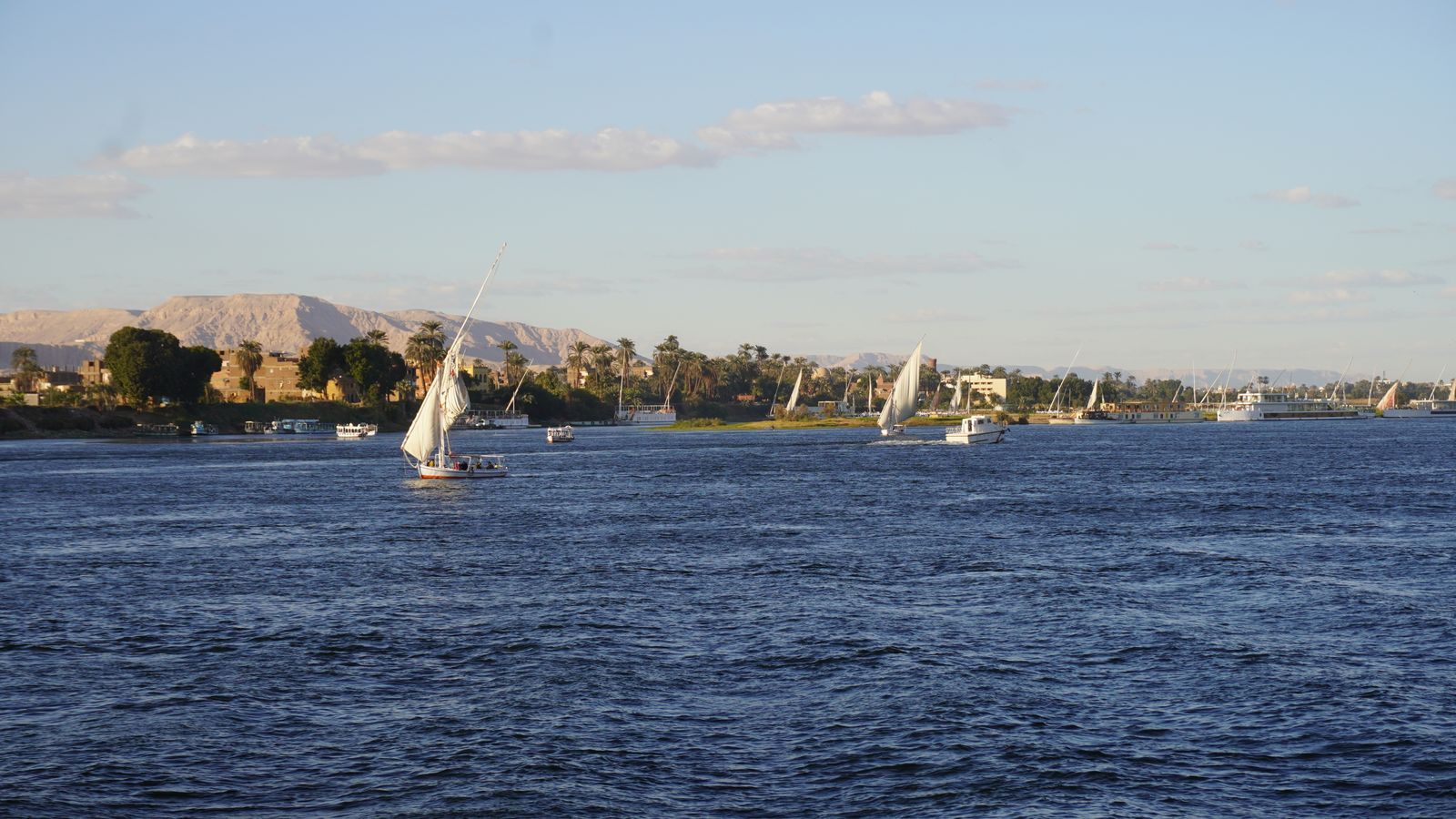
Popular Egypt holiday destinations, and how to choose between them.
Start here
Egypt is not one holiday. It’s about five, sharing a border.
Ask ten people what an Egypt holiday looks like and you’ll get ten answers. A pyramid at first light. A tomb painted so brightly it looks freshly finished. A reef the colour of a screensaver. A desert so quiet you can hear your own pulse. Every one of those answers is correct, which is exactly what makes this country awkward to plan.
Most guides handle that by listing everything and letting you drown. We’d rather do the opposite. This page walks through the popular Egypt holiday destinations one at a time, says plainly what each one is for, how many days it deserves, and which ones sensibly belong in the same trip.
We’re Egypt Luxury Trips, a private travel company based in Luxor. We plan journeys across Cairo, the Nile, Luxor, Aswan, Siwa Oasis and the Red Sea for travellers arriving from the United States, United Kingdom, Canada, Australia and across Europe — no fixed groups, no shared departures, one planner from your first message to your last day. So the advice here comes from arranging these routes, not from reading about them.
Nobody has ever come home regretting that they saw fewer places in Egypt. Plenty of people regret trying to see all of them.
Here’s what you’ll get out of the next ten minutes:
- A shortlist you can actually decide from — seven destinations, compared side by side rather than described one after another.
- Realistic day counts. How long each place genuinely needs before it starts repeating itself.
- Which combinations work. Temples and beaches in one trip is a fair question, and it has a real answer.
- Straight answers on timing, safety, packing and pace, gathered at the end where you can find them again.
If you already know roughly where you’re headed, jump to our private tours and Nile cruises or send us your dates. If you’re still staring at a map, keep reading — this page was written for you.
The shortlist
Egypt’s best places to visit, compared before they’re described.
Read this table first. It’s the same conversation we have with travellers on day one of planning, compressed into one screen. Notice that almost nothing here competes — most of these destinations do completely different jobs, which is why the good trips string two or three of them together rather than picking a winner.
| Destination | What it’s really for | Days we’d give it | Pairs naturally with |
|---|---|---|---|
| Cairo & Giza | Pyramids, world-class museums, and a city with five thousand years stacked on top of itself | 2–3 days | A flight south to Luxor |
| Luxor | Temples and painted tombs at close range — the densest ancient sightseeing in the country | 2–3 days | A Nile cruise, a dawn balloon |
| Aswan | The Nile at its most beautiful, Nubian culture, and a noticeably slower gear | 1–2 days | Abu Simbel, the end of a cruise |
| Abu Simbel | One overwhelming monument, and the drive or flight that earns it | Half a day to a full day | Aswan, always |
| The Nile, Luxor–Aswan | Temples that arrive at your door while you unpack once | 3–4 nights | Both cities, either side |
| The Red Sea coast | Reefs, warm water and the part of the holiday where nothing is scheduled | 3–5 days | The end of the trip, after the temples |
| Siwa & the Western Desert | Silence, salt pools and white chalk landscapes with almost nobody in them | 3 days and up | Second visits, and long trips |
One honest note on that last row. Our published day tours and cruises concentrate on Cairo and Giza, Luxor, Aswan and the Nile, with shore excursions running inland from the Red Sea ports. Siwa and the far desert don’t appear as fixed listings. If they’re on your wish list, send us the places you want to include and we’ll work out a private route rather than pretend a package already exists.
Destination by destination
What each place is actually like when you’re standing in it.
Descriptions are easy to inflate, so we’ve kept these to what you’ll genuinely see, feel and have to walk. Every tour named below is one we publish and run privately — links go straight to the page with its route, inclusions and exclusions.
Cairo and Giza — the loud, magnificent opening chapter
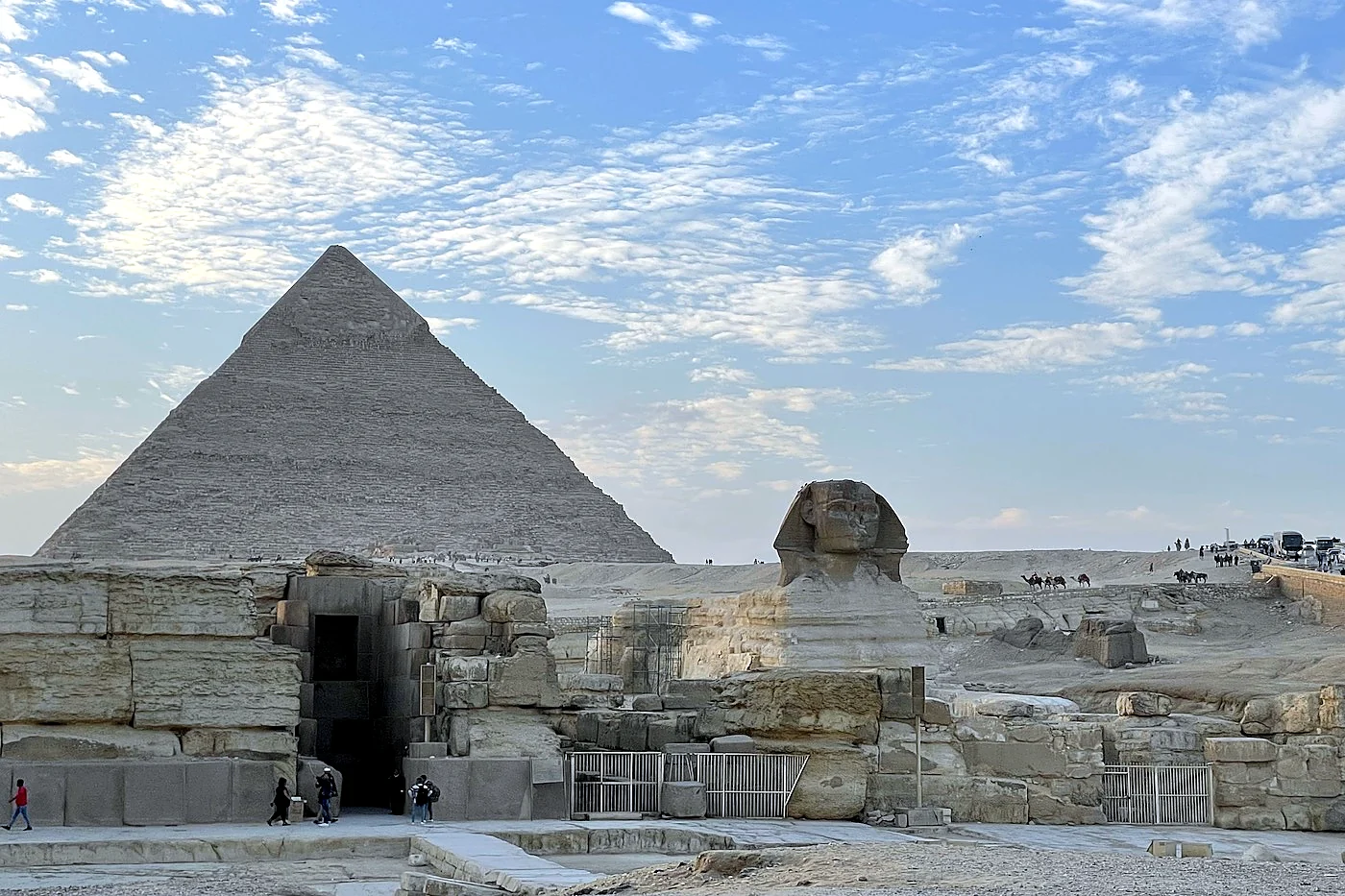
Nearly every Egypt itinerary starts here, and it should. The Giza Plateau is the one sight that survives its own fame: you know the shape by heart, then you stand at the base of the Great Pyramid and the arithmetic stops making sense. Ten minutes away, the Grand Egyptian Museum has given Tutankhamun’s treasures the room they always deserved.
But Cairo is not only pyramids. Saladin’s Citadel looks out over the whole city, the Hanging Church anchors Coptic Cairo, and Khan el-Khalili’s lanes are where you’ll find yourself bargaining for something you didn’t come for. Older still, the pyramid fields at Saqqara, Dahshur and Memphis show the idea being invented — the Step Pyramid, the Bent Pyramid, the fallen colossus of Ramses II — usually with a fraction of the crowd.
Our honest advice: two full days minimum. One for Giza and the museum, one for old Cairo or the earlier pyramid fields. Compress it into a single day and you’ll spend most of it in traffic.
Luxor — the world’s densest square mile of ancient history
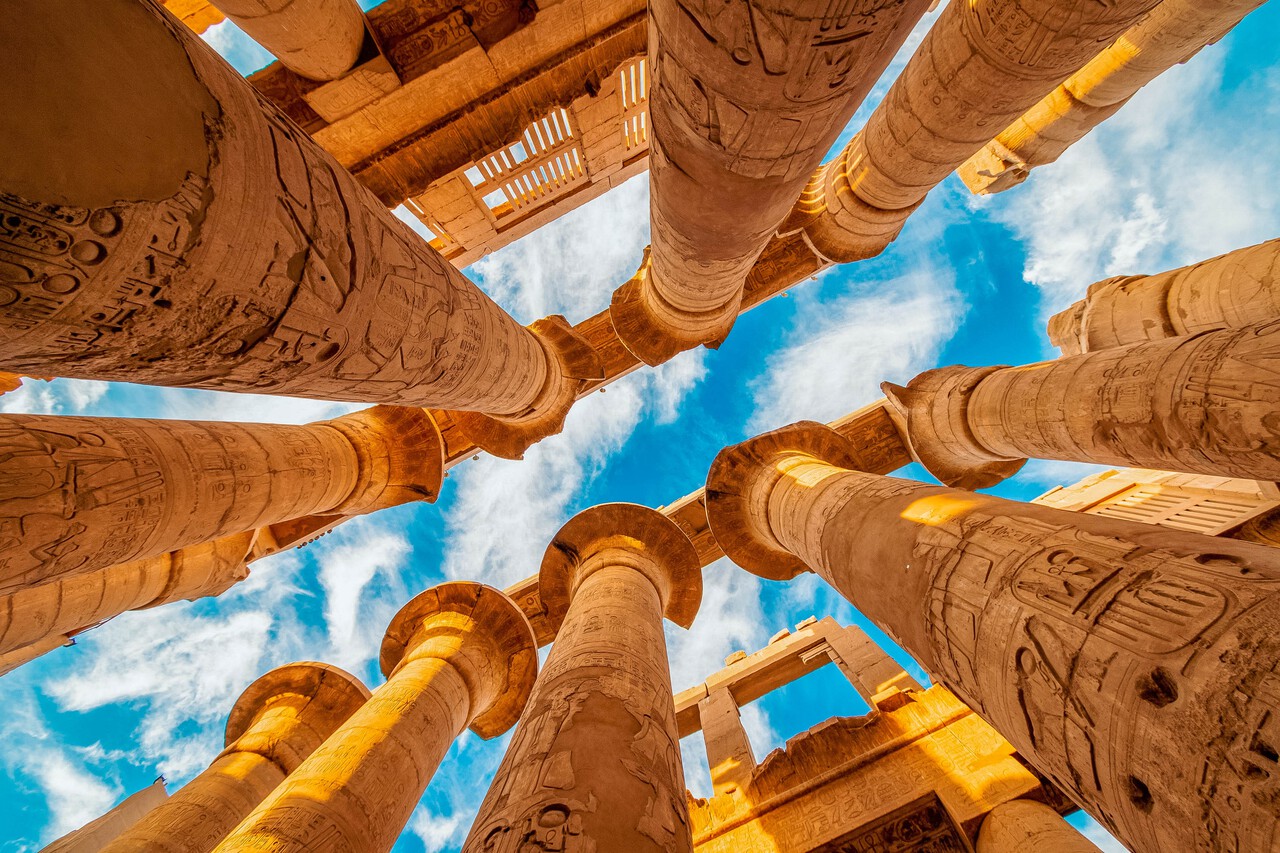
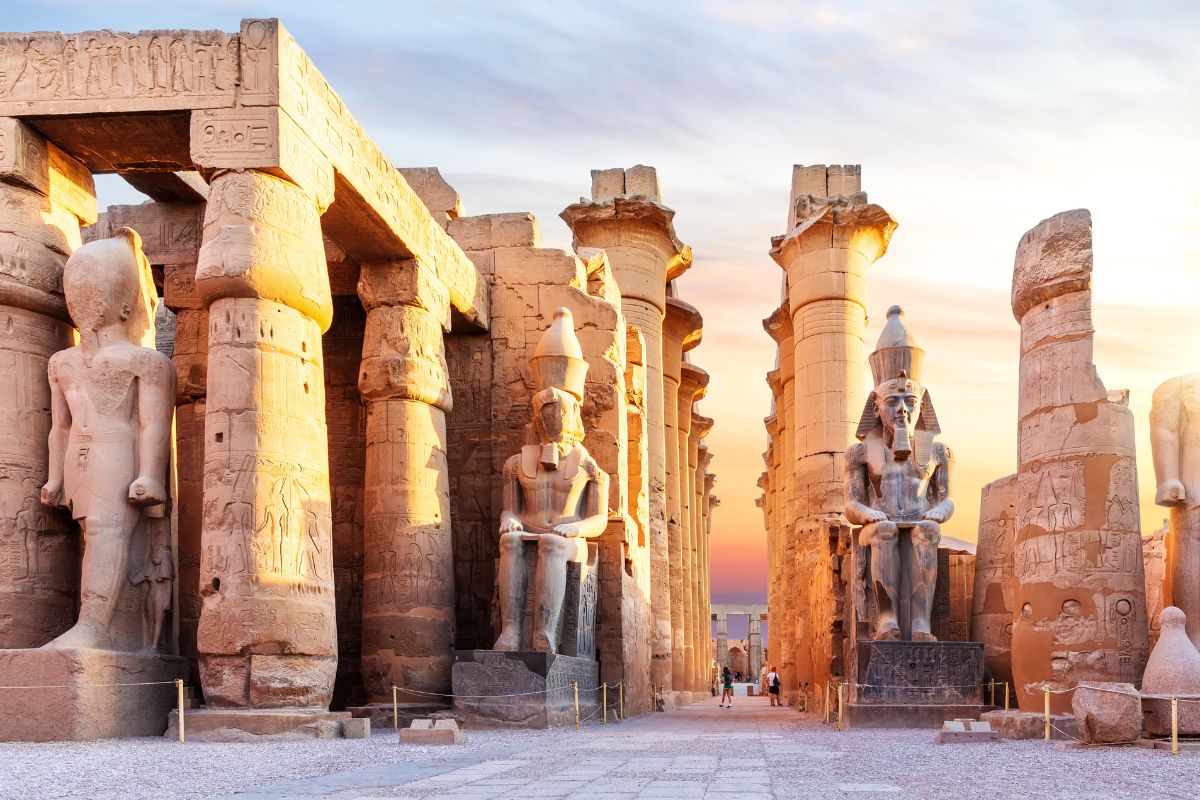
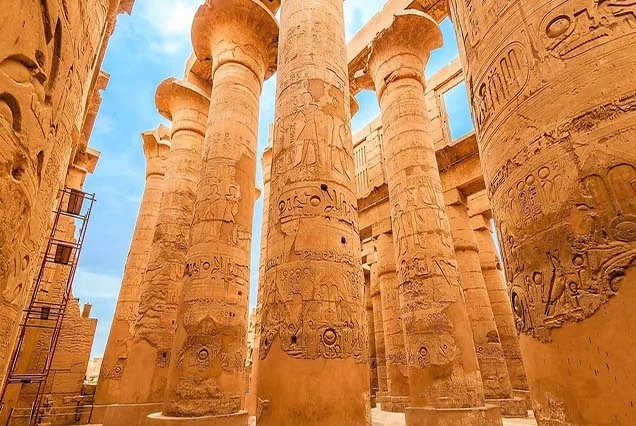
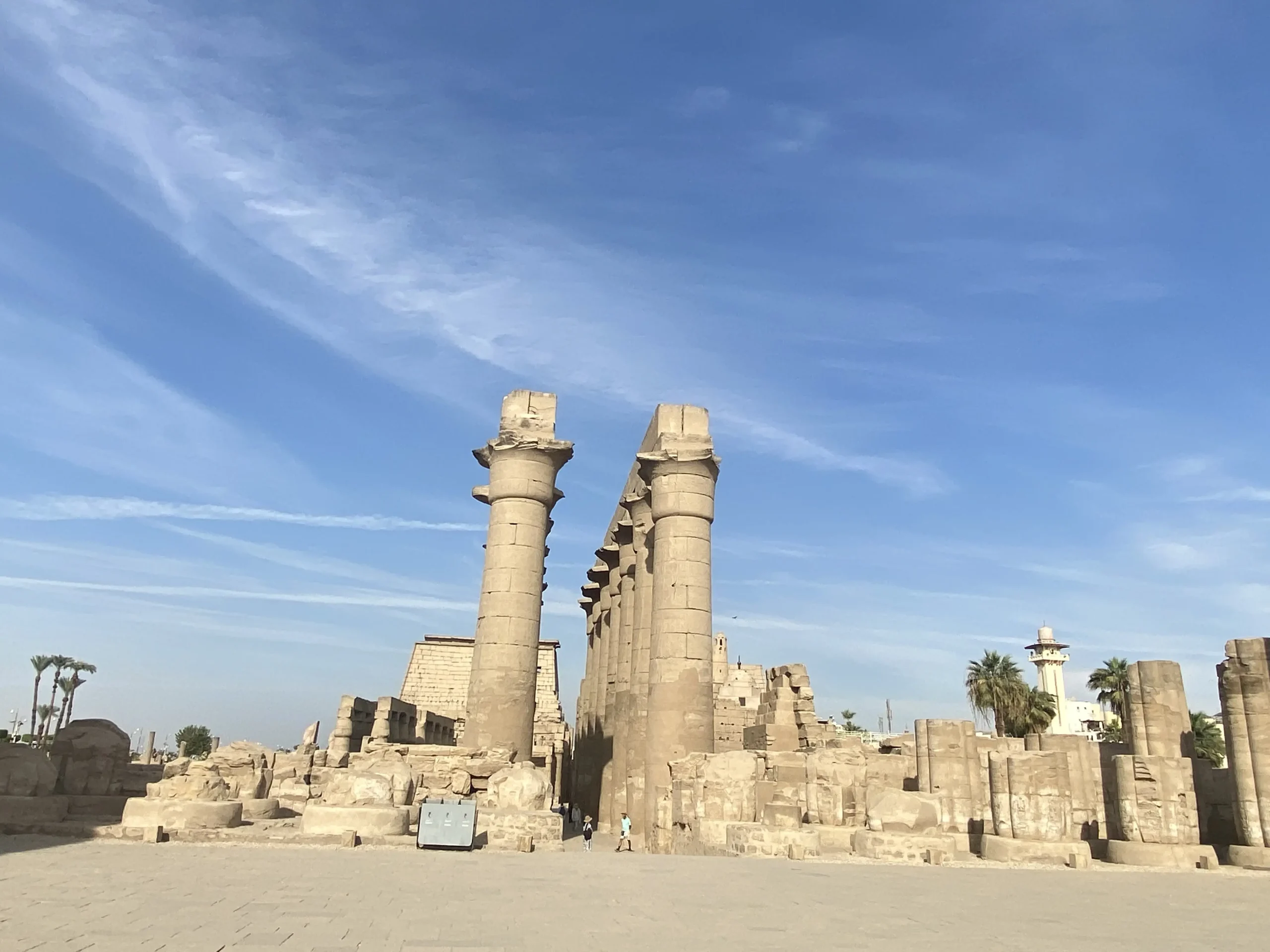
If Cairo is the headline, Luxor is the substance. The city sits on ancient Thebes and divides neatly by the river: temples on the East Bank, tombs on the West. Karnak is less a temple than a two-thousand-year argument between pharaohs, each adding a hall to outdo the last. Luxor Temple is the one to see after dark, when the columns are lit and the heat has finally let go.
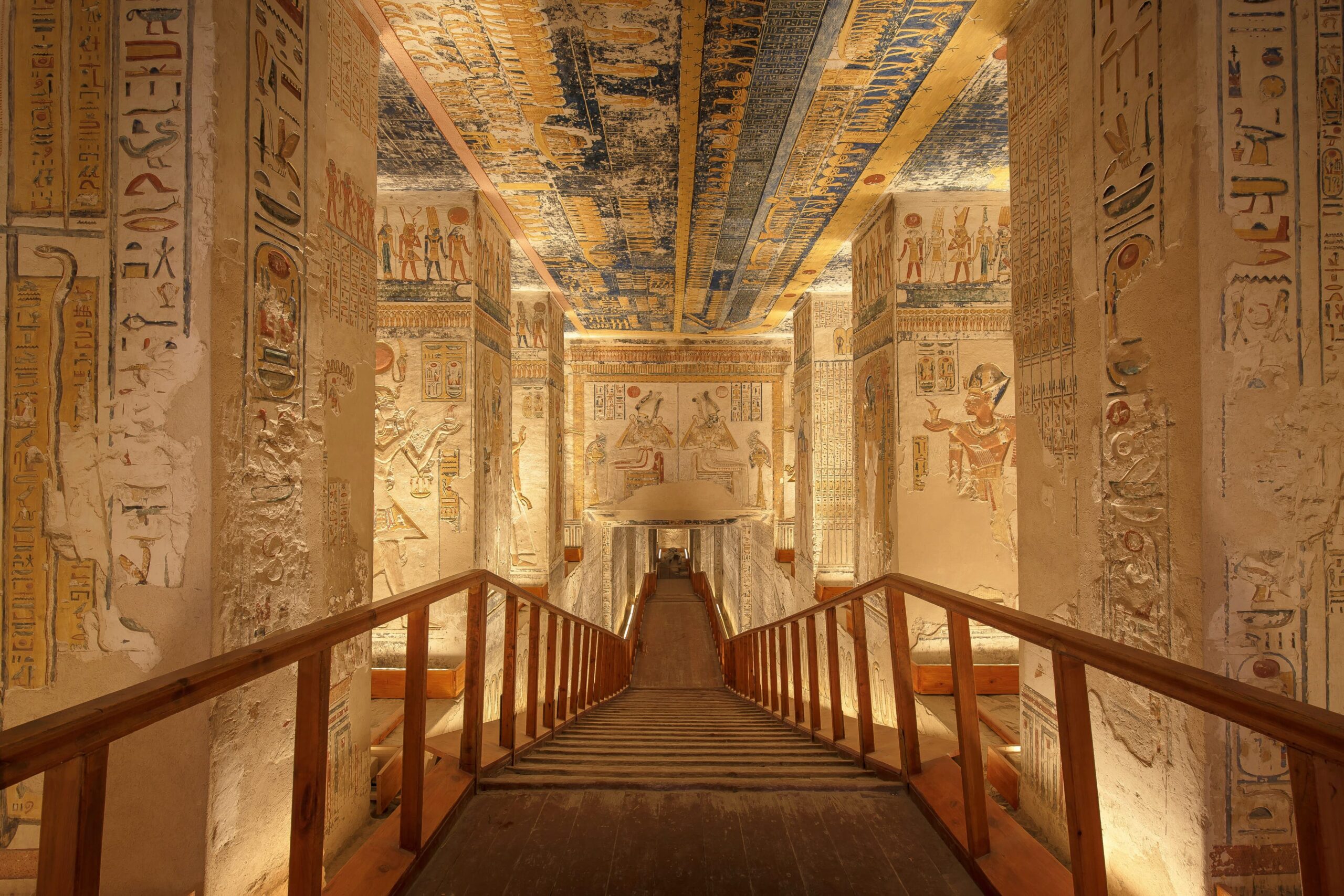
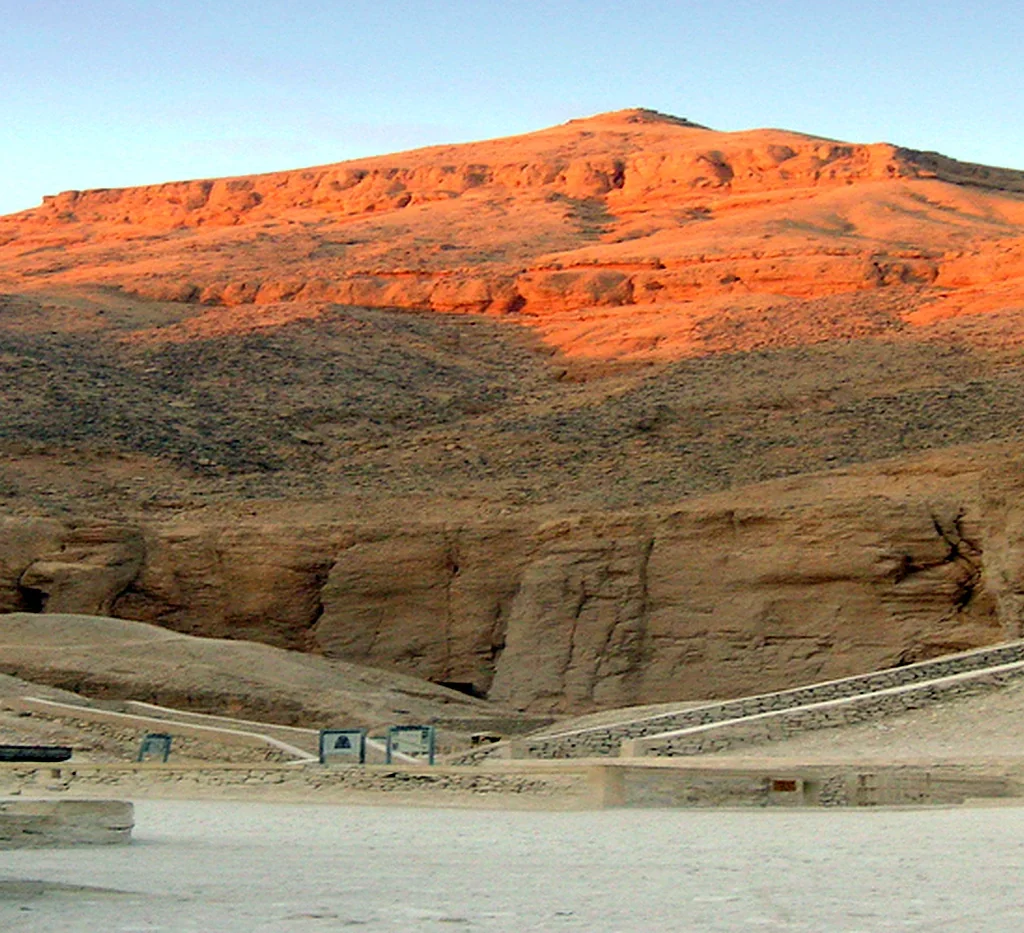
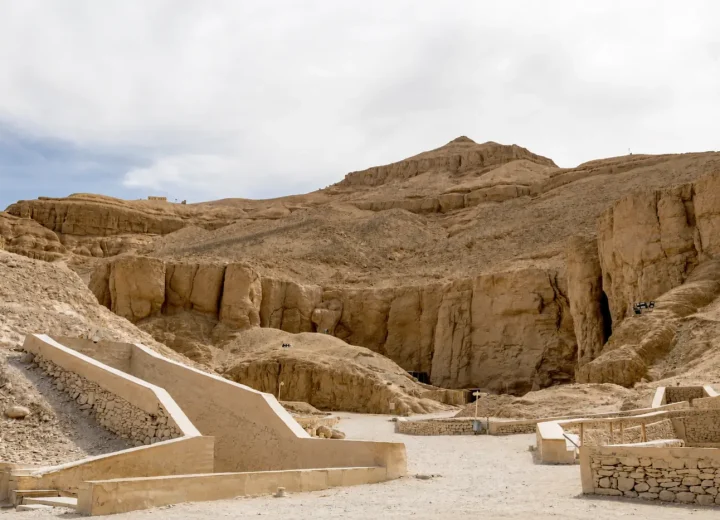
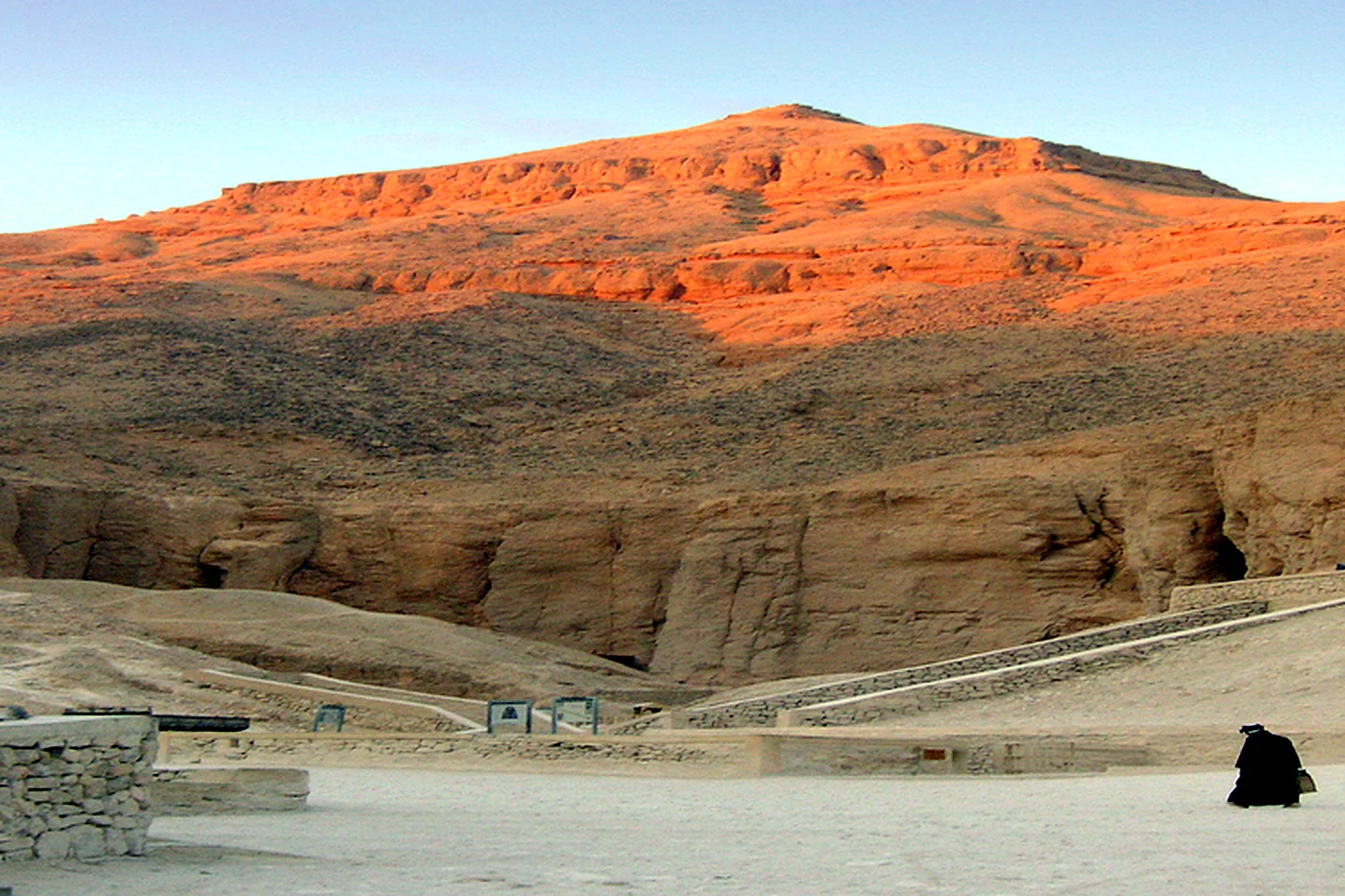
Cross to the West Bank and the mood changes completely — no city, just cliffs, and beneath them the painted tombs of the Valley of the Kings, Hatshepsut’s terraced temple, and the quieter noble tombs at Deir el-Medina. Colour survives on those walls in a way photographs never quite convey.
The one thing we’d protect in your schedule: a sunrise hot-air balloon over the West Bank. It’s the single most requested add-on we arrange in Luxor, and the light at that hour does something to the valley that no midday visit repeats.
Aswan and Abu Simbel — where the country finally exhales
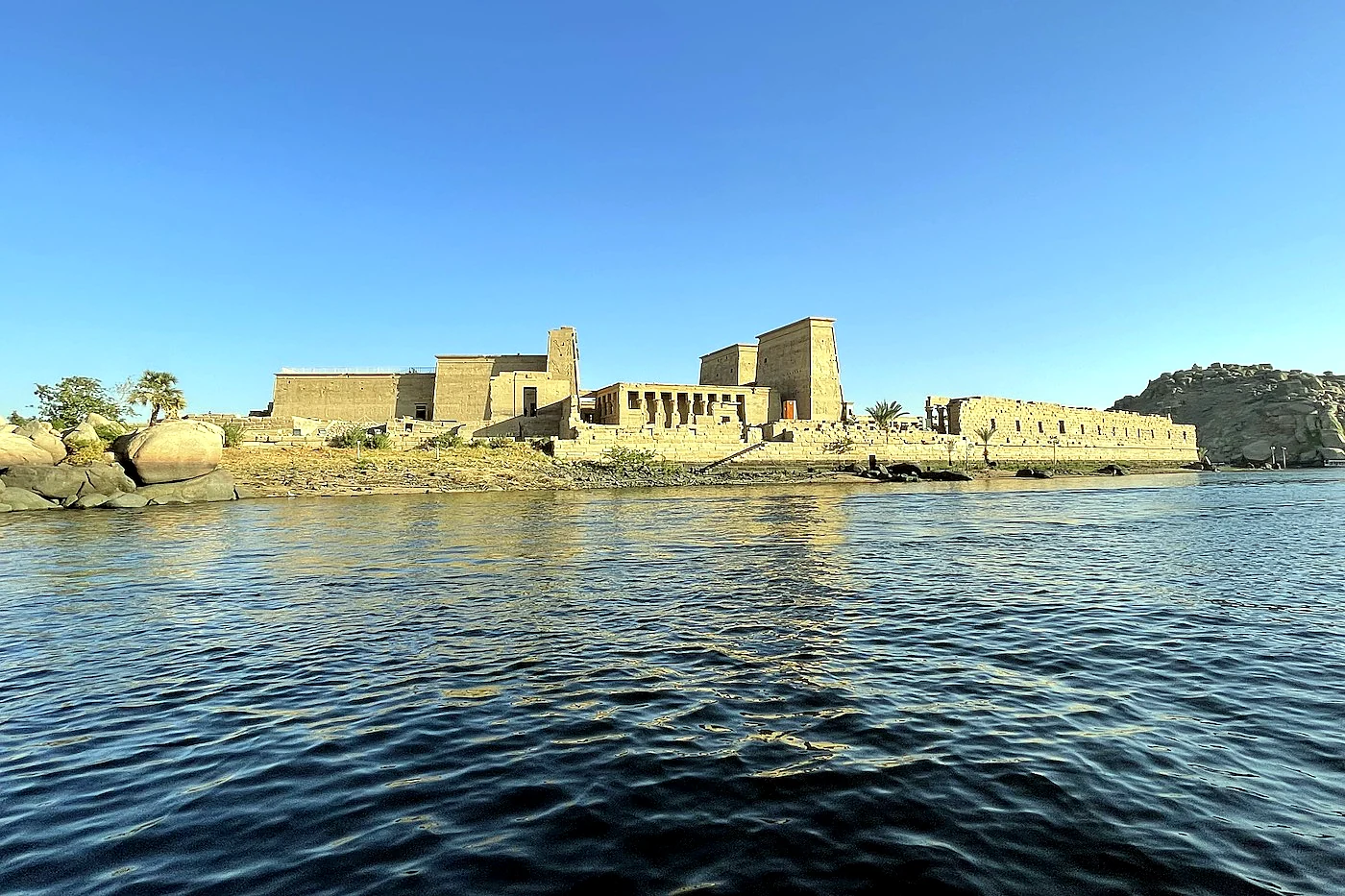
The river widens, granite islands break the current, and everybody stops walking so fast. Aswan is the most relaxed of Egypt’s headline destinations and the one travellers most often wish they’d given another night. Philae Temple sits on its own island and is reached by small motorboat, which is half the pleasure. The High Dam and the Unfinished Obelisk — still lying in the quarry where it cracked — fill out the classic day.
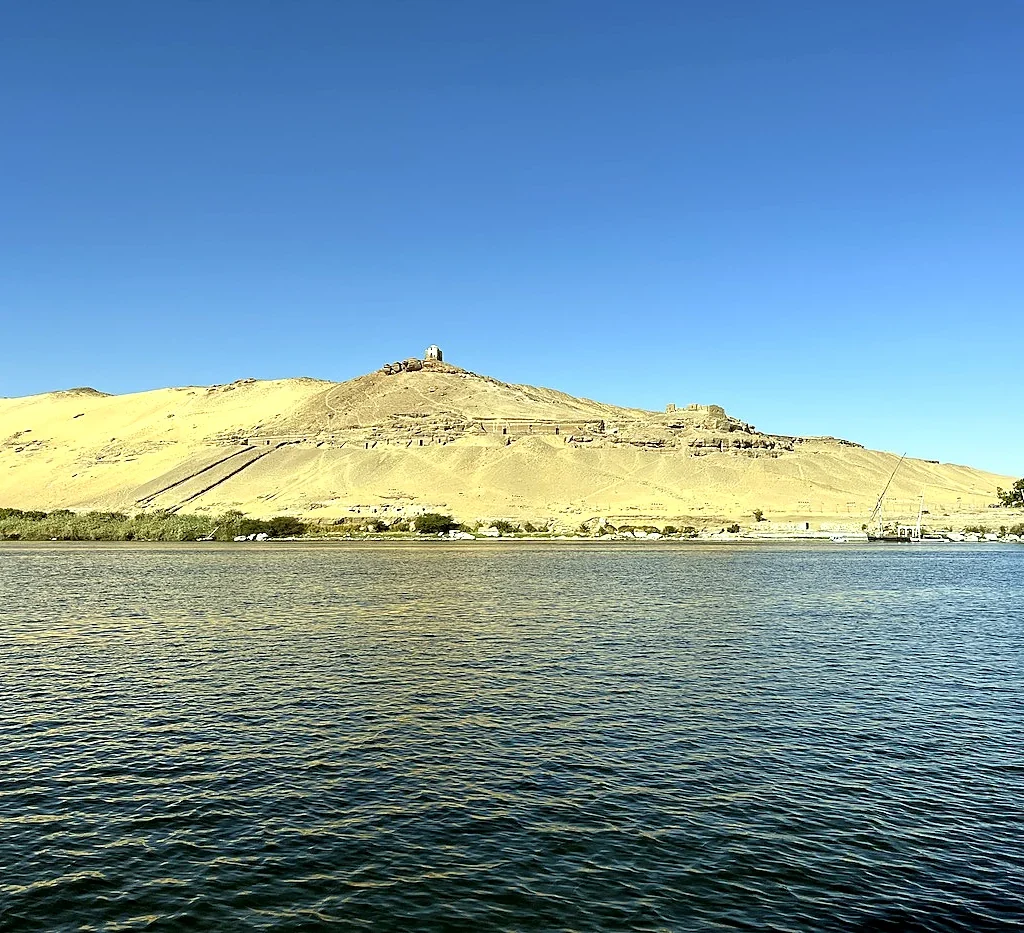
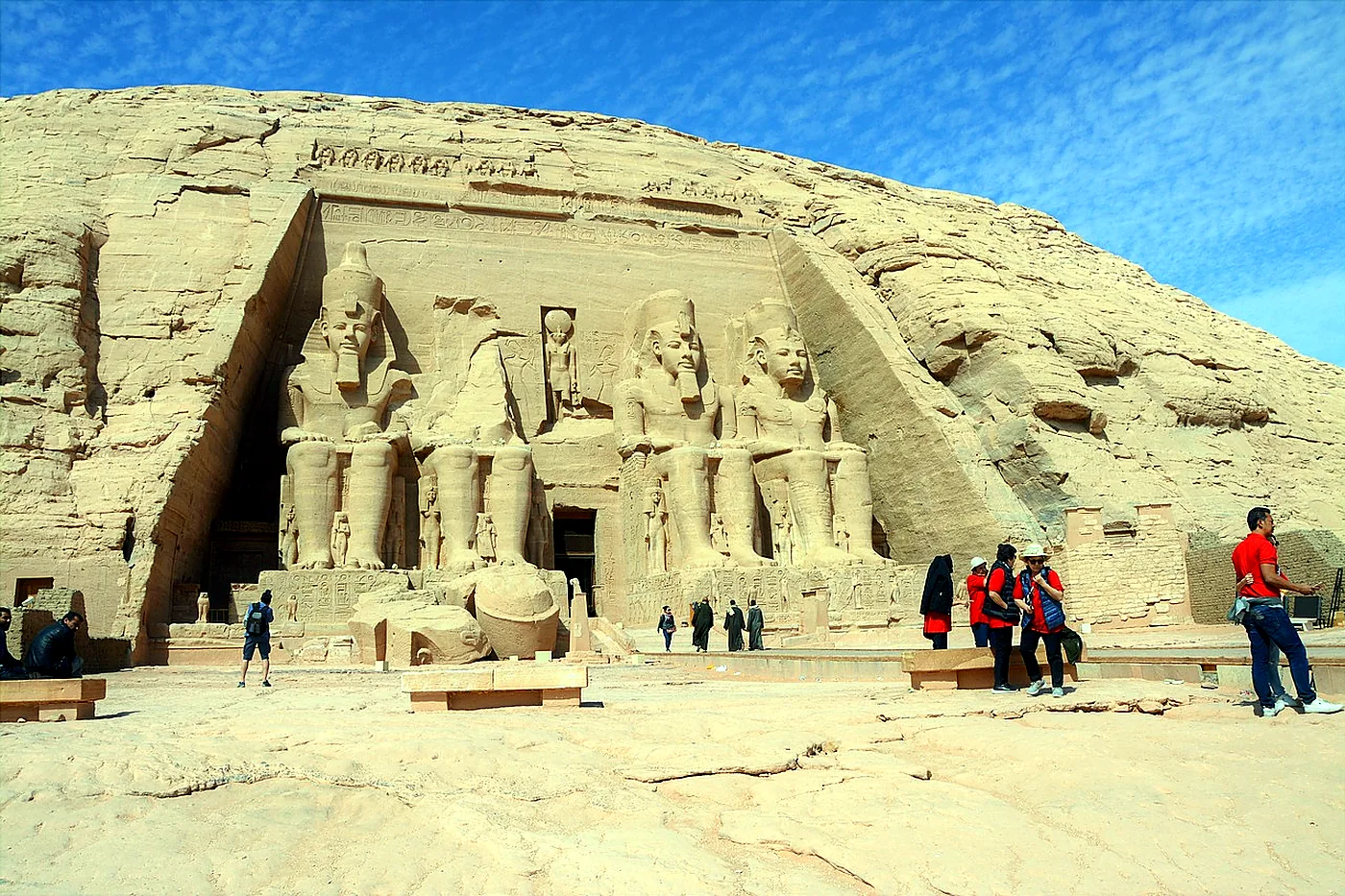
Aswan is also where Nubian Egypt becomes visible rather than historical: painted villages across the water, a different language, tea with a family who live there. And three hours south, or forty minutes by air, Ramses II’s colossal facade at Abu Simbel waits — a monument that was cut from a cliff, then cut again and moved when the lake rose behind the dam.
Worth knowing: Abu Simbel works by road or by flight. Flying compresses the travel time when your days are tight; driving beside Lake Nasser gives you the desert on the way. Neither is wrong — it depends entirely on how much of your schedule you’re willing to spend moving.
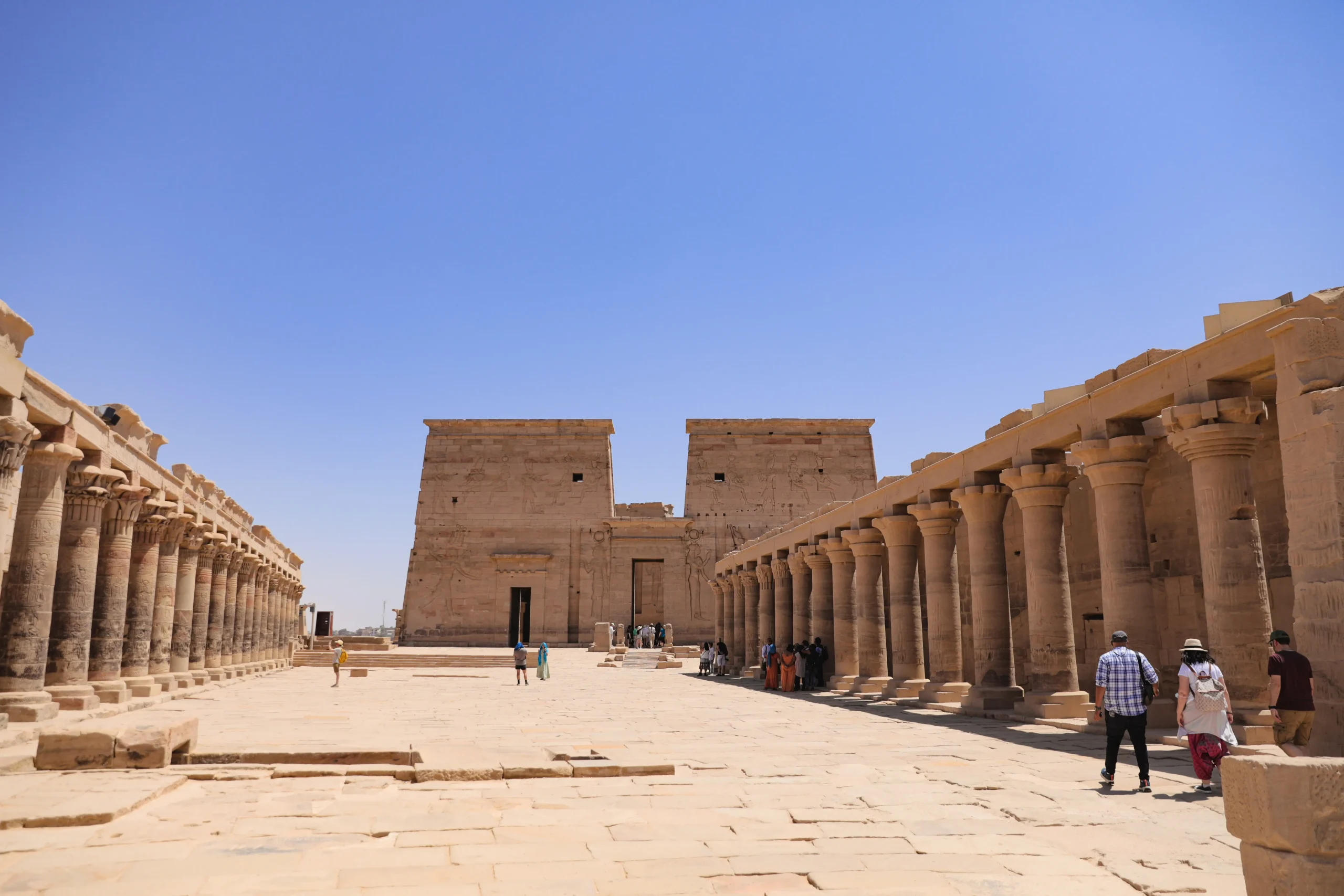
The Nile between Luxor and Aswan — a destination in its own right
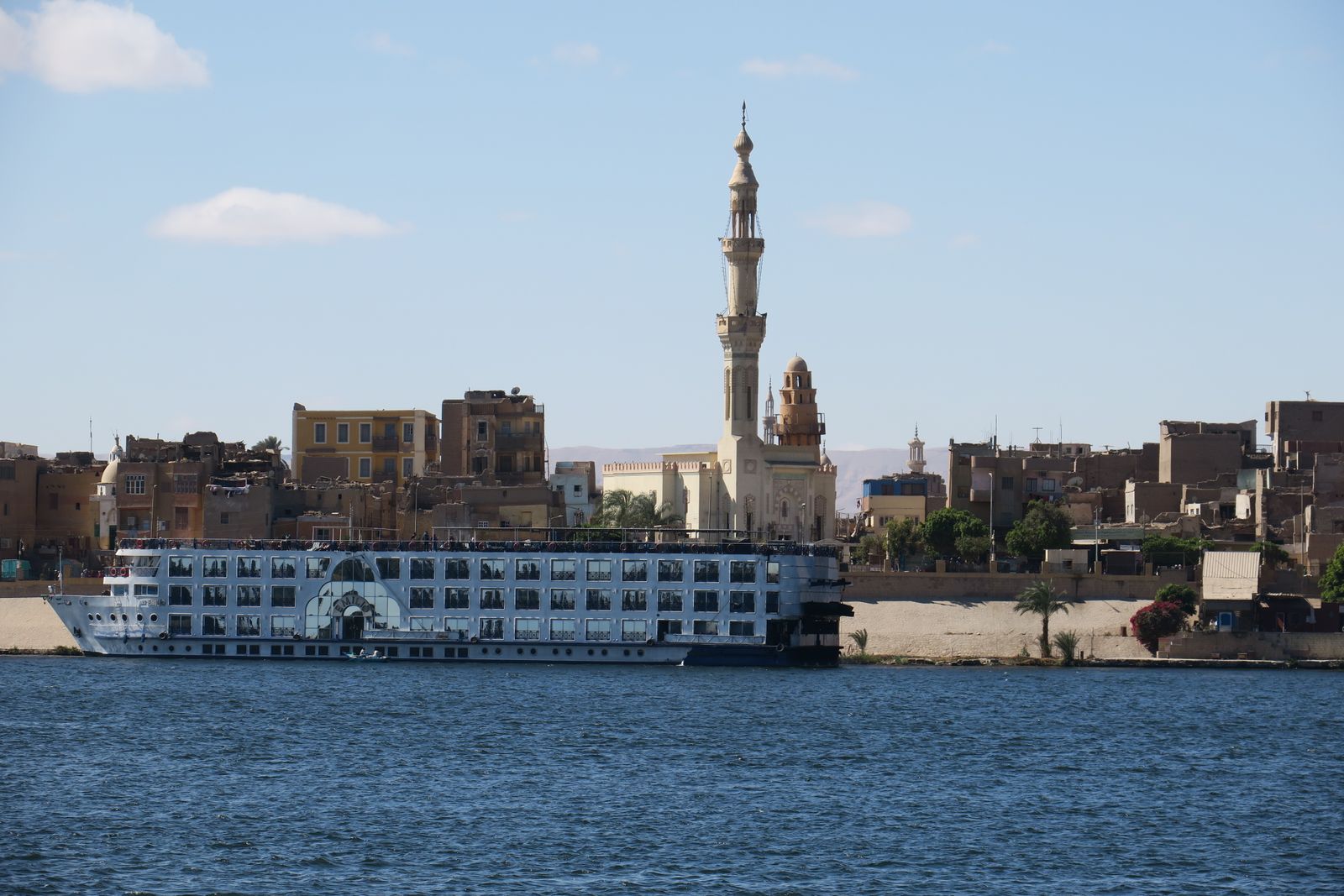
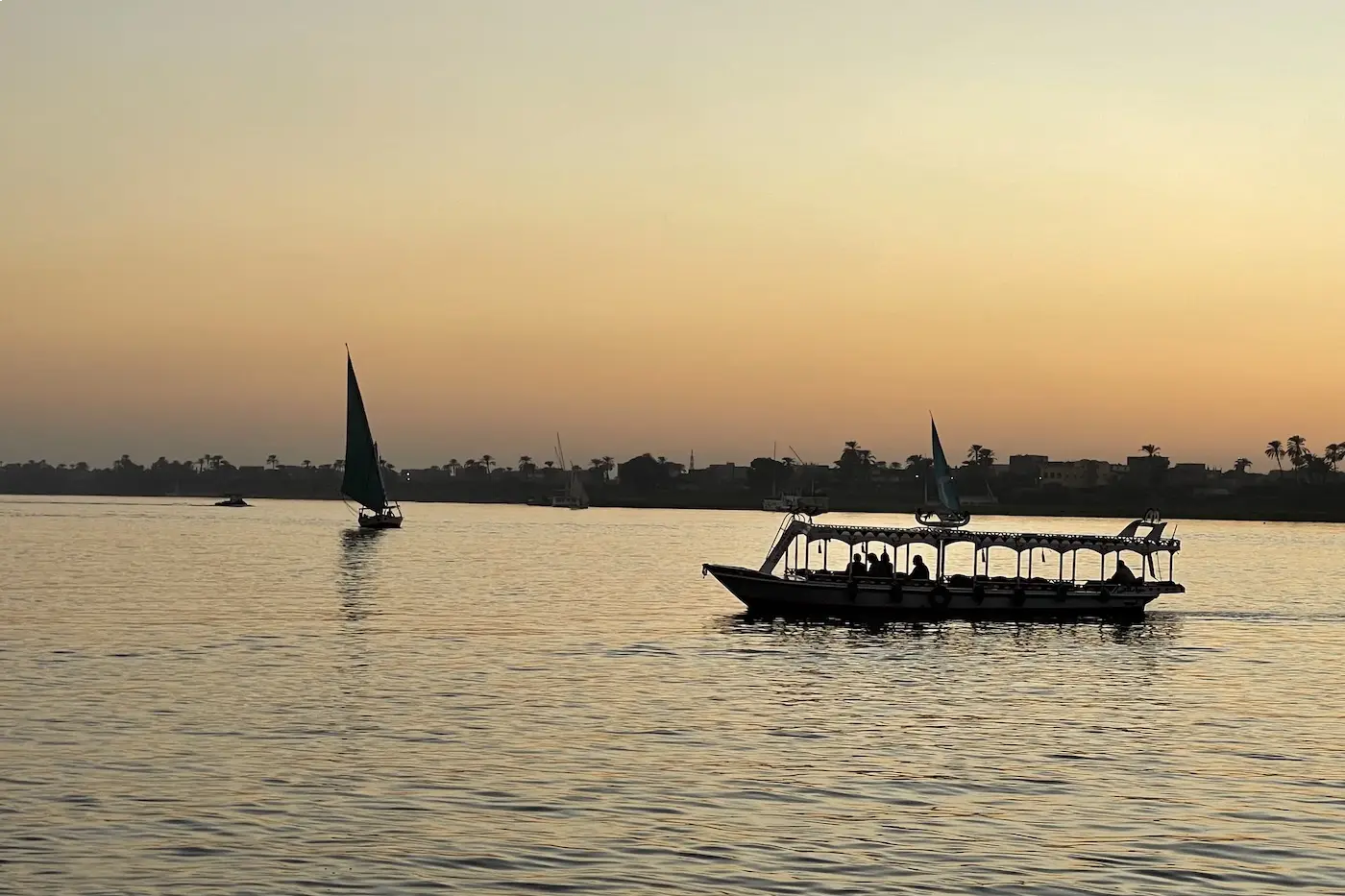
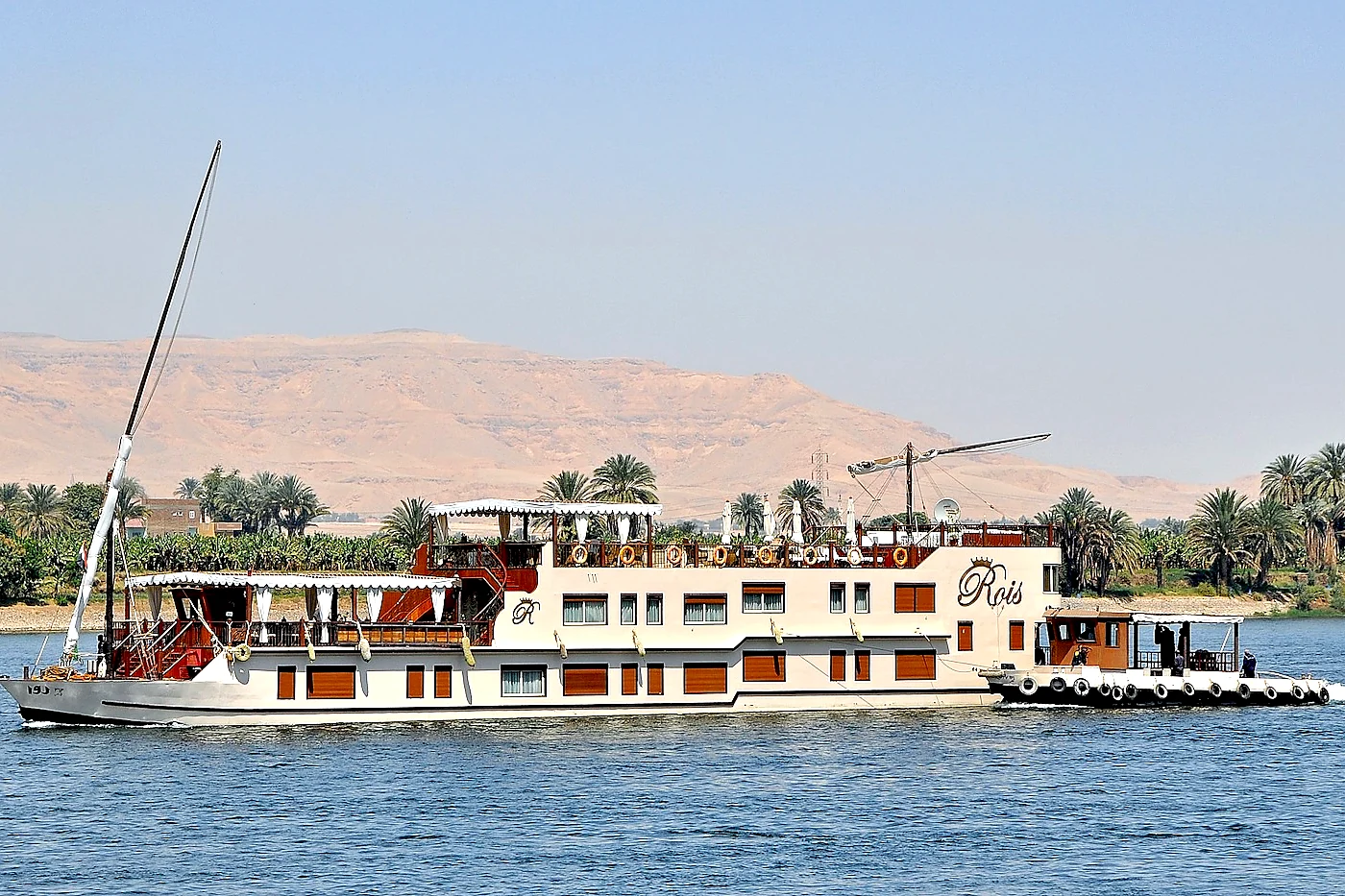
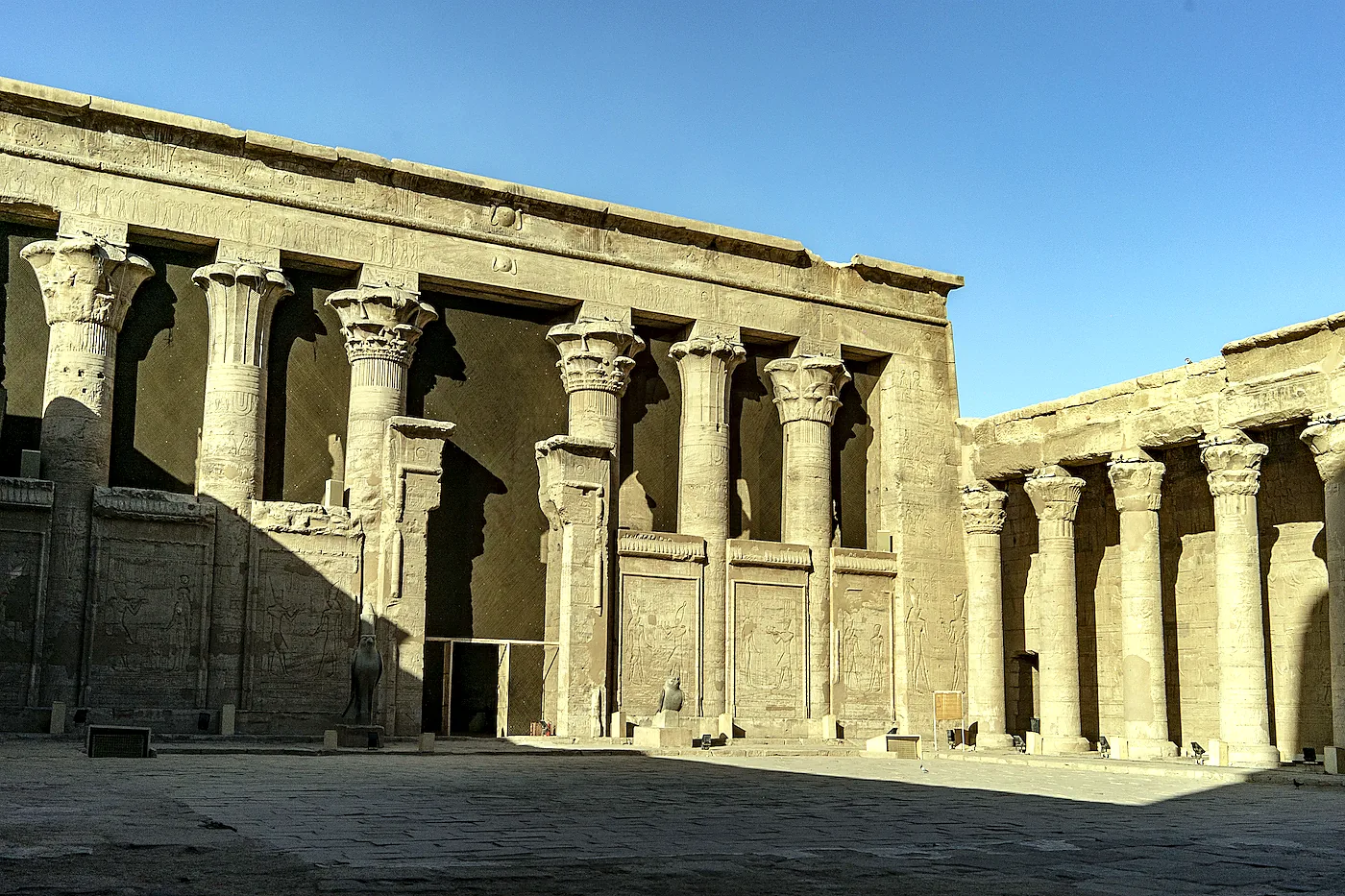
Here’s the thing first-time visitors underestimate: the stretch of river between Luxor and Aswan isn’t transport between two destinations. It is one of the destinations. Sailing it puts the temples back in their original order — Edfu’s Temple of Horus with its roof still on, the double sanctuary at Kom Ombo sitting right above a bend in the water — and quietly removes the hardest part of travelling in Egypt.
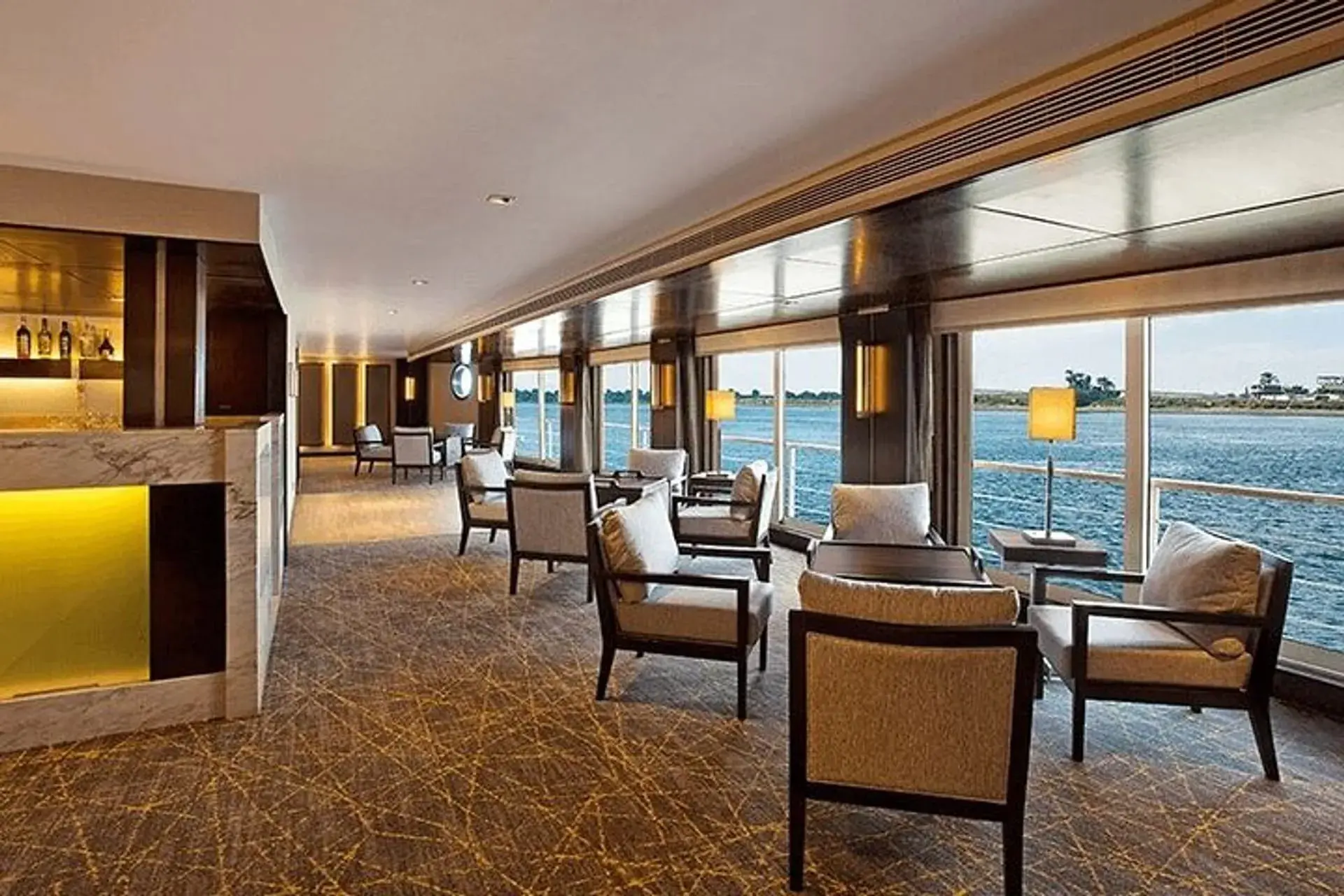
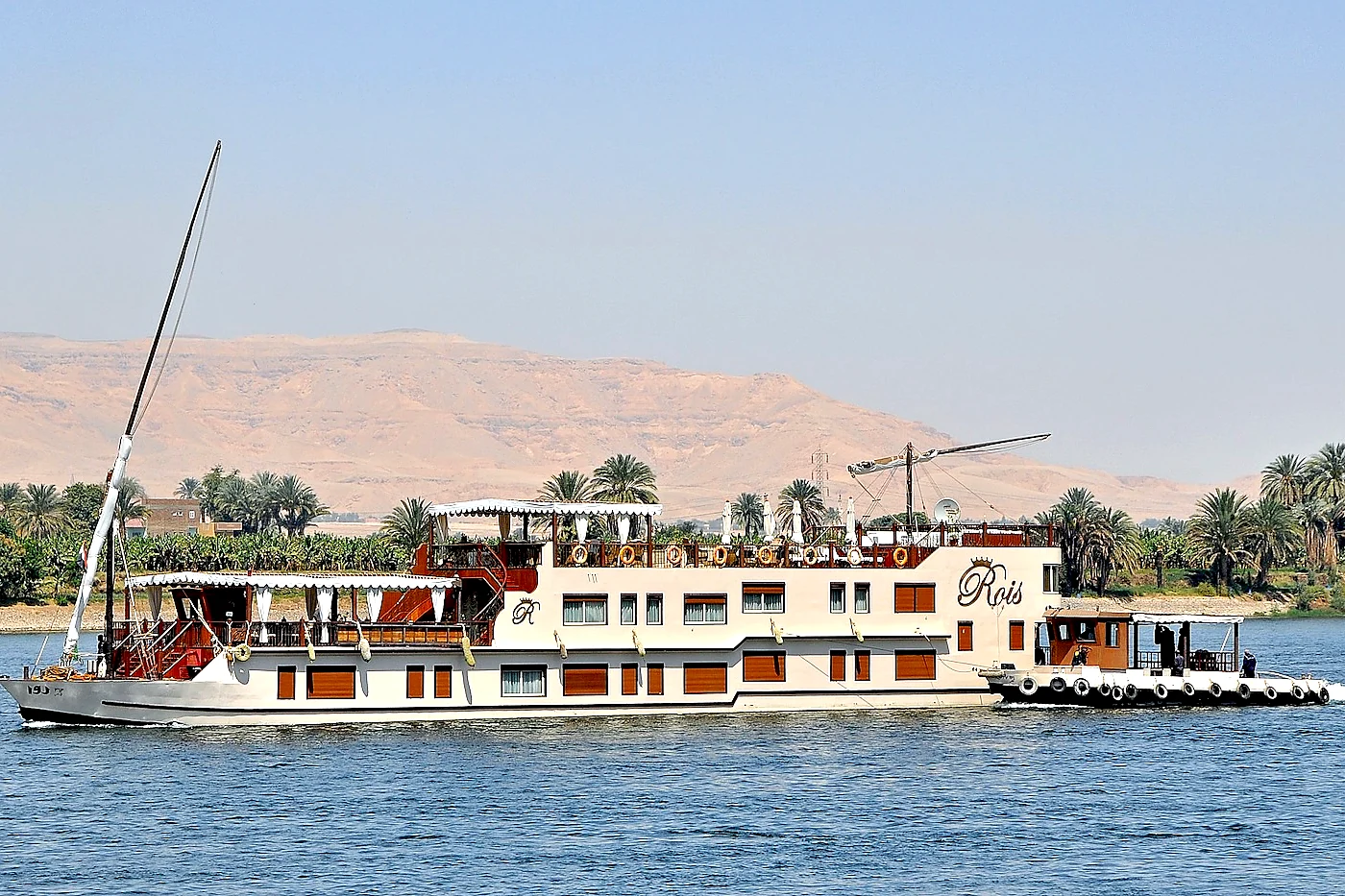
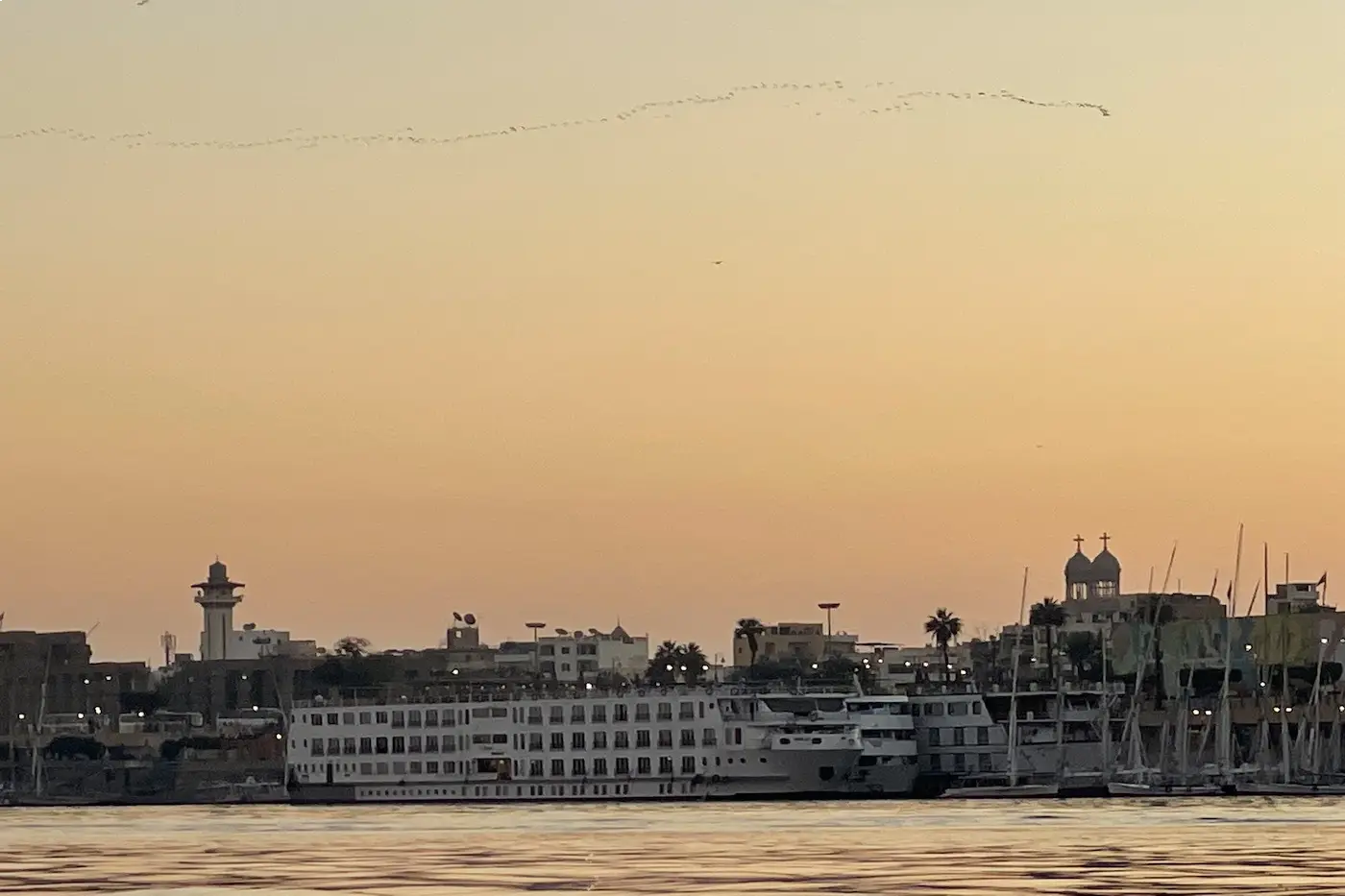
Your hotel moves with you. Your bags stay where you left them. The desert edge slides past while you’re eating breakfast. And the hours between sites, which on a road itinerary are spent looking at the back of a headrest, are spent on a deck watching the country farm exactly as it has for a very long time.
We publish two sailings on this stretch: four nights southbound from Luxor to Aswan, and three nights northbound from Aswan to Luxor. Neither is the better cruise. Let your onward flights choose the direction — the wrong one simply costs you a day of doubling back.
The Red Sea coast — the half of Egypt nobody expects
Fly ninety minutes east of the Nile and Egypt changes character entirely. The Red Sea resorts — Hurghada, Sharm El Sheikh, Marsa Alam, El Gouna, Dahab, Safaga — sit on some of the most accessible coral reef on the planet, where you can be looking at fish through a mask within minutes of walking off a beach. It’s warm water almost year-round, which makes this coast Egypt’s natural decompression chamber.
Which is precisely how we’d use it: at the end of the trip, not the start. Temples first, while you still have the energy for early mornings; sea afterwards, when what you want is a lounger and nothing on the schedule.
Our own published work on this coast runs in the other direction — private shore excursions inland from Safaga Port, either as a long single day to Luxor’s highlights or as a two-day overnight covering both banks. They’re built for cruise-ship passengers and resort guests who don’t want to miss the ancient half of the country while they’re this close to it.
Beyond the classic route — for second visits and long trips
Once the headline destinations are behind you, Egypt keeps going, and this is where it gets genuinely quiet. Dendera and Abydos, north of Luxor, hold the two most atmospheric temple interiors in the country: Hathor’s restored astronomical ceiling and Seti I’s famous King List. Esna and El-Kab add a restored temple ceiling and rock-cut tombs on a day where you may see almost nobody else.
Further out, Siwa Oasis sits near the Libyan border with its salt pools and mud-brick fortress, and the White Desert turns into a chalk sculpture park under the stars. Alexandria gives you Mediterranean Egypt — Greek and Roman layers, sea air, a completely different lunch.
None of these are first-trip material unless you have real time. But if you’re returning, or you’ve built in two clear weeks, they’re where the country stops feeling like a highlights reel.
Build the trip from these
The private tours that cover Egypt’s most popular destinations.
Eight programmes, one per destination or experience discussed above. All are private — your own licensed Egyptologist guide and vehicle — and all can be combined into a longer itinerary. Each link opens the full route with its inclusions and exclusions listed.
Approx. 8 hours
Cairo & Giza
Giza Pyramids and Grand Egyptian Museum
The two things everyone comes to Cairo for, in one private day: Khufu, Khafre and Menkaure, the panoramic viewpoint and the Sphinx, then Tutankhamun’s collection in the museum built to hold it.
 Full day
Luxor · Both banks
Full-Day Luxor Tour: East and West Banks
The most efficient day in Egypt. Valley of the Kings and Hatshepsut’s temple in the cool of the morning, then Karnak and Luxor Temple as the light softens — the whole of ancient Thebes in one go.
 Aswan day
Aswan
Philae Temple, High Dam and Unfinished Obelisk
How most travellers spend Aswan: the obelisk still lying in its quarry, the dam that reshaped the river, then a motorboat crossing to the island temple of Isis.
4 nights
Luxor → Aswan · Southbound
4-Night Nile Cruise from Luxor to Aswan
Temples by day at Karnak, the Valley of the Kings and Philae; the river by night. Four nights southbound, finishing in Aswan — ideal if Abu Simbel is next on your list.
 3 nights
Aswan → Luxor · Northbound
3 Nights Nile Cruise from Aswan to Luxor
The same river corridor one night shorter: Philae, Kom Ombo, Edfu and Karnak, ending in Luxor. The version to choose when your trip has to finish where the flights leave from.
 By flight
Aswan · Abu Simbel
Abu Simbel Temples by Flight
Ramses II’s colossal facade, seen and returned from in the same day. The travel time compresses into a short flight instead of a pre-dawn drive — the right call when your schedule is tight.
 By road
Edfu · Kom Ombo
Edfu and Kom Ombo Temples from Luxor
The two river temples every cruise stops at, reachable by road when your dates don’t line up with a sailing. Edfu is the best-preserved temple in Egypt; Kom Ombo has two gods and perfect symmetry.
1 day
Red Sea · Safaga Port
Safaga to Luxor Day Trip
For anyone whose Egypt starts on the coast. A private full day inland from Safaga Port — Valley of the Kings, Hatshepsut Temple, the Colossi of Memnon and Karnak — back the same evening.
Want something quieter or more unusual? There’s a quad-bike ride along the desert trails beside Giza, a Nubian village crossing at Aswan, Karnak after dark, and a horse-drawn carriage through Luxor’s streets. Or browse everything on our tours page.
Fitting it together
How many days do you need — and can you really do temples and beaches?
Two questions arrive in almost every enquiry, and they’re connected. Egypt rewards depth over distance, so the real skill in planning isn’t adding destinations. It’s knowing which one to drop.
| You have | What fits without rushing | What we’d leave for next time |
|---|---|---|
| 5–6 days | Cairo and Giza, then a flight to Luxor for both banks. Or Cairo plus a short Nile cruise. | The Red Sea, Abu Simbel, anything off the main line |
| 7–8 days | Cairo, Luxor, and a 3-night cruise finishing in Aswan. The classic route, at a fair pace. | Beach days, Alexandria, the Western Desert |
| 10 days | All of the above with four cruise nights, Abu Simbel added, and a genuine day off somewhere. | Siwa, and a full Red Sea stretch |
| 14 days and up | Cairo, Luxor, the Nile, Aswan and Abu Simbel — plus three to five nights on the Red Sea, or a desert leg. | Very little. This is the length Egypt actually wants. |
Beach and temples in the same trip: yes, in that order
You can absolutely combine them, and plenty of travellers do. The rule we’d give you is simply about sequence. Culture first, coast last. The ancient sites demand early starts and a lot of walking on uneven stone; do them while you’re still fresh and time-shifted in your favour. The Red Sea asks nothing of you at all, which makes it a much better ending than an opening.
The other combination worth knowing about works in reverse. If you’re already staying on the coast — or arriving on a ship at Safaga — the temples are reachable as a single long day or a two-day overnight. They are long days, and we’d rather tell you that up front than sell them as something gentler.
Timing
The best time to visit Egypt, by what you’re willing to trade.
There isn’t a single best month — there’s a trade between heat and company. Upper Egypt is desert; the Red Sea has its own, milder rules. Here’s the honest shape of the year.
| Season | What it feels like | Worth knowing |
|---|---|---|
| October to April | The comfortable window. Warm days, cool evenings, sightseeing at a civilised hour without wilting. | Also the busiest. Cabins on the Nile and balloon flights in Luxor go first — enquire early. |
| December & January | Coolest of all. Bright days, genuinely chilly mornings and evenings, especially on the water. | Pack a proper layer. Everyone underestimates a moving boat at 6am in Upper Egypt. |
| May & September | The shoulder months. Hot, but with noticeably fewer people in front of you at the temples. | Our quiet favourite if you don’t mind starting at dawn. |
| June to August | Serious heat inland, especially around Aswan. The coast stays more bearable with sea breeze. | Entirely workable on a private schedule: sites at first light, middle of the day indoors or in the water. |
Two things move the decision more than the weather table does. First, a Nile cruise handles heat far better than a road itinerary, because your air-conditioned room is always about ninety seconds away. Second, sunrise and late afternoon are when these monuments look their best in any month — so what really matters is whether your days can be timed around them. On a private programme, they can be.
Tell us the window you’re considering and we’ll tell you plainly what to expect in it, including where the crowds will be and which mornings we’d start early.
Who these destinations suit
Same country, six very different holidays.
What changes between travellers isn’t usually the destination list. It’s the pace, the order and how much of the day is scheduled.
First-time visitors
Stick to the spine: Cairo, Luxor, the Nile, Aswan. It’s popular for a reason, and trying to be clever on a first trip usually just costs you time in transit.
Honeymooners
Spectacle and stillness in alternating doses — a temple after dark, a felucca at sunset, then days where the hardest decision is which side of the deck has shade.
Families
Children do better on the river and the coast than on long road days. A private schedule can also be cut short the moment someone has genuinely had enough.
Solo travellers
You’re never stranded working out dinner or a taxi, and a private guide means the history arrives as conversation rather than a loudspeaker in a car park.
Small groups of friends
This is where private touring makes obvious financial sense: one guide and one vehicle at each stop, shared between you, with the days still entirely your own.
Travelling with parents
The real constraints in Egypt are heat, steps and uneven ground — not distance. Flag mobility in your enquiry and we’ll build the days around it rather than improvise.
What to pack, whichever destinations you choose
Light, loose clothing that covers shoulders and knees for temples and mosques. Shoes you can walk uneven stone in — tomb and temple floors are not level and never were. Hat, sunglasses and high-factor sun cream, because shade is rarer than it looks. One warm layer between roughly November and February. A refillable bottle. Swimwear if the Red Sea is on the list, and far fewer outfits than you’re currently planning.
How to judge an Egypt operator before you pay
Four questions, and they cost you nothing. Are the tours private, or will I be attached to a coach group? Can I have the inclusions and exclusions itemised in writing before I commit? Who exactly is with me at each site — a licensed Egyptologist, or a driver? And do the answers arrive as plain statements, or as urgency and countdown timers? Ask us those four and you’ll get four straight answers, including the ones that don’t flatter us.
Straight answers
Tell us four things and we’ll shape the route around them.
There’s no deposit to ask a question, and no obligation attached to a plan. The quickest enquiries to answer well are the ones that tell us how you actually want to travel.
What a plan from us looks like. A day-by-day route across the destinations that fit your dates, with what’s included and what isn’t listed line by line, and one planner who stays with you from that first message through to your last day in Egypt.
Why we don’t publish a single headline price for a whole trip. It moves with real things — your dates, your party size, how many nights on the river, which internal flights you need and what you attach either side. Individual tours carry their own published detail; a full itinerary gets quoted for your journey rather than decorated with an average.
International flights stay with you. Long-haul from the USA, UK, Canada, Australia or Europe is almost always better arranged at your end. Everything inside Egypt is ours to organise.
Your travel window
Firm dates if you have them, or the month you’re circling. Tell us how flexible it is — flexibility is worth real money in high season.
How many days you have in Egypt
Count from landing to take-off, not the days you’d like to have. We’d rather cut a destination than hand you an itinerary that only works on paper.
Who’s coming
Numbers, ages if children are travelling, and anything about pace or mobility we should design around rather than improvise on.
What you’d hate to miss
Abu Simbel, the balloon at dawn, a reef, a temple after dark, or one morning with nothing in it at all. Name it and we’ll protect it in the plan.
Before you enquire
Popular Egypt holiday destinations: your questions, answered.
What are the most popular holiday destinations in Egypt?
Cairo and Giza for the pyramids and the Grand Egyptian Museum; Luxor for the temples and the Valley of the Kings; Aswan for the river, Nubian culture and Philae; Abu Simbel for Ramses II; the Nile itself between Luxor and Aswan; and the Red Sea coast for reefs and beach days. Siwa, the White Desert and Alexandria round out the list for travellers with more time or a second visit already behind them.
What is the best time of year to visit Egypt for a holiday?
October to April is the comfortable window — warm days, cool evenings, and sightseeing you can do without wilting. It’s also the busiest, so cruise cabins and Luxor balloon flights go early. May and September are the shoulder months: hotter, but with noticeably fewer people at the temples. June to August brings serious inland heat, which is entirely workable on a private schedule built around dawn starts and shaded middles of the day.
Are Egypt holiday packages worth it for first-time visitors?
For a first trip, yes — mainly because of the logistics. The classic route involves internal flights, a cruise, site tickets and transfers in several cities, and coordinating that yourself eats days you could be spending at monuments. What matters is which kind of package. Ours are private rather than group departures, so you get the structure without inheriting somebody else’s pace or a fixed coach schedule.
Which Red Sea resort is best for families in Egypt?
It depends on what your family wants from the water. Hurghada and Sharm El Sheikh are the biggest and best connected, with the widest range of hotels and the easiest flight access. El Gouna is calmer and more compact. Marsa Alam and Dahab appeal more to divers and snorkellers than to people wanting a big resort. Tell us the ages travelling and what matters most — reef access, kids’ facilities or a short transfer — and we’ll point you at the right stretch of coast rather than a brand name.
Is it safe to travel to Egypt for tourists in 2026?
Egypt’s main tourist destinations — Cairo, Luxor, Aswan and the Red Sea resorts — are well protected and used to welcoming international visitors year-round. Travelling privately adds another layer: you’ll have a local team, licensed guides, vetted vehicles and support on WhatsApp throughout your trip rather than being left to work things out at a taxi rank. As anywhere, check your own government’s current travel advice before you book.
How many days do I need for a good Egypt holiday itinerary?
Seven to eight days covers the classic route properly: Cairo, Luxor, a three-night Nile cruise and Aswan. Ten days lets you add Abu Simbel, a fourth cruise night and a genuine day off. Two weeks is what Egypt actually wants, because it leaves room for the Red Sea or a desert leg without cutting anything short. Five to six days works, but you’ll be choosing between the pyramids and the river rather than seeing both at a fair pace.
What are the must-see historical sites in Egypt?
The shortlist most travellers build around: the Giza pyramids and the Sphinx; the Grand Egyptian Museum; Saqqara’s Step Pyramid and the pyramids at Dahshur; Karnak and Luxor Temple; the Valley of the Kings and Hatshepsut’s temple; the Temple of Horus at Edfu; Kom Ombo; Philae at Aswan; and Abu Simbel. Add Dendera and Abydos if you want two of the most atmospheric temple interiors in the country with a fraction of the crowd.
Can I combine beach holidays and cultural tours in one Egypt trip?
Yes, and it’s one of the country’s real advantages. The sequence matters more than the itinerary: do the temples first, while early starts and long walks are still appealing, and finish on the Red Sea when what you want is a lounger and nothing scheduled. Allow around ten days minimum to do both without rushing. If you’re already based on the coast, the temples also work in reverse as a private day trip or an overnight from Safaga Port.
What should I pack for an Egypt holiday?
Light, loose clothing that covers shoulders and knees for temples and mosques; shoes you can walk uneven stone in; a hat, sunglasses and strong sun cream; and one proper warm layer if you’re travelling roughly between November and February, when mornings on the water are genuinely cold. Add swimwear and a rash vest for the Red Sea, and a refillable bottle — it’ll be more useful than a second pair of shoes.
Are Nile cruises suitable for all ages and fitness levels?
The cruising itself is the gentlest way to travel in Egypt: you unpack once, your room is always close, and the transfers that tire people out on road itineraries simply disappear. The variable is what happens ashore — temple sites involve walking on uneven ground, and some tombs have steps and ramps. On a private programme we can shorten a visit, choose the more accessible sites or skip a morning entirely. Tell us about pace or mobility in your enquiry and we’ll design around it.
Next step
You’ve seen the map. Now let’s pick your three.
Send us your travel window, how many days you have in Egypt, who’s travelling and the destinations you’d hate to leave out. We’ll come back with a private route that fits the time you’ve actually got, what each day involves, and what’s included and what isn’t — plus an honest word if we think you’re trying to fit in one city too many.