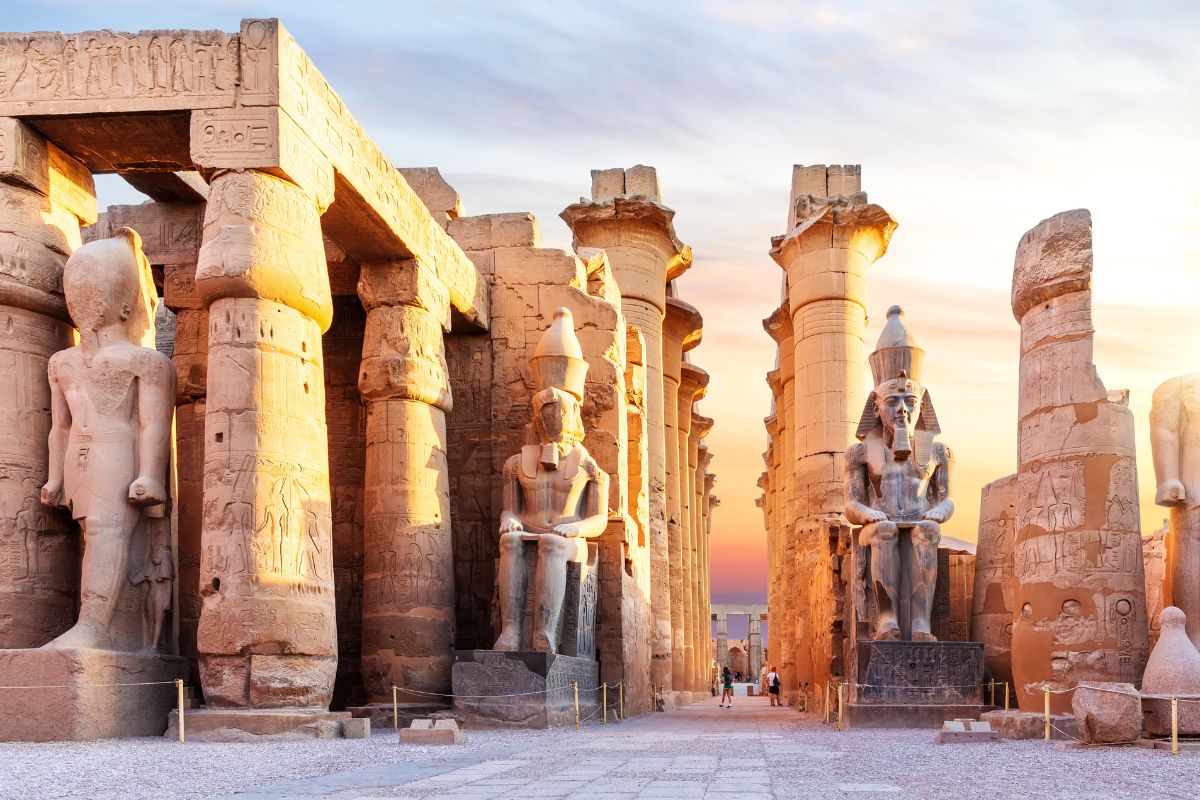

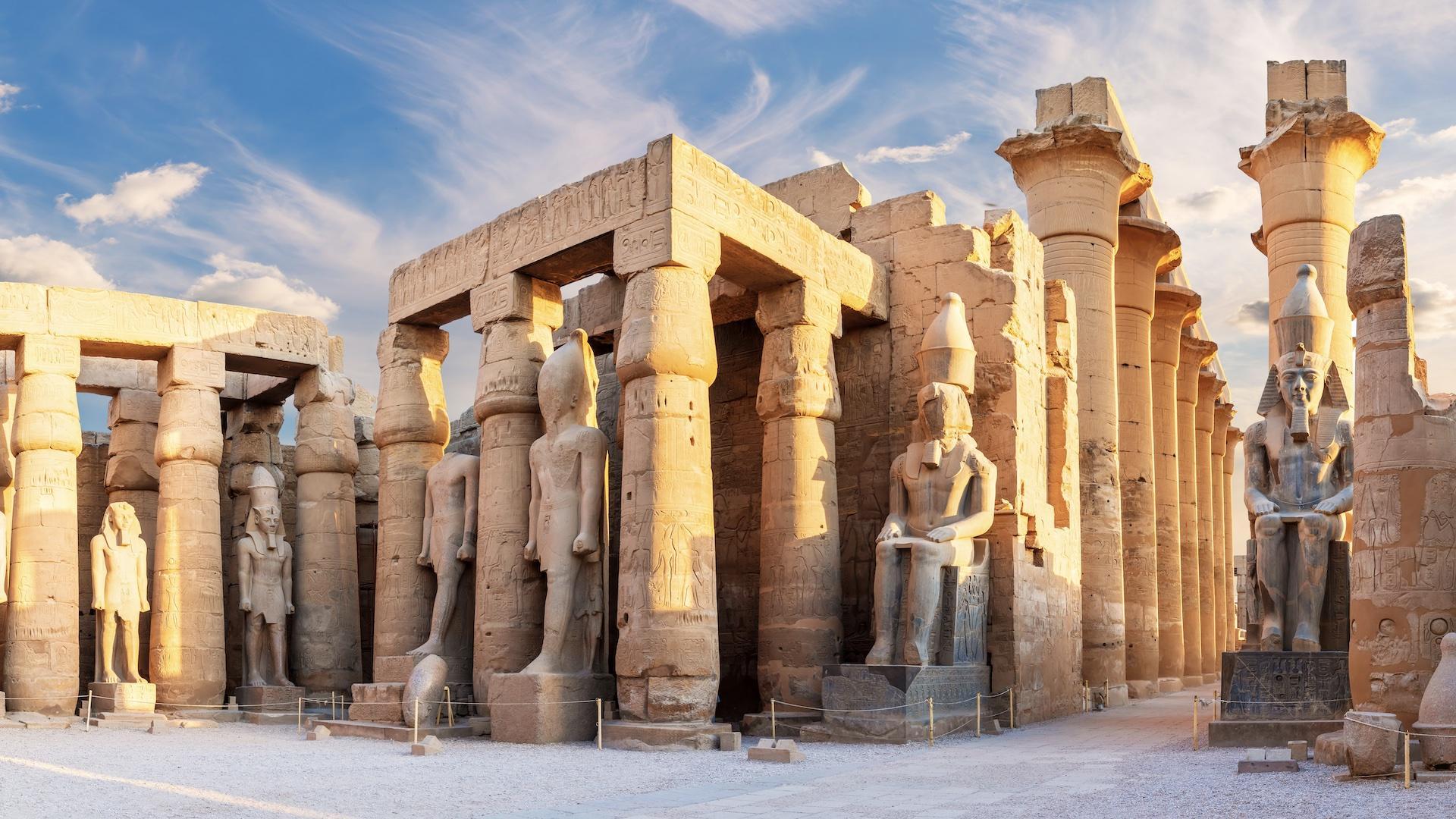
The Luxor Temple — the one that’s still in the middle of town.
Start here
Most Egyptian temples sit out in the desert. This one has traffic outside it.
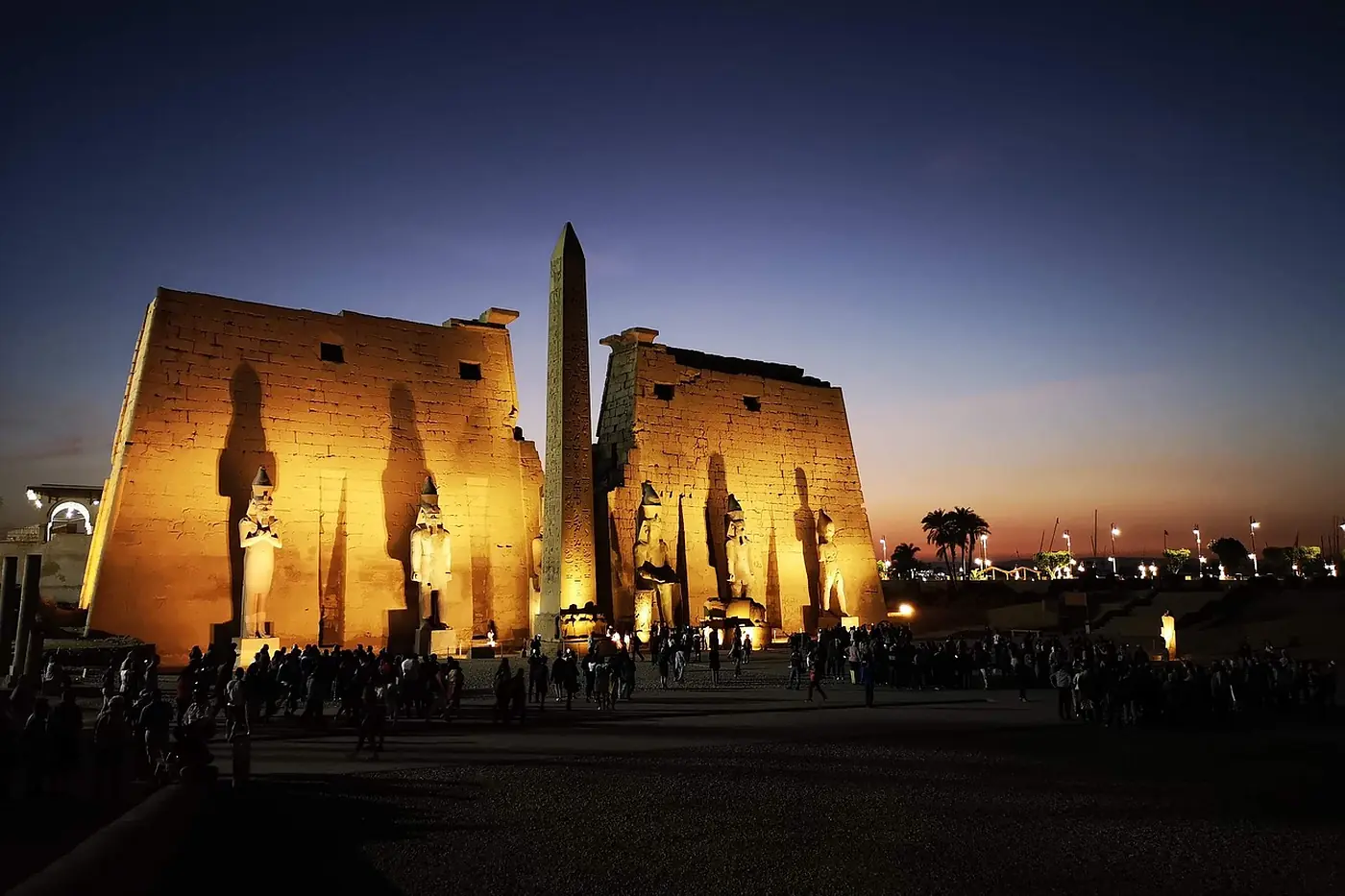
You don’t drive out to Luxor Temple. You walk to it — past a café, a taxi rank, someone selling scarves — and then the pylon simply appears at the end of the street, floodlit and enormous, like a building that forgot to leave.
That’s the thing nobody warns you about. The Pyramids stand apart on a plateau. The Valley of the Kings is a locked desert canyon. Luxor Temple stayed exactly where it was built, and the town of Luxor grew up around it instead of moving out of the way. The result is one of the few ancient Egyptian monuments you can visit twice in a day without it feeling like a trip.
We’re based in Luxor. Our guides walk past this temple on their way to work. So when travellers ask us whether it’s worth a stop — usually with one eye on a tight itinerary and Karnak already booked — the honest answer is that Luxor Temple isn’t competing with anything on your list. It’s the site you slot into the gap.
Karnak is where the priests worked. Luxor Temple is where the city lived. You feel the difference within about ninety seconds of walking in.
This guide covers what the temple actually is, who built it, what you’ll walk through in what order, how long to allow, when to go, and how it fits into a wider Egypt route — whether you’re on a Nile cruise, flying in from Cairo, or docking at a Red Sea port with one day to spend.
The short version
Luxor Temple, in the fewest possible words.
If you only read one part of this page, read this table. Everything below it is detail.
| Question | Answer |
|---|---|
| What is it? | A temple complex in ancient Thebes dedicated to the Theban triad — Amun, Mut and Khonsu — and to the renewal of kingship itself, rather than to a buried pharaoh |
| Where is it? | The east bank of the Nile, inside the modern city of Luxor, Egypt — a short walk from the Corniche and roughly three kilometres south of Karnak |
| Who built it? | Principally Amenhotep III, with a major extension by Ramses II; later additions by Tutankhamun, Alexander the Great and the Romans |
| How old? | Construction began in the 14th century BC — more than 3,000 years ago |
| Which bank? | East Bank, the “city of the living” side, together with Karnak, Luxor Museum and the Mummification Museum |
| UNESCO? | Part of the World Heritage listing that covers ancient Thebes and its necropolis |
| How long to allow | 60–90 minutes for a proper guided visit; 2 hours if you’re photographing it seriously |
| Best paired with | Karnak on the same morning, or on its own in the evening once the floodlights come on |
One more piece of orientation, because it explains almost everything else about the site: Luxor Temple was never a tomb. It wasn’t built to house a dead king. It was built for a festival — an annual procession called Opet, when the sacred images of Amun, Mut and Khonsu travelled south from Karnak along an avenue of sphinxes, spent time inside this temple, and travelled back. The pharaoh’s divine right to rule was renewed here, in public, in front of the city.
That’s why the building points north towards Karnak instead of towards the river. It’s why there’s a processional colonnade running straight through its heart. And it’s why so much of the decoration is about legitimacy — including a whole room dedicated to arguing that Amenhotep III was fathered by a god.
Luxor Temple history
Nobody ever really finished this building.
Most ancient sites have a builder. Luxor Temple has a queue of them — each one convinced the last one hadn’t gone far enough.
Amenhotep III laid down the core in the 14th century BC: the inner sanctuaries, the elegant Sun Court, and the vast processional colonnade that still forms the spine of the site. His reign was the wealthy, confident stretch of the 18th Dynasty, and the architecture shows it. The proportions here are noticeably lighter than Karnak’s — less brute force, more poise.
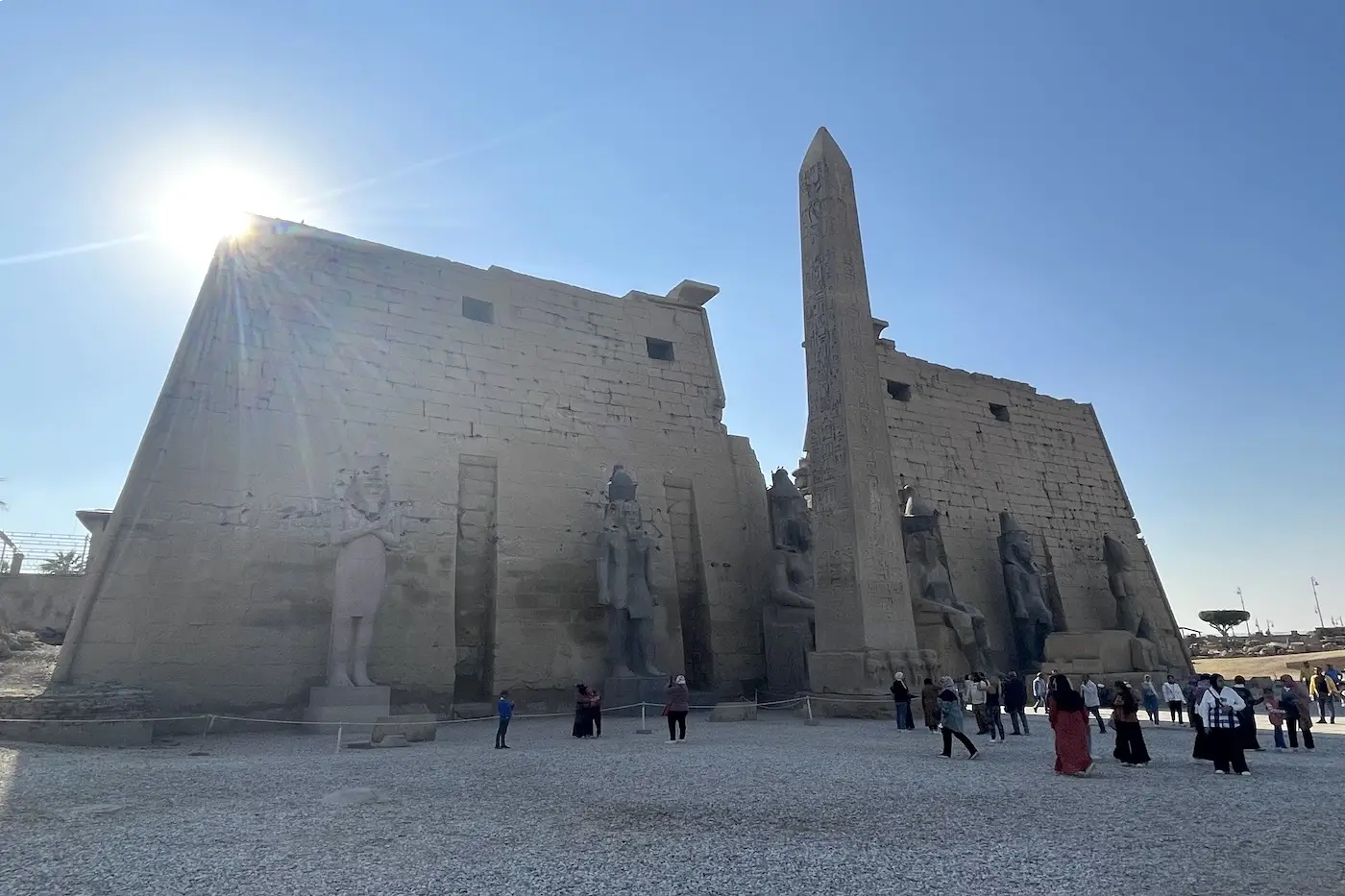
Then Ramses II arrived a century or so later and did what Ramses II did everywhere: he built outwards, added a huge new courtyard at the front, put up a monumental pylon, and filled the space with colossal seated statues of himself. He also raised two granite obelisks at the entrance. One is still standing. The other left for Paris in the 1830s and now stands in the Place de la Concorde — which makes Luxor Temple one of the few monuments where the missing half has a postcode.
Later hands kept going. Tutankhamun and Horemheb completed decoration in the colonnade. Alexander the Great rebuilt a granite shrine deep inside the sanctuary and had himself carved in full pharaonic dress, making offerings to Amun — a Macedonian king borrowing three thousand years of local authority in a single room. The Romans later used part of the complex as a legionary camp and painted a chapel over the pharaonic reliefs; traces of that Roman plaster are still visible.
And then the layer that surprises people most.
The mosque that sits on top of the temple
Above the Court of Ramses II stands the Abu Haggag Mosque, still in use today. It’s built high on the courtyard wall — not because anyone wanted a view, but because for centuries the temple was buried under accumulated debris and the mosque was constructed at what was then ground level. When archaeologists excavated the courtyard back down to the ancient paving, the mosque stayed put, its doorway now hanging several metres up in the air. It is the clearest picture anywhere in Egypt of what “continuously occupied for 3,400 years” actually looks like.
That layering is the honest reason to visit. You are not looking at one civilisation. You are looking at pharaonic Egypt, Ptolemaic Greece, Rome, early Christianity and living Islam stacked in the same few hundred square metres — and, unusually, none of it was cleared away to make the story tidier.
| Builder | What they added | What you can still see |
|---|---|---|
| Amenhotep III | The original temple — sanctuaries, Sun Court, processional colonnade | The Sun Court’s double rows of columns; the colonnade’s fourteen giant papyrus columns |
| Tutankhamun & Horemheb | Decoration of the colonnade walls | Relief scenes of the Opet Festival procession |
| Ramses II | Forecourt, pylon, colossal statues, two obelisks | The pylon and seated colossi at the entrance; one standing obelisk |
| Alexander the Great | A rebuilt granite barque shrine in the sanctuary | Alexander shown as an Egyptian pharaoh before Amun |
| Rome | A military camp and a painted chapel over earlier reliefs | Faded Roman plaster and painted figures near the sanctuary |
| Medieval Luxor | The Abu Haggag Mosque, built on the buried courtyard | A working mosque suspended above the ancient floor level |
Inside the temple
What you actually walk through, in order.
Luxor Temple is refreshingly linear. You enter at one end and walk straight through roughly 3,400 years of construction in about twenty minutes of actual walking. Here’s the sequence, so you know what you’re looking at before your guide tells you.
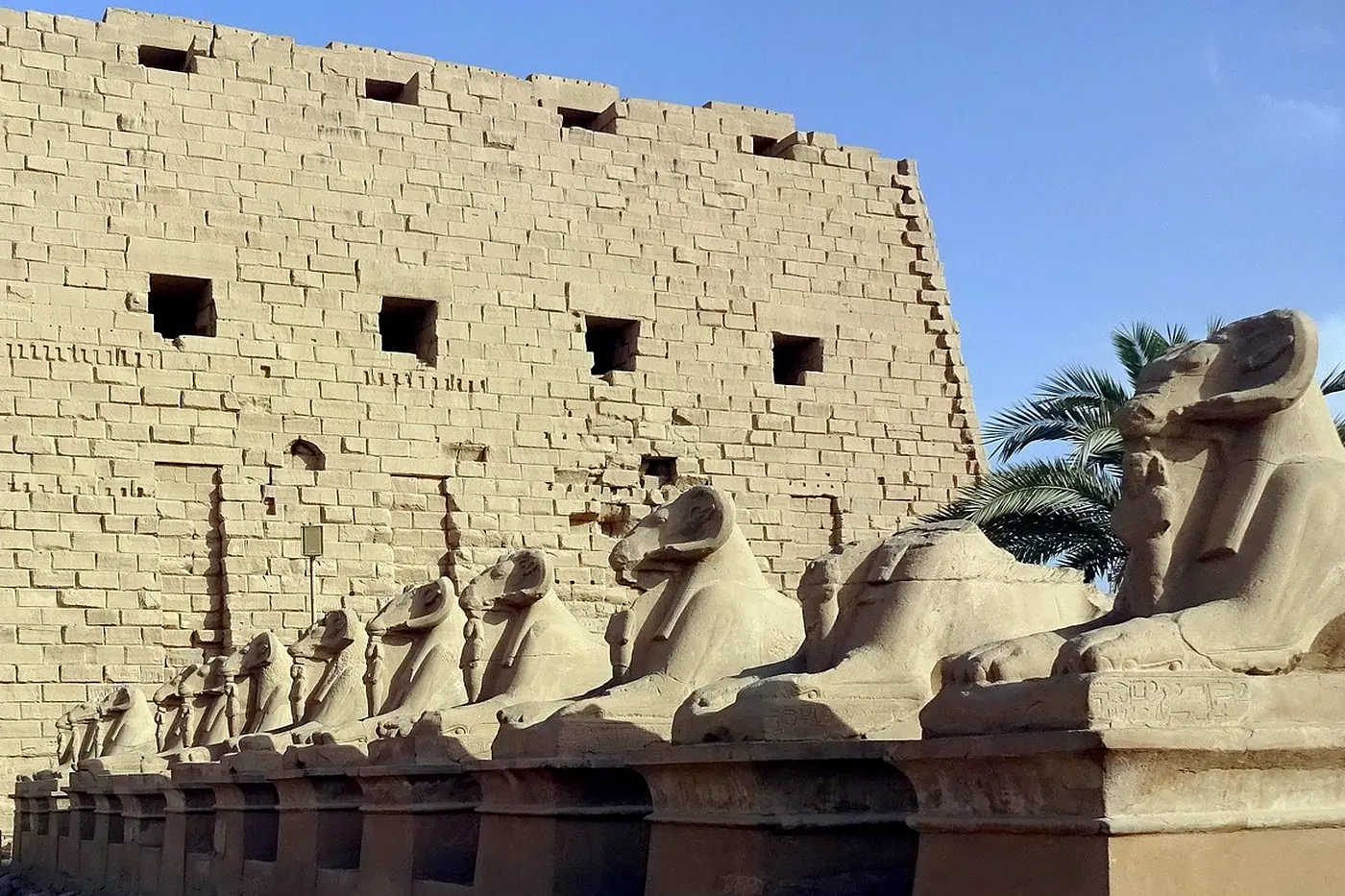
The Avenue of Sphinxes
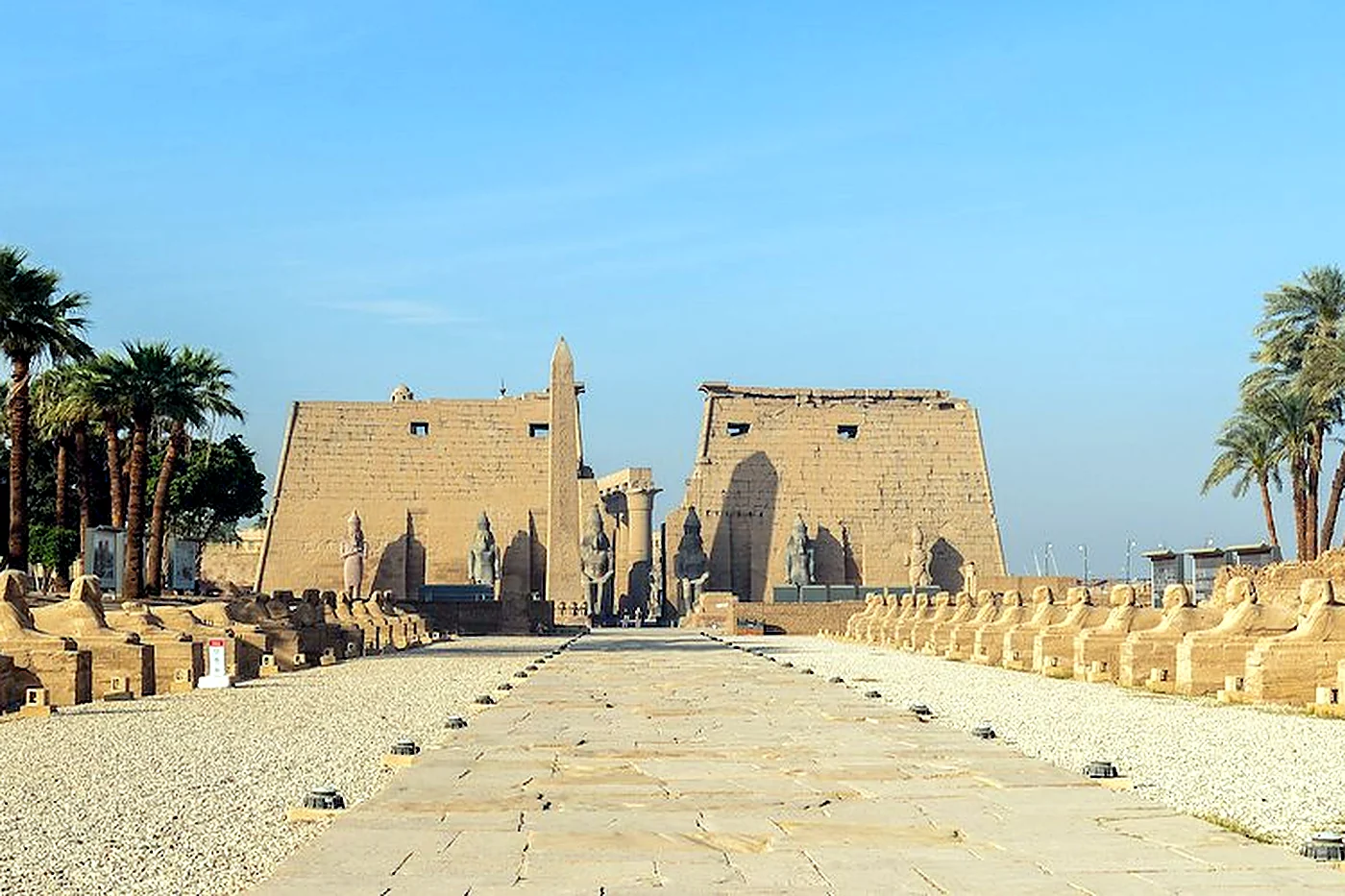
The processional road that once linked Luxor Temple to Karnak, lined with sphinx statues on both sides. Long stretches of it have been excavated and reopened, and you can now stand at the temple entrance and look straight up the ancient route towards Karnak. Start here rather than at the ticket gate — it costs you nothing and it reframes everything you see afterwards.
The pylon, the colossi and the obelisk
Ramses II’s monumental gateway, with seated statues of the king flanking the entrance and one pink granite obelisk still standing beside it. The pylon walls carry battle reliefs. This is the single most photographed spot on the site, and it is dramatically better after dark.
The Court of Ramses II
A broad open courtyard ringed with columns and standing statues — and the point where you look up and find the Abu Haggag Mosque built into the wall above you. Give this court more time than it seems to deserve. It’s where the temple’s whole layered history is visible in one frame.
The Colonnade of Amenhotep III
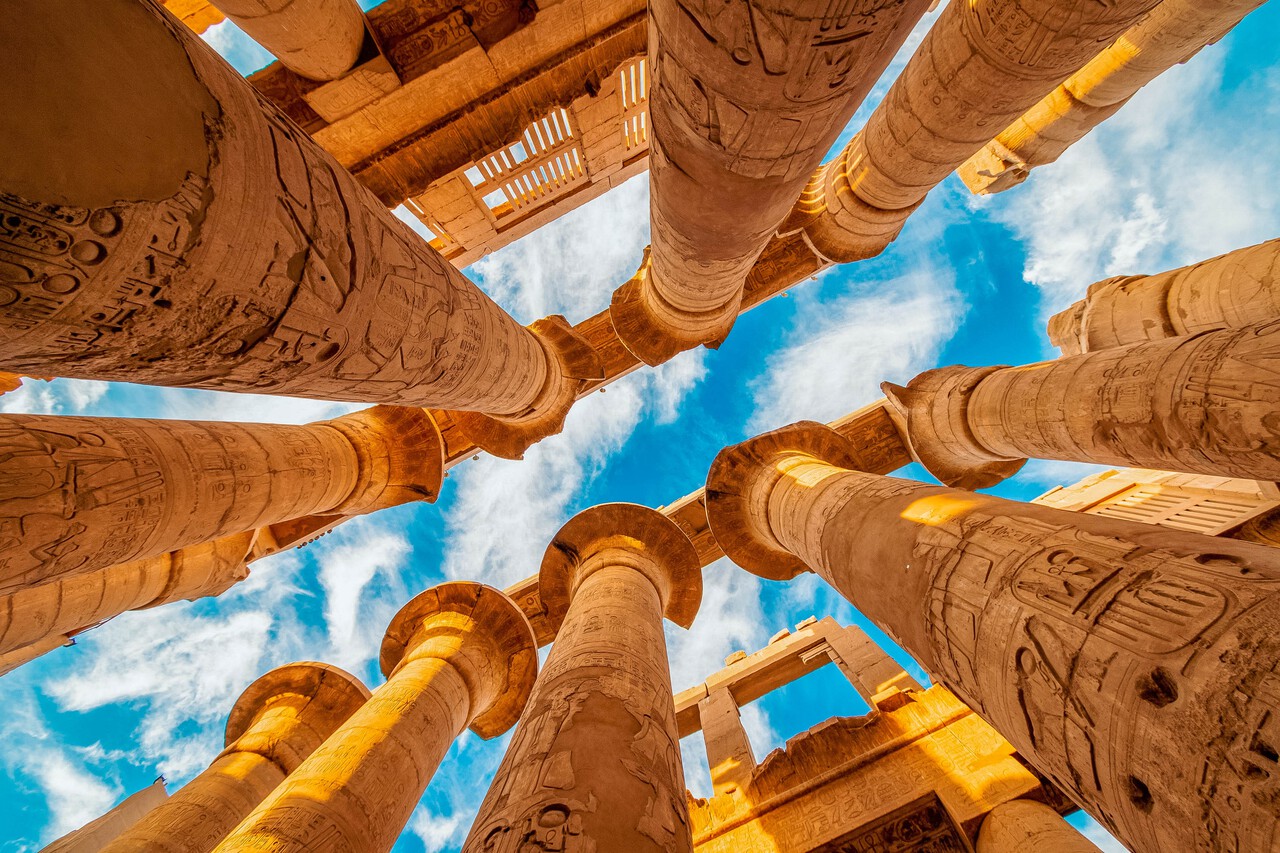
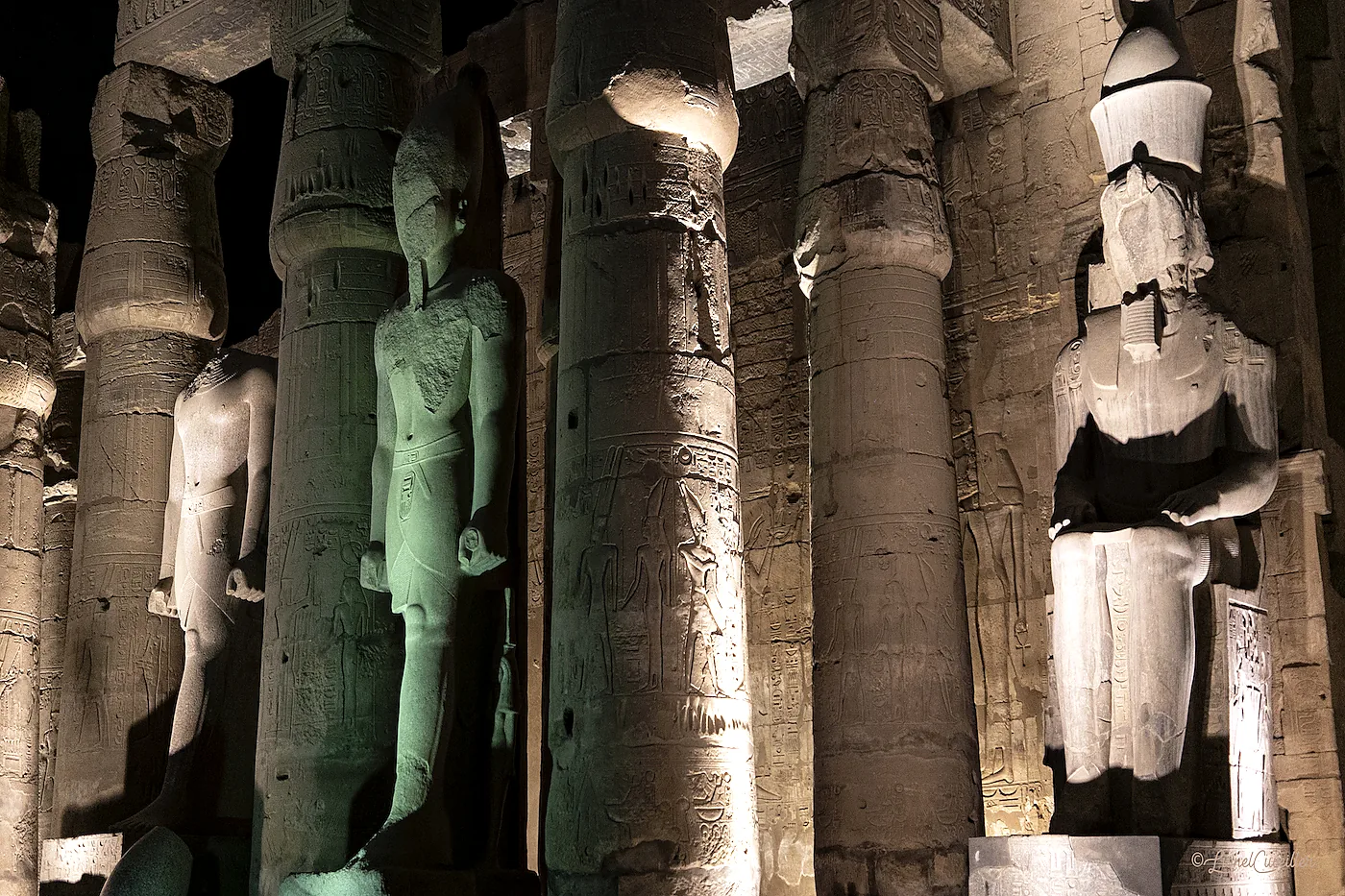
Fourteen enormous columns with open papyrus capitals, forming a corridor of stone that funnels you deeper into the temple. The walls on either side carry the Opet Festival reliefs — boats, crowds, musicians, offerings — essentially an ancient documentary about the ceremony this building existed to host.
The Sun Court
Amenhotep III’s courtyard, open to the sky and enclosed by double rows of columns on three sides. The light in here at the end of the day is the reason photographers plan their whole Luxor schedule around this temple. A cache of superb statues was found buried beneath this court; several are now displayed in the Luxor Museum a short drive away.
The Birth Room and the sanctuaries
Past the hypostyle hall you reach the inner chambers, where the light drops and the ceilings close in. One room carries the “divine birth” reliefs claiming Amenhotep III’s conception by the god Amun. Beyond it sits the barque sanctuary rebuilt by Alexander the Great — and, off to one side, the Roman painted chapel. The last twenty metres of this temple contain its three most interesting arguments about who had the right to rule.
Luxor Temple vs everything else
“If I can only do one, which one?”
We get this question weekly, usually from travellers with two days in Luxor and a list built for five. Here’s how we answer it.
Luxor Temple vs Karnak Temple
They were built as two halves of one ceremony, three kilometres apart, so treating them as rivals is slightly missing the point. But they do feel completely different, and if your schedule forces a choice, the difference matters.
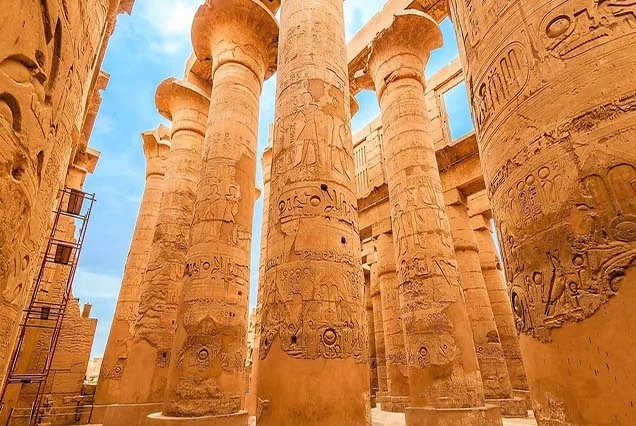
Karnak overwhelms you. It is the largest religious complex of the ancient world, added to by around thirty rulers across roughly 2,000 years, and its Great Hypostyle Hall contains 134 columns — the tallest of them about 21 metres high. You leave impressed and slightly exhausted.
Luxor Temple contains you. It’s a fraction of the size, it reads as a single coherent building, and you can take it in without a map. It also has the one thing Karnak doesn’t: convenience. It’s in town, it stays open into the evening, and you can visit it on foot after dinner.
Our actual recommendation, if you have a full day, is neither — it’s both, in the right order. Karnak in the morning while you have energy for scale, then Luxor Temple later in the day when the light softens and the crowds thin. That’s exactly how our Karnak and Luxor Temples Tour is sequenced, and there’s no clever trick to it — it’s just the order that works.
| Luxor Temple | Karnak Temple | Valley of the Kings | |
|---|---|---|---|
| Bank of the Nile | East | East | West |
| Built for | The Opet Festival and royal renewal | The state cult of Amun | Royal burial |
| Time needed | 60–90 minutes | 2–3 hours | 2–3 hours |
| Walking | Light, flat, compact | Long distances, open ground | Sloped tomb ramps, desert heat |
| Open in the evening | Yes — and floodlit | Evening sound and light show | No |
| Best for | A first taste, or a second visit at night | Sheer scale and architecture | Painted tombs and colour |
| Skip it if… | You genuinely have only three hours in Luxor | Big sites tire you out quickly | Enclosed spaces or heat are a problem |
Luxor Temple vs the Valley of the Kings
This isn’t really a comparison — it’s a scheduling question. The two sit on opposite banks and serve opposite purposes. The Valley of the Kings is where New Kingdom pharaohs were buried, cut deep into limestone and painted floor to ceiling; Luxor Temple is where the living city renewed its king in public.
Practically, they belong in the same day but at different ends of it. West Bank tombs first, while it’s cool and before the coach groups land. East Bank temples afterwards. Our full-day Luxor tour across both banks is built in precisely that order, finishing at Luxor Temple — which is not a coincidence, because it’s the site that improves most as the day gets later.
If you want to go deeper on the West Bank than one day allows, our guide to a full day on the Luxor West Bank covers what that looks like, and the unhurried version of a Luxor day tour is worth reading if you’d rather see less and enjoy it more.
The one piece of timing advice we repeat most
Visit Luxor Temple twice. Once with a guide, in daylight, so you understand the reliefs and the layout. Then again after dark, alone, with no agenda — it’s a ten-minute walk from most East Bank hotels and the floodlighting turns the colonnade into something entirely different. Costs you almost nothing in time. It’s the visit people describe when they get home.
Same stones, same route, four hours apart. Travellers who do both consistently tell us the second visit was the one they’d repeat.
Private tours including Luxor Temple
Six ways to actually get there.
Every programme below is private, runs for your party only, and includes Luxor Temple or the East Bank temple route. They’re ordered by how directly they answer the question that brought you to this page.
 Approx. 4 hours
The direct answer · Luxor East Bank
Karnak and Luxor Temples Tour
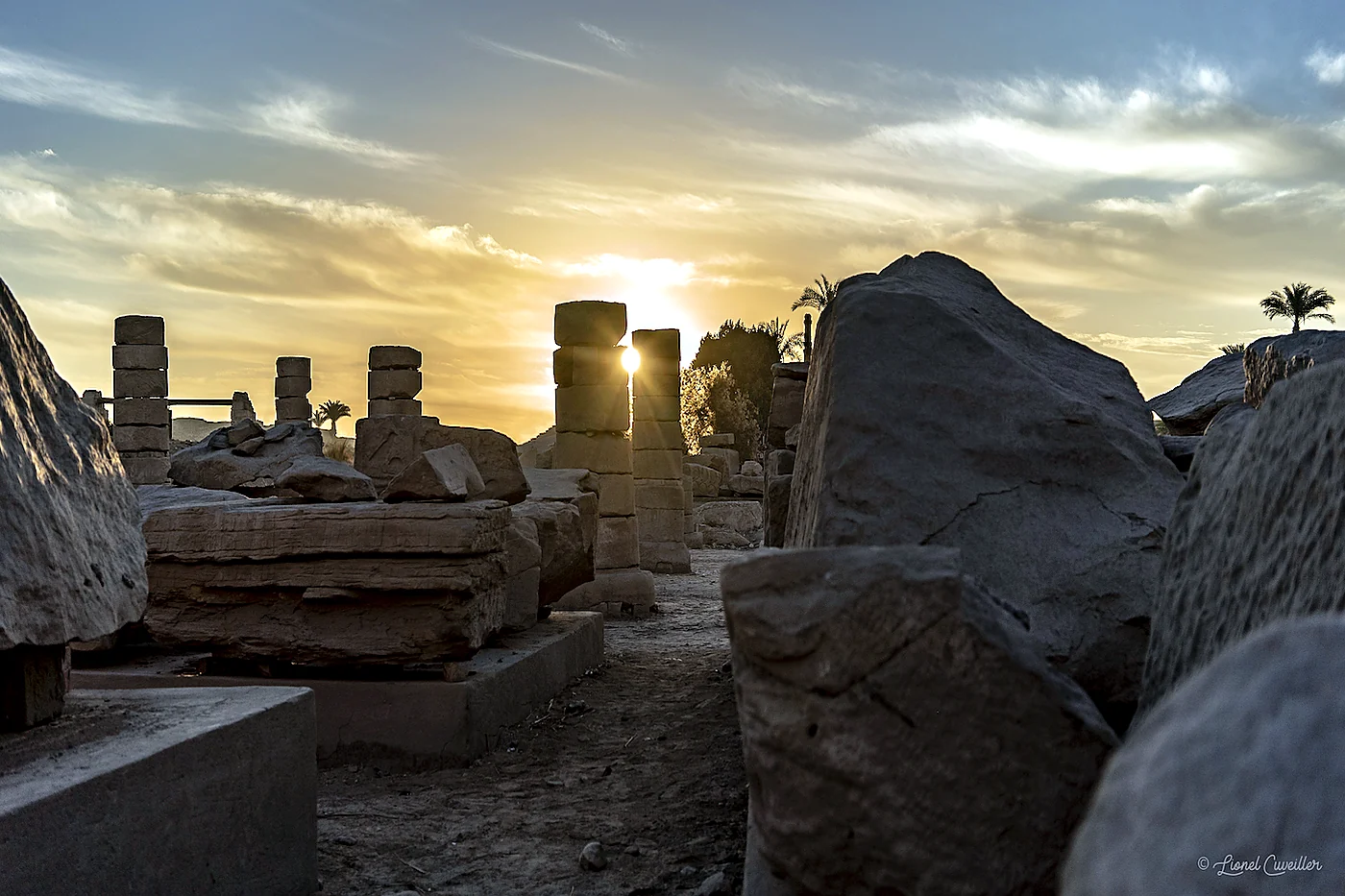
The half-day that exists for exactly this question. Karnak’s Great Hypostyle Hall, obelisks and Sacred Lake first, then Luxor Temple’s courts, colonnades and the colossal statues of Ramses II. Entrance fees to both temples are included, along with a qualified Egyptologist guide and private air-conditioned transfers.
 Approx. 8 hours
Both banks in one day
Full-Day Luxor Tour: East and West Banks
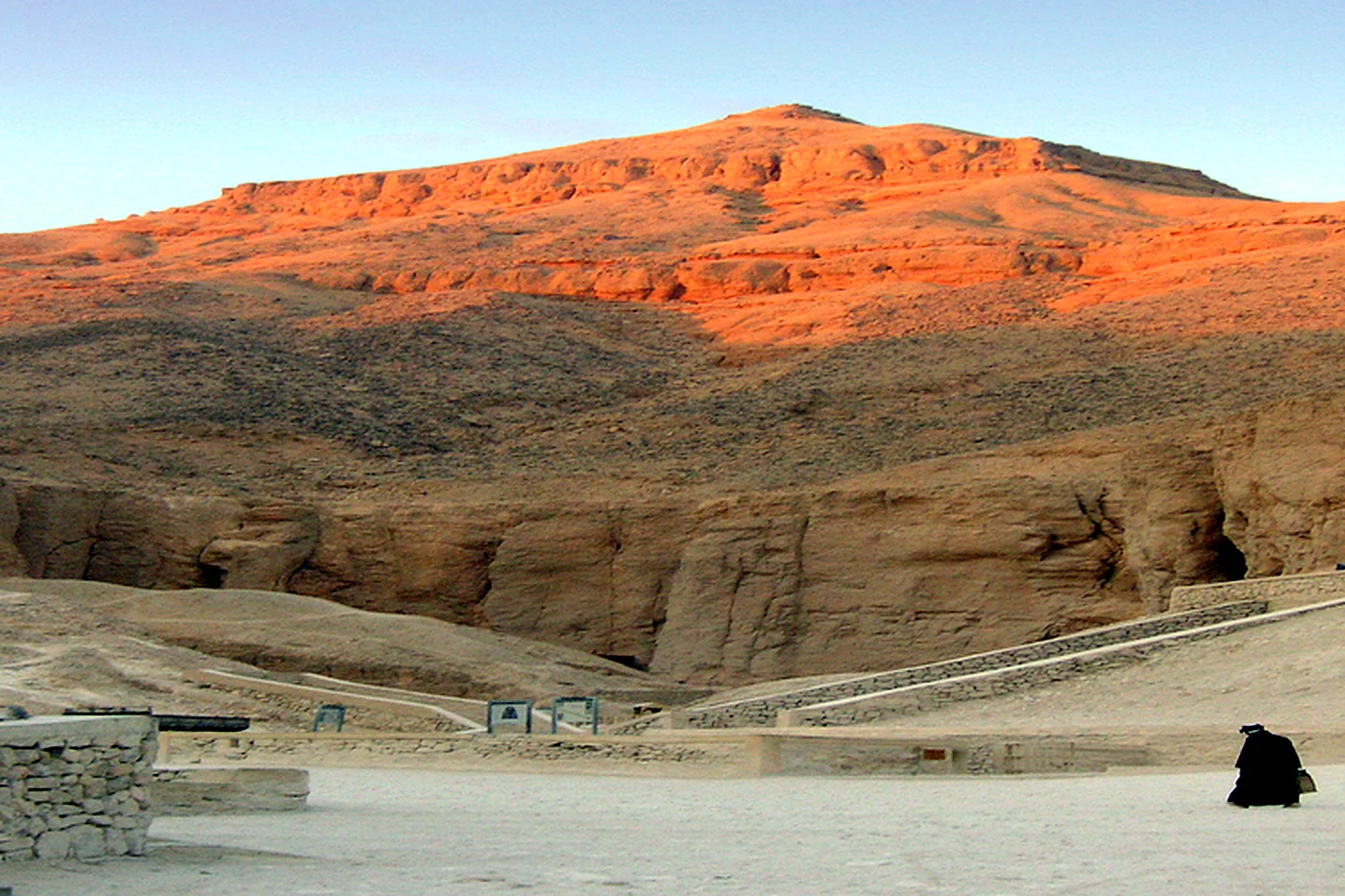
Valley of the Kings, Hatshepsut’s terraced temple and the Colossi of Memnon in the morning; lunch; then Karnak and Luxor Temple as the light softens. Lunch, entrance fees to the listed sites and a private Egyptologist are included — special-entry tombs are not.
 Approx. 2 hours
After dark · Evening
Karnak Temple Sound and Light Show
If the floodlit version of ancient Thebes is what pulled you here, this is the evening counterpart to a daytime temple visit: a walk through illuminated pylons and the Great Hypostyle Hall, ending seated beside the Sacred Lake. Admission and transfers are included; a guided temple tour is separate.
 Approx. 2 hours
The temple from the street
Luxor City Tour by Horse-Drawn Carriage
The one that shows you why this temple feels different from every other site in Egypt. You pass sections of the Avenue of Sphinxes, Luxor Temple and the Winter Palace exterior — plus the produce market and the Corniche — without buying a single entrance ticket. A café stop is included.
 Full day by flight
Based in Cairo · Cairo → Luxor
Day Trip from Cairo to Luxor by Flight
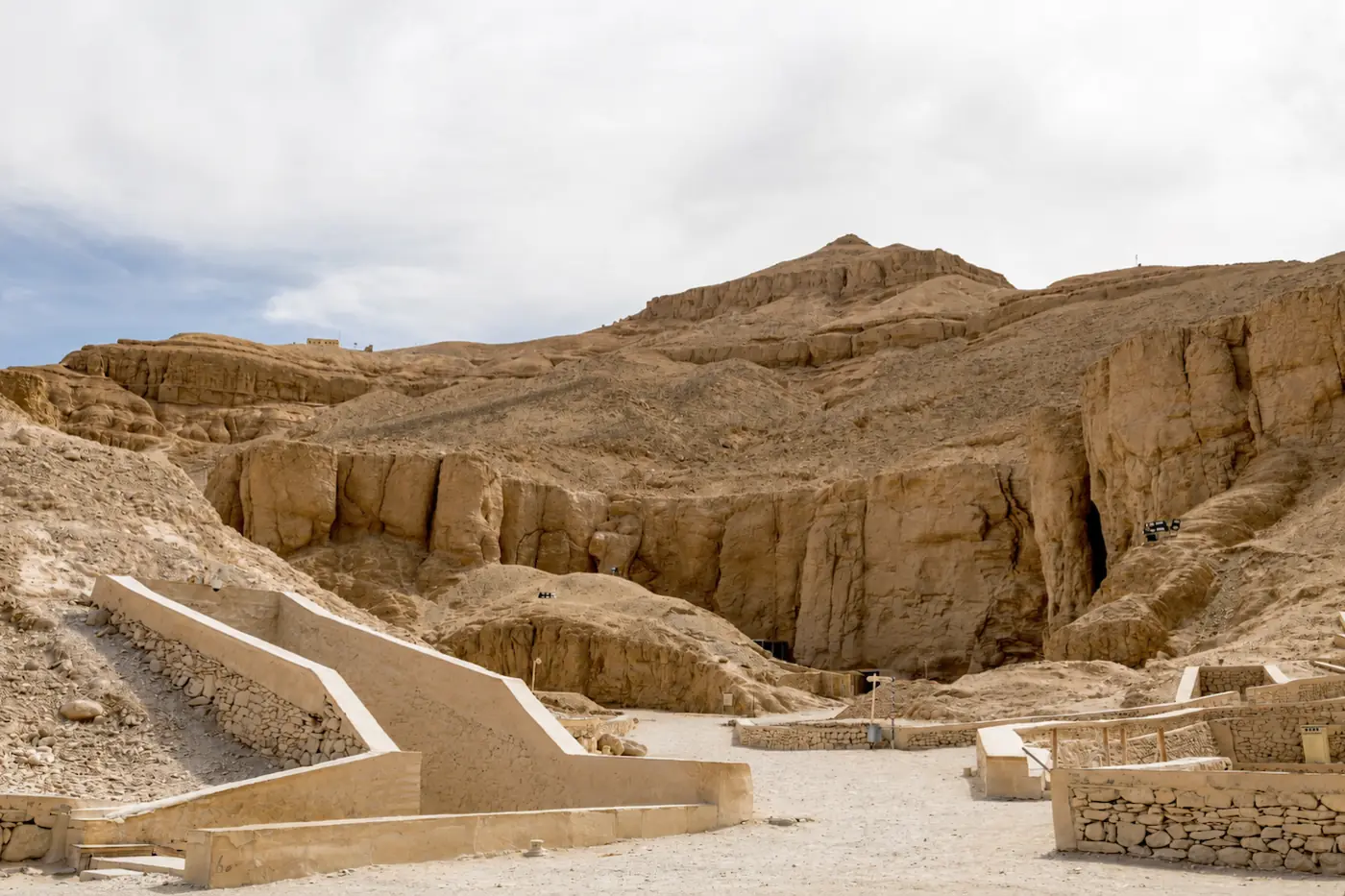
Around an hour in the air each way, and Luxor stops being a multi-day commitment. Valley of the Kings and Hatshepsut in the morning, then Karnak and Luxor Temple after lunch, with return flights, transfers, standard entrance fees, lunch and an Egyptologist guide included.
 Private day tour
Cruise passengers · Safaga Port
Safaga to Luxor Day Trip
Door-to-door from the Safaga Port cruise exit, timed backwards from your ship’s all-aboard. Valley of the Kings, Hatshepsut, the Colossi and Karnak — and because the tour is private, you can swap Karnak for Luxor Temple when you enquire. Lunch and standard tickets included.
Travelling by river instead? Luxor Temple sits within walking distance of the cruise moorings, which is why it lands on almost every sailing — including the 4-night Nile cruise from Luxor to Aswan and the 3-night cruise from Aswan to Luxor. Browse everything we run in the region on our Luxor destination page.
Before you go
Practical things worth knowing.
Tickets, timings, cameras and heat. The unglamorous half of a good visit.
Tickets and opening hours
Entrance fees and opening hours for Luxor Temple are set by Egypt’s Ministry of Tourism and Antiquities, and they’re reviewed periodically — including seasonal changes to closing time. We deliberately don’t publish a figure here, because a number that’s wrong is worse than no number at all.
What we can tell you plainly: on our Karnak and Luxor Temples Tour, entrance fees to both temples are included in the package, along with your guide, transfers and bottled water. On the full-day East and West Banks tour, entrance fees to the listed sites are included. Ask us at enquiry and we’ll confirm the current position for your travel dates in writing.
When to visit — the honest answer
Luxor gets seriously hot from roughly May to September. That doesn’t rule the temple out; it just changes the hour. The site is compact and largely flat, so a summer visit works if you take it late in the day rather than at noon.
October to April is the comfortable window, and it’s also the busiest. Within any given day, the best two slots are early morning and — for this temple specifically — the hour after the floodlights come on.
Photography, tripods and drones
Standard hand-held photography is generally fine at Luxor Temple, and the site rewards it: the colonnade at low sun, and the pylon lit at night, are the two shots people come away with. Rules on tripods, professional equipment and any commercial shoot are set by the site authorities and can change, so check on the day or flag it to us in advance. Drones are not something you can simply fly at Egyptian archaeological sites — they require official permits arranged well ahead of time.
| Kind of visit | Time to allow |
|---|---|
| A quick walk-through | 45 minutes |
| Guided visit with context | 60–90 minutes |
| Photography-led visit | Around 2 hours |
| Karnak and Luxor Temple together | Approximately 4 hours |
| Evening return visit | 30–45 minutes |
Travelling with children, or with mobility in mind
Of the major Luxor sites, this is the easiest one. The ground is mostly flat, the route is short and linear, there are no tomb ramps or long desert walks, and you can leave whenever you’ve had enough. Families who find the Valley of the Kings hard work usually find Luxor Temple the opposite. Mention any mobility needs in your enquiry and we’ll build the day around them rather than improvising on the morning.
Five minutes away: Luxor Museum
Several of the finest statues ever recovered from Luxor Temple — found buried beneath the Sun Court — are displayed a short drive along the Corniche. If you liked the temple, our Luxor Museum and Mummification Museum tour is the natural follow-on, and it’s a good use of the hot hours.
Before you enquire
Luxor Temple: your questions, answered.
What is the Luxor Temple?
Luxor Temple is an ancient Egyptian temple complex on the east bank of the Nile, built in what was then Thebes. Unlike the royal tombs across the river, it wasn’t a burial place. It was dedicated to the Theban triad of Amun, Mut and Khonsu, and it existed to host the annual Opet Festival, during which the sacred images travelled from Karnak and the pharaoh’s right to rule was ceremonially renewed.
Where is the Luxor Temple located?
In the centre of the modern city of Luxor, on the east bank of the Nile in Upper Egypt, close to the Corniche and within walking distance of most East Bank hotels and the Nile cruise moorings. Karnak Temple lies roughly three kilometres to the north, connected to it by the Avenue of Sphinxes.
Who built the Luxor Temple?
Principally Amenhotep III, who built the sanctuaries, the Sun Court and the great processional colonnade. Ramses II later added the forecourt, the monumental pylon, the colossal statues and two obelisks. Tutankhamun and Horemheb completed decoration in the colonnade, Alexander the Great rebuilt a granite shrine in the sanctuary, and the Romans added a painted chapel. The Abu Haggag Mosque, still in use, was built centuries later on top of the then-buried courtyard.
When was the Luxor Temple constructed?
Construction began in the 14th century BC under Amenhotep III, making the core of the temple more than 3,000 years old. Major additions continued for well over a thousand years afterwards, which is why the site reads as layers rather than as a single moment in time.
What is the entrance fee for Luxor Temple?
Entrance fees are set by Egypt’s Ministry of Tourism and Antiquities and are reviewed periodically, so we don’t publish a figure that could be out of date by the time you travel. On our Karnak and Luxor Temples Tour, entrance fees to both temples are included in the package. Send us your travel dates and we’ll confirm the current position in writing before you commit to anything.
What are the opening hours of Luxor Temple?
Opening hours are set by the site authorities and change with the season, particularly the closing time. Because we’re based in Luxor, we check the current hours when we build your day rather than working from a published estimate. Tell us your dates in your enquiry and we’ll confirm them.
Is Luxor Temple open at night?
It is one of the very few major sites in Egypt that stays open after dark, and it’s floodlit in the evening — which is why so many travellers rate the night visit above the daytime one. Exact closing times vary by season, so confirm them for your dates. If you specifically want ancient Thebes after dark with a full programme around it, the Karnak Temple Sound and Light Show is the other evening option.
Can you take photos inside Luxor Temple?
Standard hand-held photography is generally permitted, and the site is one of the most photogenic in Egypt — particularly the colonnade in low sun and the pylon under floodlights. Rules on tripods, professional gear and commercial shoots are set by the site authorities and can change, so check on the day. Drones require official permits and cannot simply be flown at Egyptian archaeological sites.
How long does a visit to Luxor Temple take?
Allow 60 to 90 minutes for a guided visit with proper context. A brisk walk-through takes around 45 minutes, and a photography-led visit is closer to two hours. Combined with Karnak in a single half-day programme, the total is approximately four hours including transfers.
Is Luxor Temple worth visiting compared to Karnak Temple?
Yes, and ideally not instead of it. Karnak wins on sheer scale — it’s the largest religious complex of the ancient world, with a hypostyle hall of 134 columns. Luxor Temple wins on coherence and convenience: it’s compact enough to understand in one visit, it’s in the middle of town, and it’s open in the evening. If your schedule allows only one, take Karnak for the spectacle and Luxor Temple for the atmosphere. If it allows both, do Karnak first and finish at Luxor Temple as the light drops.
What is the Avenue of Sphinxes?
The ancient processional road linking Luxor Temple to Karnak, lined on both sides with sphinx statues. It carried the Opet Festival procession between the two temples. Substantial stretches have been excavated and reopened, and you can stand at the temple entrance and look directly up the ancient route.
Why is there a mosque built into Luxor Temple?
The Abu Haggag Mosque was built when the courtyard below it was buried under centuries of accumulated debris — so it stood at ground level at the time. When archaeologists later excavated down to the ancient paving, the mosque remained in place, leaving its entrance suspended several metres above the temple floor. It is still an active place of worship.
Where is the second Luxor Temple obelisk?
Ramses II raised two granite obelisks at the entrance. One still stands beside the pylon. The other was transported to France in the 1830s and now stands in the Place de la Concorde in Paris.
Can I visit Luxor Temple from a Nile cruise?
Yes — it’s one of the easiest sites in Egypt to reach from a moored cruise ship, since the temple sits within walking distance of the East Bank moorings. It features on the standard Luxor sightseeing of both our 4-night Luxor to Aswan sailing and our 3-night Aswan to Luxor sailing, and we can confirm exactly how it sits in the programme for your sailing date.
Is Luxor Temple suitable for families and older travellers?
It’s the most accessible of Luxor’s major sites. The route is short, mostly flat and linear, with no tomb ramps or long desert walking, and a private visit means you can leave the moment anyone has had enough. Mention any mobility considerations in your enquiry so we can shape the pacing and timing around them.
Do I need a guide to visit Luxor Temple?
You can walk in without one, and plenty of people do. But this is a site where almost everything interesting is an argument carved into a wall — divine birth scenes, festival processions, Alexander presenting himself as a pharaoh — and none of it is self-explanatory. Our Luxor programmes include a qualified Egyptologist guide, which is the difference between seeing old stone and understanding what it was for.
Next step
Tell us your dates. We’ll build the day around the temple.
Fill in the enquiry form with your travel window, how long you have in Luxor, who’s coming, and which of the tours on this page caught your attention. We’ll come back with what’s available for your dates, what each programme includes and excludes, and our honest recommendation on timing — including whether to do Karnak and Luxor Temple together or split them across the day. No obligation, no pressure, and a written answer from a team that lives here.