
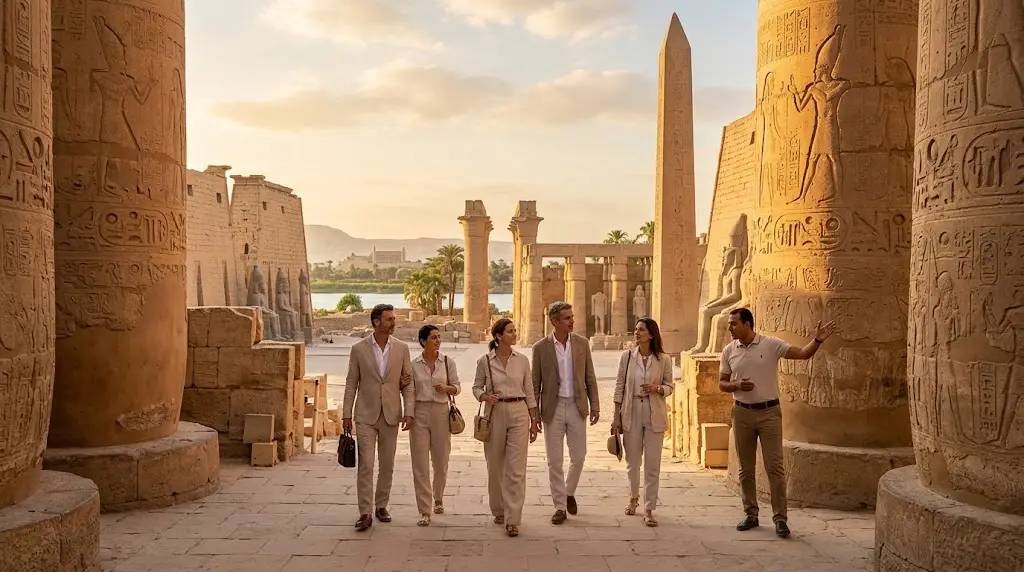
Most people arrive in Luxor with a list and leave with a regret.
The list is always the same — Valley of the Kings, Hatshepsut, Karnak, Luxor Temple — and the regret is almost always the same too: we saw it, but we didn’t really see it. Somewhere between the fourth coach park and the second hour of standing in a queue, the day stopped belonging to them.
That is the problem a Luxor day trip has to solve. Not what to see. Luxor decided that three thousand years ago. The question is what fits, in what order, with how much shade in the middle — and who is walking you through it.
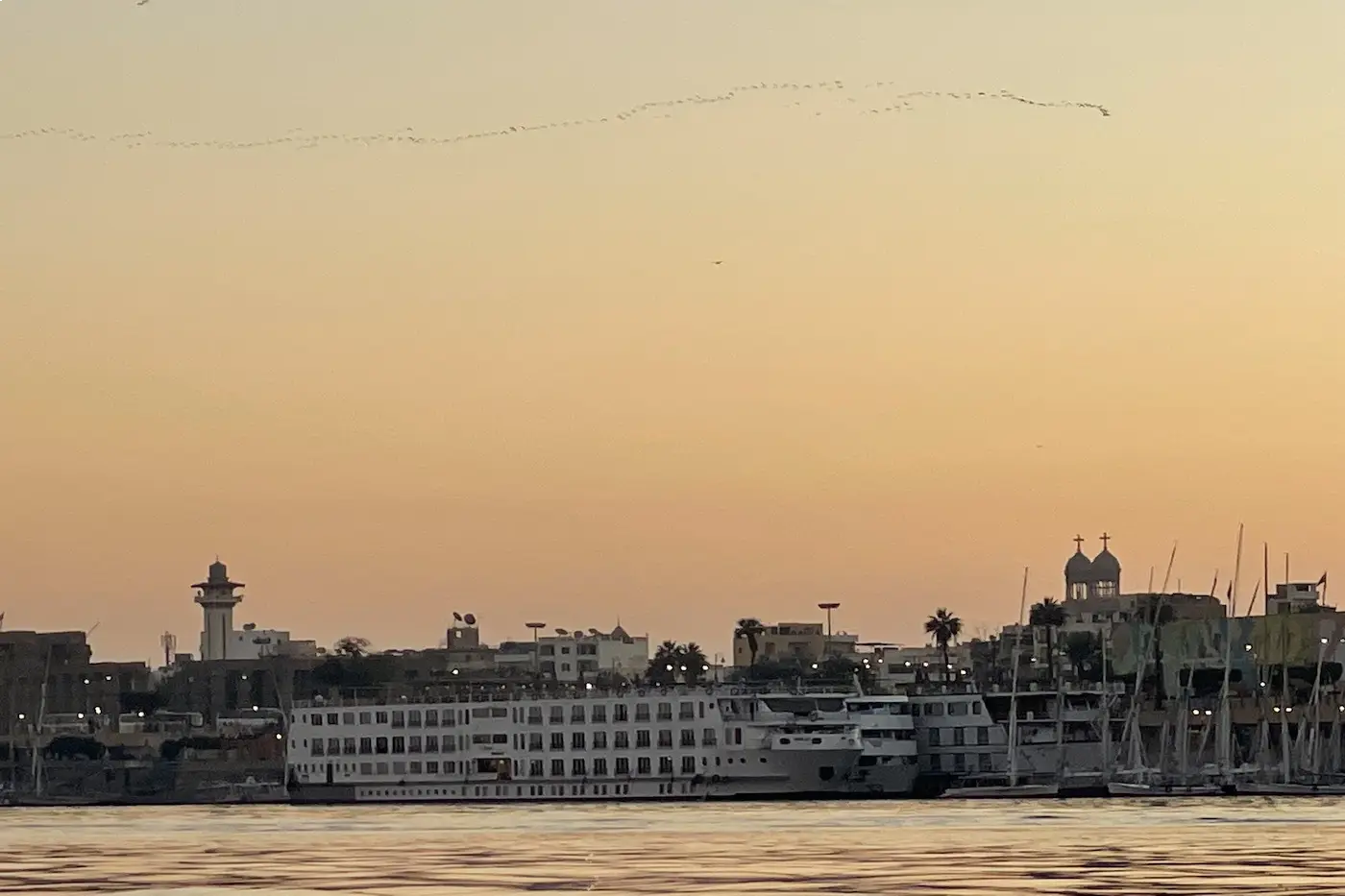
We are Egypt Luxury Trips. We are based in Luxor, and this page is about one specific programme we run: the Full-Day Luxor Tour: East and West Banks. It’s private, it runs approximately 8 hours, and it covers the monuments most travellers fly halfway around the world for. Below you’ll find exactly what it includes, exactly what it doesn’t, how the day is sequenced, and the honest answers to the questions we field every week.
No filler. Just the tour, and enough detail for you to decide whether it’s yours.
The Luxor Day Trip at a Glance
Before the detail, the shape of the day:
| Detail | What we confirm |
|---|---|
| Tour name | Full-Day Luxor Tour: East and West Banks |
| Duration | Approximately 8 hours |
| Format | Private tour — your party only |
| Starting point | Luxor (hotel or docked Nile cruise) |
| Area covered | Luxor and surrounding sites |
| Guide | Private English-speaking Egyptologist |
| Transport | Private air-conditioned vehicle |
| Meals | Lunch at a local restaurant, included |
| Price | On request, quoted per trip |
That last line is deliberate, and we’d rather explain it than bury it. We quote this Luxor day trip per trip because the number depends on your party size, your date and your pickup point. A figure printed on a page months before you travel is a figure that’s usually wrong by the time you read it. Tell us your details and you’ll get a real one.
What You’ll Actually Do: The Full Itinerary
Here’s how the eight hours unfold, stop by stop.
1. Pickup and the Colossi of Memnon
You’ll meet your private Egyptologist guide at your hotel or Nile cruise, and the day opens on the West Bank with a photo stop at the Colossi of Memnon.
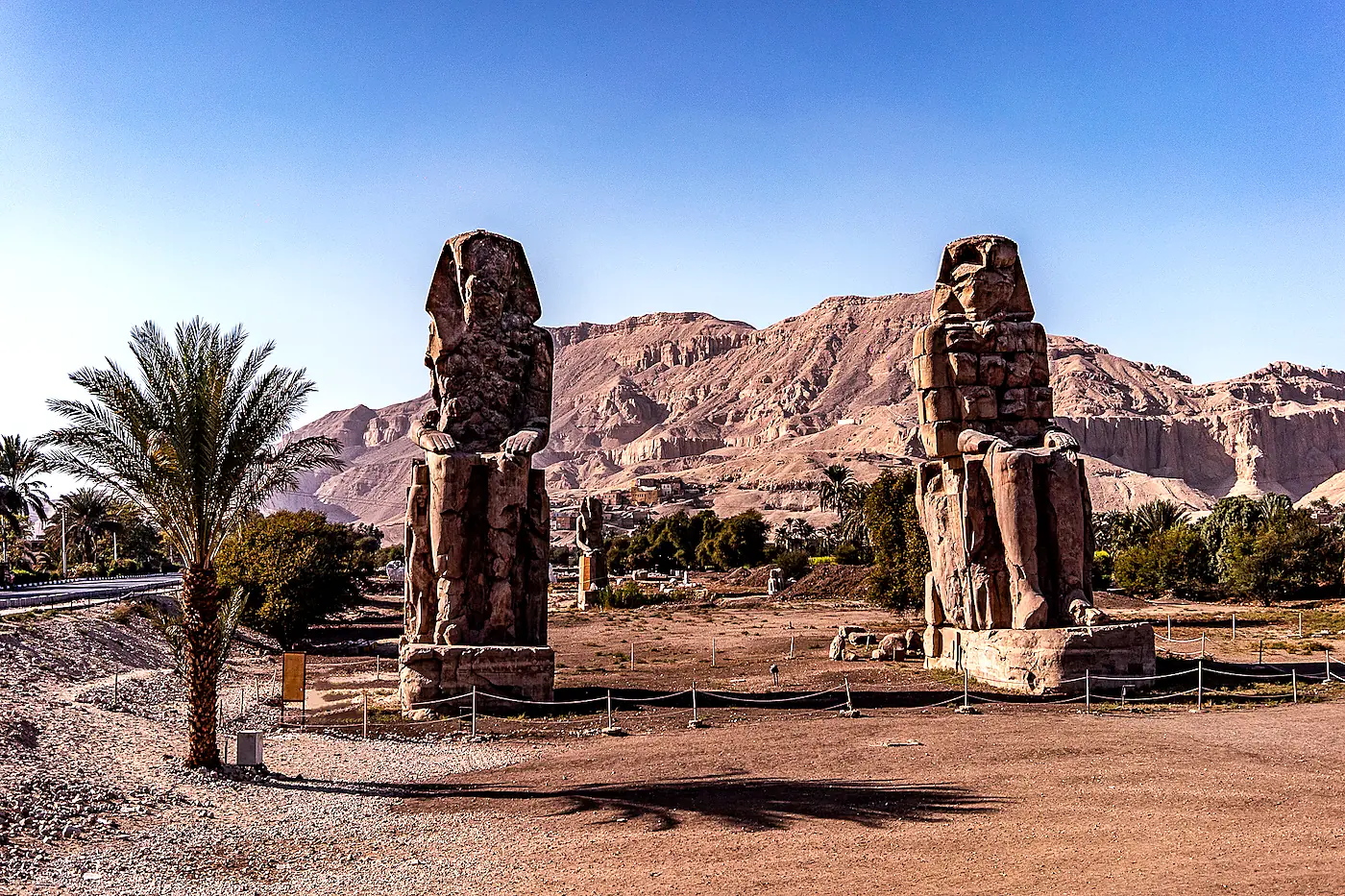
It’s a short stop, and a smart one. Two vast seated statues, standing on open ground, doing the job an overture does in an opera — they set the scale of ancient Thebes in your head before you go underground. Everything that follows lands harder because of it.
From the first minute the pacing is built around questions, photographs and small pauses. You understand what you’re looking at, and you still move.
2. Valley of the Kings
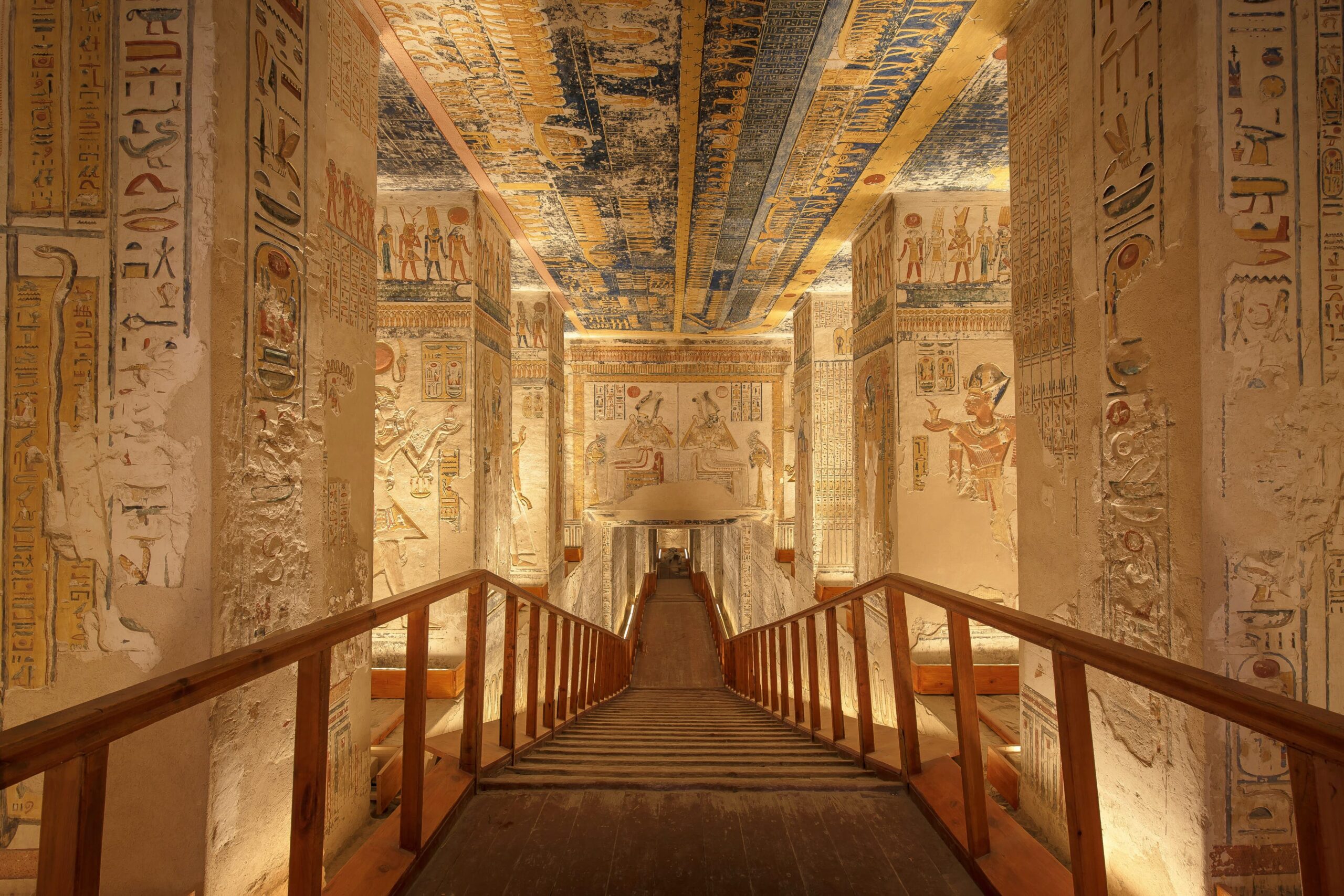
Then the main event. You’ll enter three open royal tombs, included with the standard ticket, while your guide explains the New Kingdom burial landscape around you. For the full background before you go, read our guide to the Valley of the Kings.
One honest note, because we’d rather you heard it here than at the gate: the tombs of Tutankhamun, Seti I and Ramses VI are separate tickets, and they are not included in this tour. They’re available as an optional add-on, with availability and price confirmed before you travel. We say so upfront, in writing, every time.
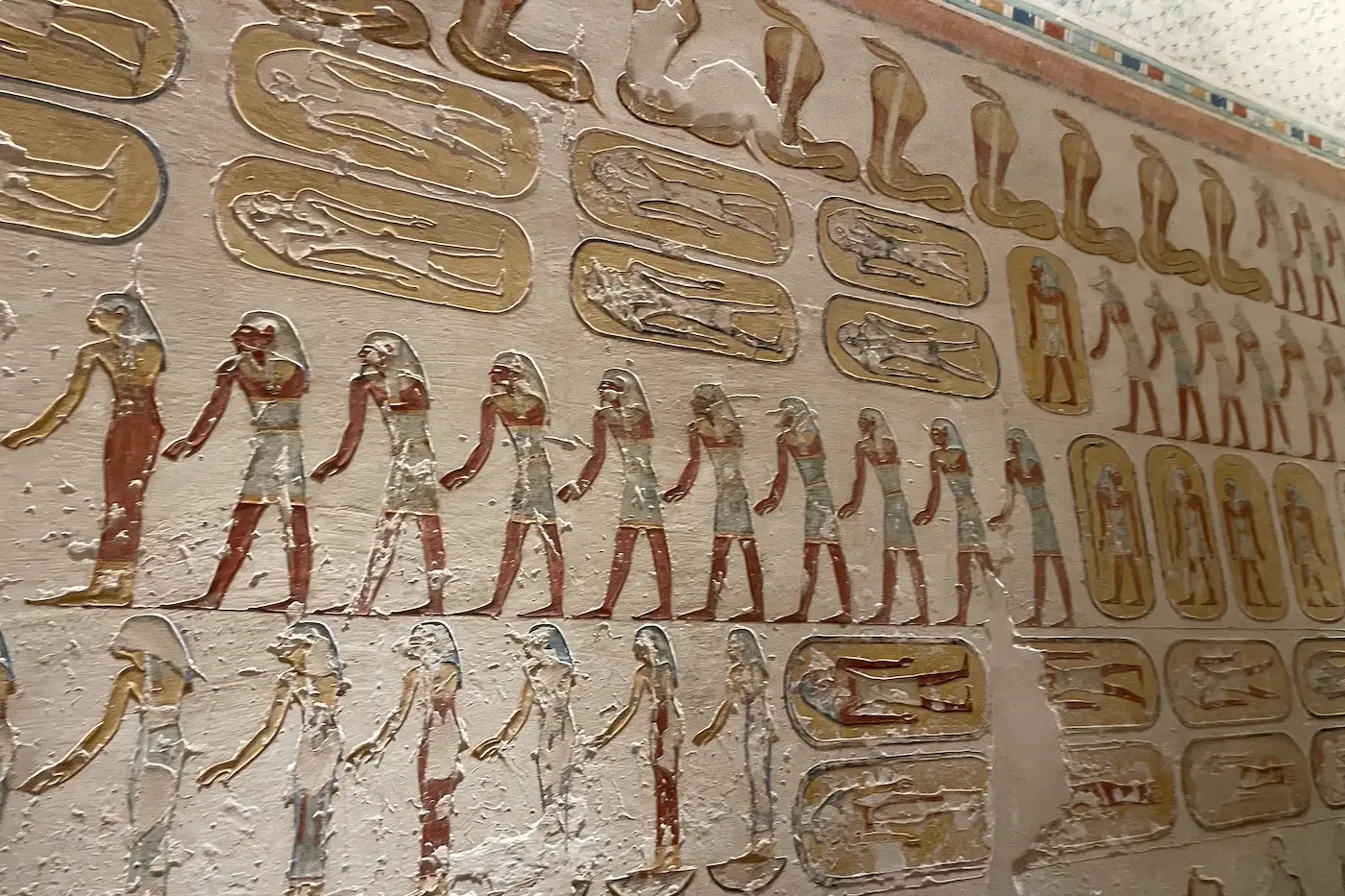
What you’re walking into isn’t a treasure chamber. It’s a corridor cut through solid limestone, sloping down, with colour and funerary text still on the walls and ceiling — written to talk a dead king safely through the night. We usually allow about two hours here, and tomb time is exactly what rushed visitors run short of.
3. Temple of Queen Hatshepsut
Next, Deir el-Bahari — the terraces, colonnades and surviving reliefs of the mortuary temple built for the woman who ruled Egypt as pharaoh in her own right.
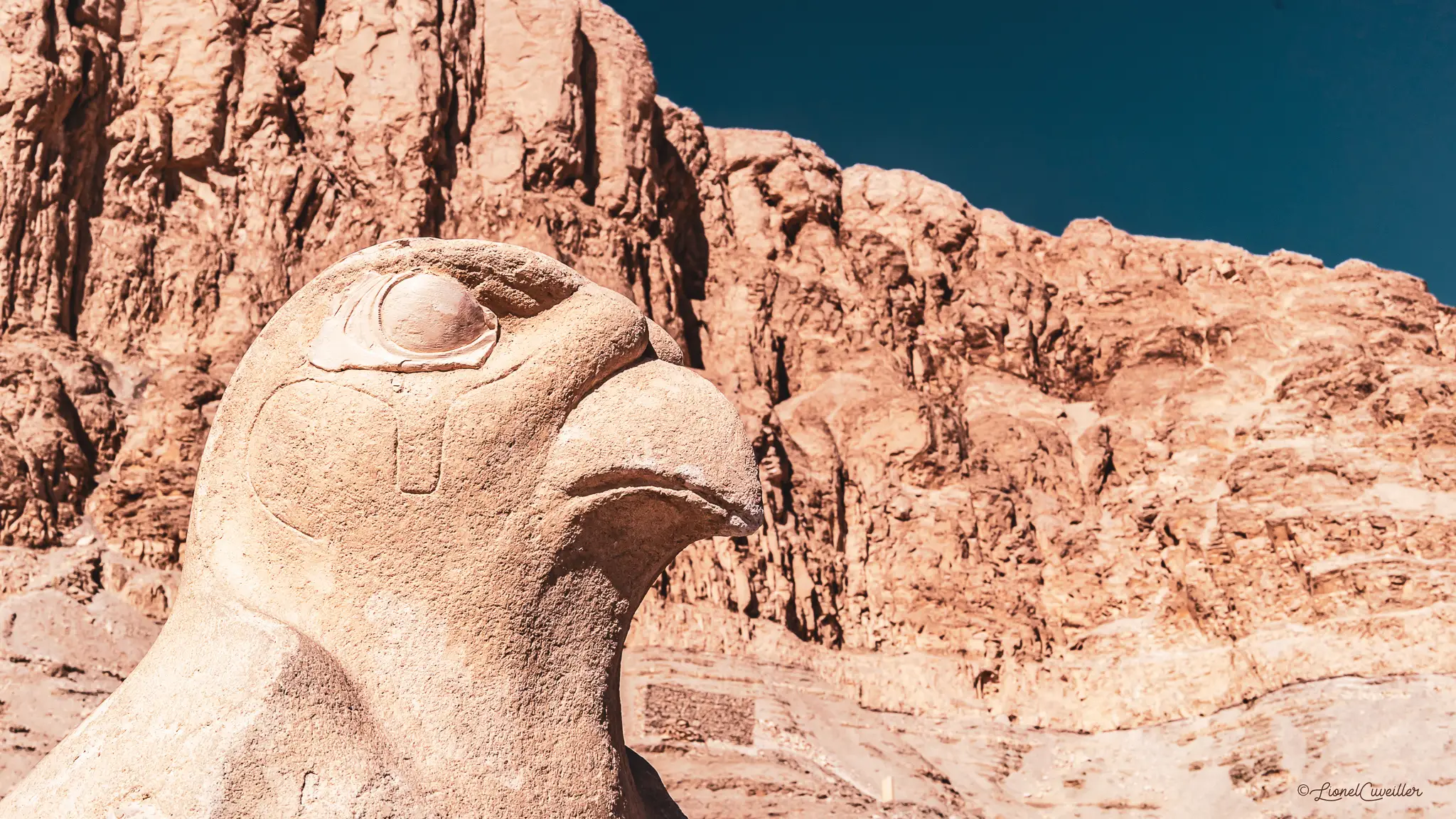
Three flat terraces set against a cliff that rises behind them like a wall. Photographs genuinely do not prepare you for the proportion; you have to be standing at the bottom, looking up. It’s the architectural finish to the West Bank morning, and it comes right before lunch — which, in Luxor, is not a coincidence.
4. Lunch, Then Karnak Temple
You’ll have lunch at a local restaurant, included in the tour, and then cross to the East Bank for Karnak.
The timing here is the whole trick. The middle of the day is when the open desert sites stop being enjoyable, and it’s precisely when this itinerary hands you back to shade and a chair.
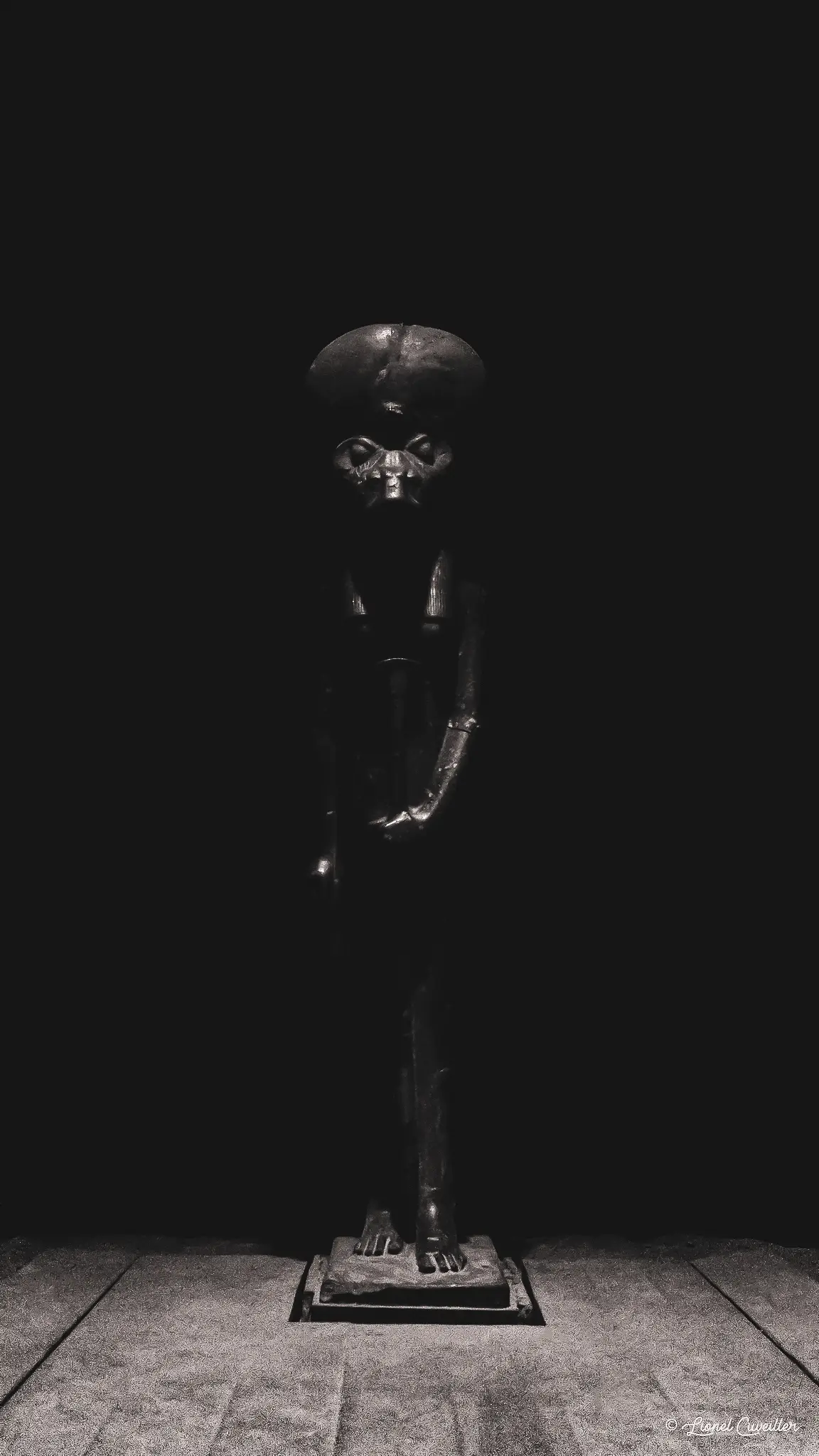
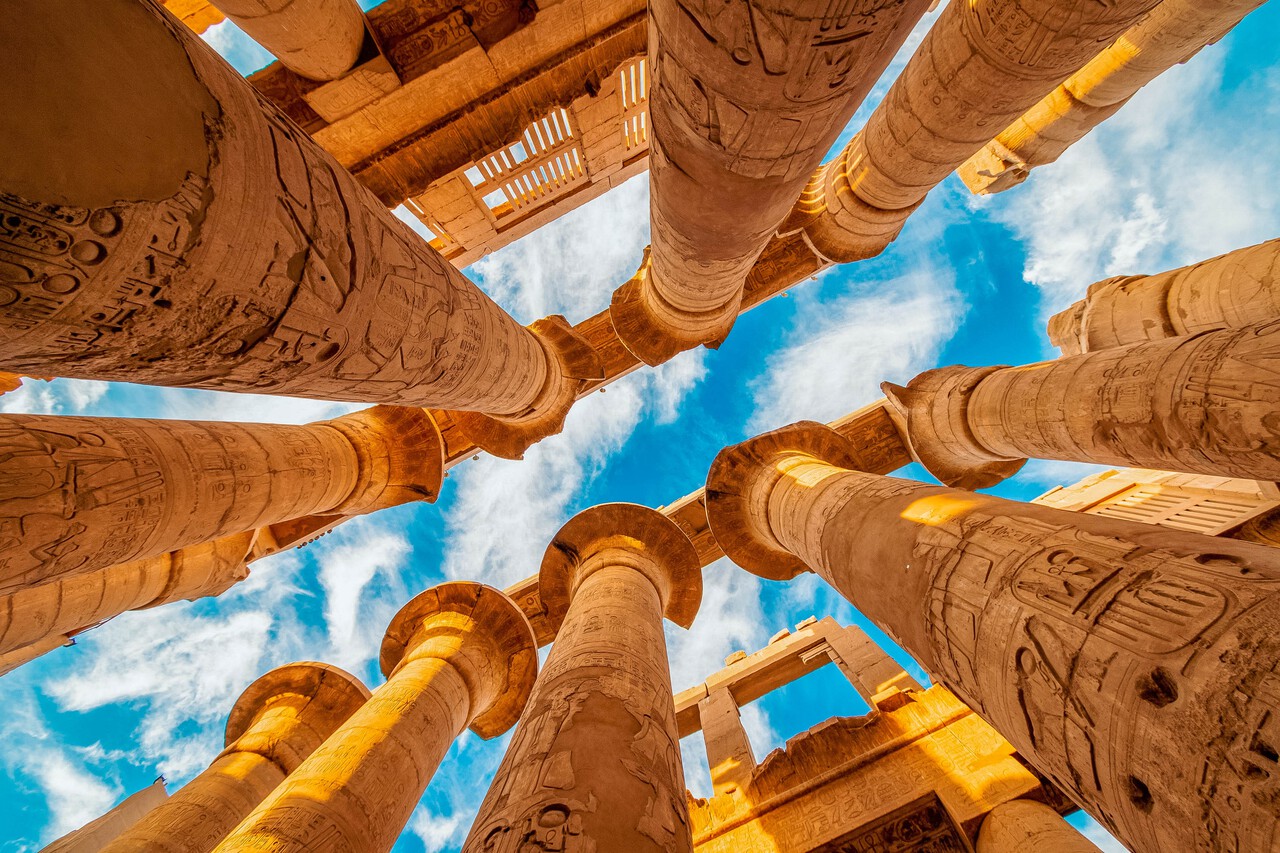
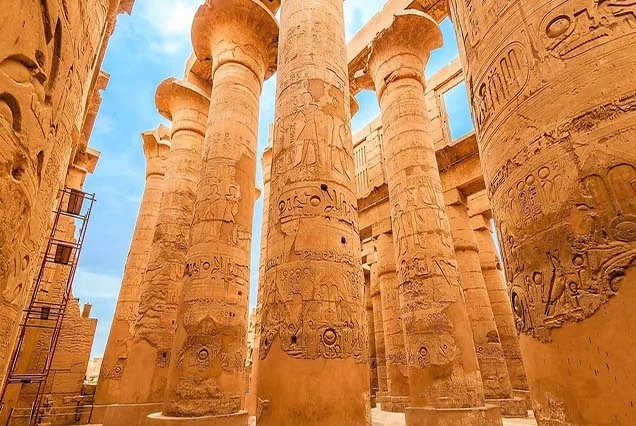
Then Karnak: the gateways, the Great Hypostyle Hall, the obelisks and the Sacred Lake. The register of the day shifts completely — from funerary monuments to the ceremonial and religious heart of ancient Thebes. Morning was about how Egypt prepared to die well. The afternoon is about how it lived, worshipped and staged power. If you want to see it again after dark, the Karnak Temple Sound and Light Show is an easy evening addition.
5. Luxor Temple, and Home
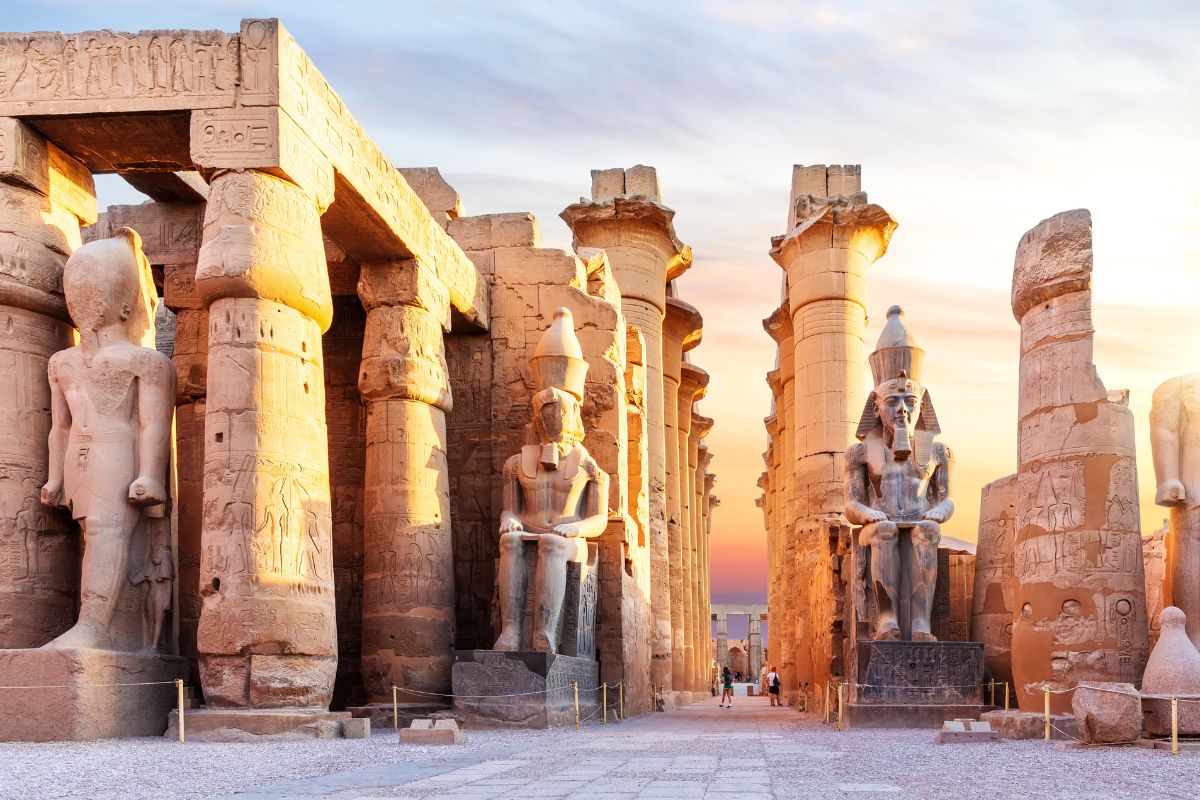
The day closes at Luxor Temple, built principally by Amenhotep III and expanded by Ramses II, before you’re returned to your hotel or cruise.
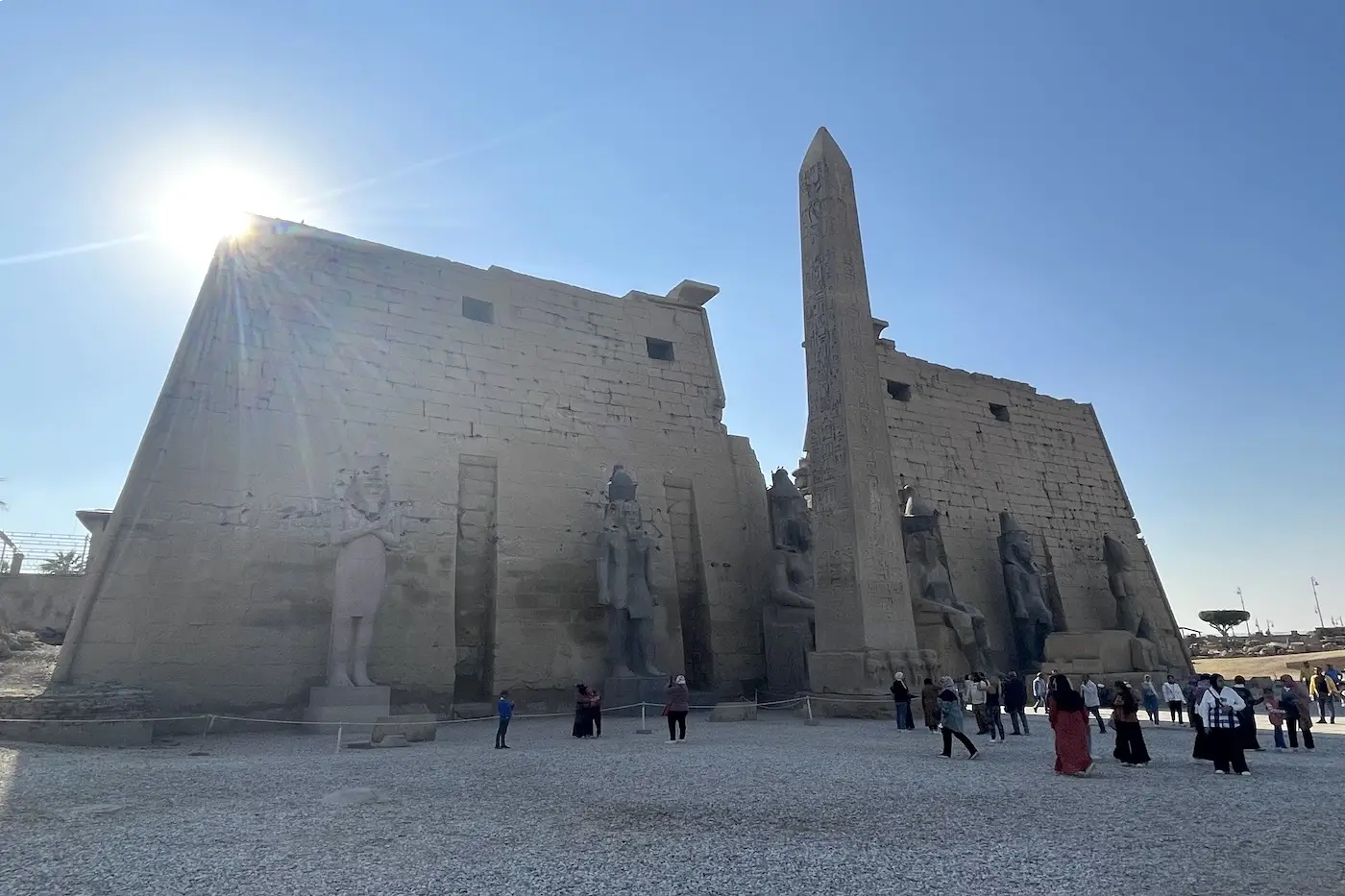
A riverside sanctuary tied to processions, statues and the ancient city itself — and a fitting last stop, because unlike almost everything else you’ll have seen, it never left town. Travellers who want more time on this side of the river alone can take our Karnak and Luxor Temples Tour.
Included and Excluded: No Small Print
We publish this in full, because “included” is the word travel companies stretch the furthest.
| ✅ Included | ❌ Not included |
|---|---|
| Hotel or cruise pickup and return in Luxor | Entry to the tombs of Tutankhamun, Seti I and Ramses VI |
| Private air-conditioned transportation | Any sites or services not mentioned |
| Entrance fees to the listed sites | Personal expenses |
| Lunch at a local restaurant | Tipping |
| Private English-speaking Egyptologist guide | |
| Bottled water | |
| Service charges and taxes |
Optional add-on: Special tombs — availability and price confirmed on enquiry.
So yes: entrance fees are included on this Luxor day tour, for the sites listed in the itinerary. The special tombs are the exception, and they’re the one exception. That’s the entire story.
How We Spend the Hours
Knowing roughly how long each site takes is what turns a list into a plan. These are the allowances we usually work with on the West Bank:
| Site | Time we usually allow |
|---|---|
| Valley of the Kings | About 2 hours |
| Temple of Hatshepsut (Deir el-Bahari) | About 1 hour |
| Colossi of Memnon | About 10 minutes |
Two things worth drawing out of that table.
First, the Colossi are a ten-minute stop. Anyone selling them to you as a headline attraction is padding an itinerary.
Second, the West Bank monuments sit kilometres apart, with cultivated fields and open desert in between. You cannot walk it. A private air-conditioned vehicle waiting at each gate isn’t a luxury here — it’s the difference between finishing the day with an afternoon in hand and finishing it with a headache. We explain the logistics in more depth in our guide to Luxor West Bank private tours.
Which Luxor Day Is Actually Yours?
The full-day tour is our answer for travellers with one day in Luxor. It isn’t the only shape a Luxor excursion can take, and we’d rather point you to the right one than sell you the longest one. You can browse every option on our Egypt day trips page.
| If you have | The tour that fits | Duration |
|---|---|---|
| One full day in Luxor | Full-Day Luxor Tour: East and West Banks | Approx. 8 hours |
| Half a day, or a cruise stop | Valley of the Kings and Hatshepsut Temple Tour | Approx. 6 hours |
| Half a day, and you’ve seen the royal valleys | Valley of the Nobles, Deir el-Medina and Medinet Habu | Approx. 4 hours |
| A dawn slot before your day begins | Luxor Hot-Air-Balloon Ride | Approx. 2 hours |
All of these are private, all include a licensed Egyptologist, and all collect you from your Luxor hotel or from a Nile cruise ship docked for the day.
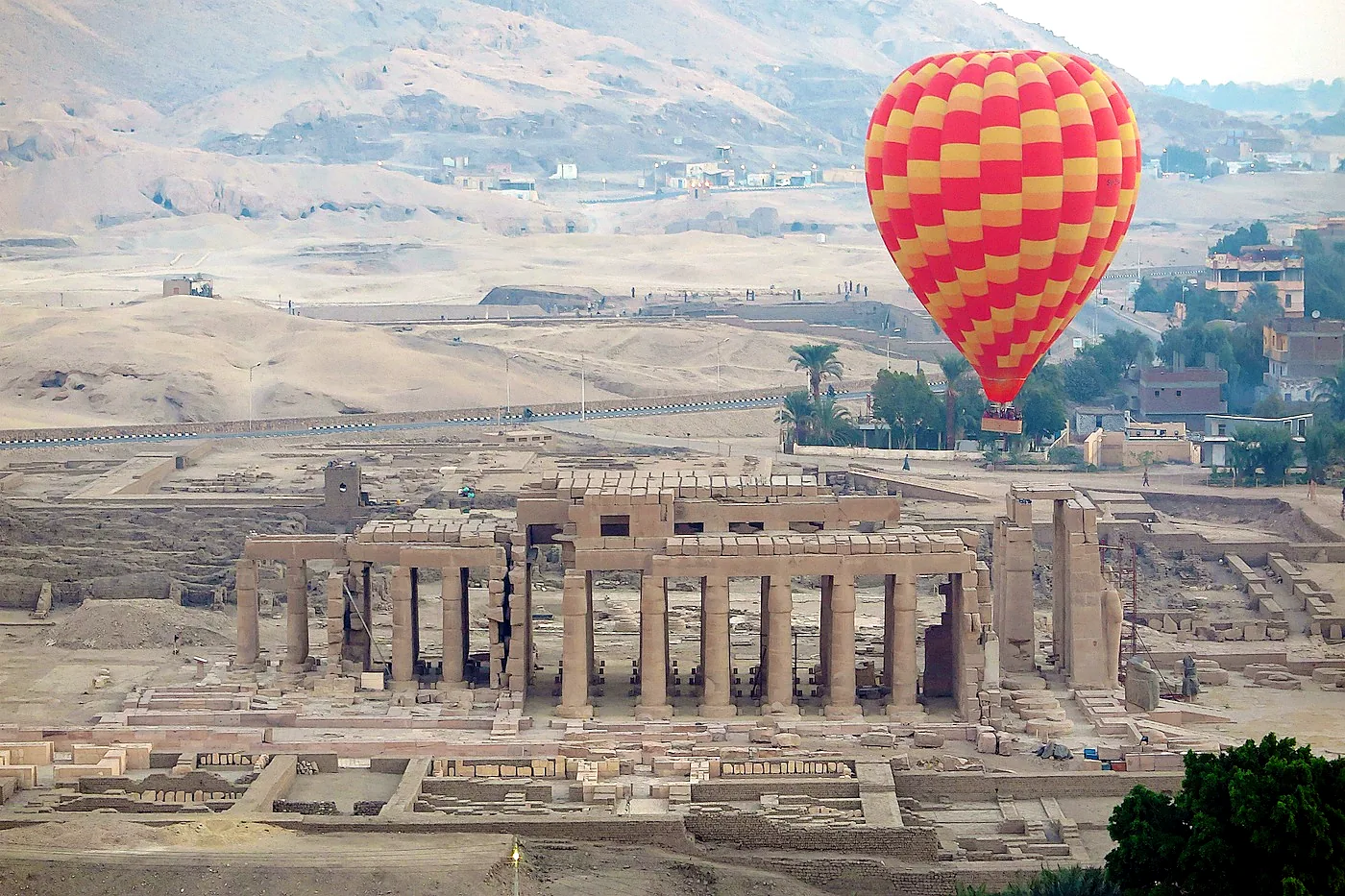
The Luxor hot air balloon deserves its own line, because it pairs unusually well with a full day rather than competing with it. The programme runs about two hours including transfers: a motorboat crossing of the Nile in the dark, refreshments at the launch site, roughly a forty-five-minute flight over the West Bank as the sun comes over the eastern hills, and a flight certificate afterwards. Flights are early and conditions-dependent, so timing is confirmed close to the date.
It also finishes early enough to leave your day completely intact. Balloon at first light, full-day tour after breakfast — that’s an ambitious Luxor day, but it’s a real one.
When to Come, and How We Schedule Around It
Luxor doesn’t have a bad season. It has seasons that require different start times.
| Season | What it’s like | How we schedule it |
|---|---|---|
| November – February | The comfortable window, and the busiest. Warm days, genuinely cool mornings and evenings. | Standard early start; pacing is about crowds rather than heat. |
| March – April | Warming quickly but still very manageable, with long clear light. | Early start, longer midday break, open ground scheduled first. |
| May – September | Hot, and the desert sites are exposed. Noticeably quieter at the monuments. | Dawn starts, sharper routes, outdoor sections finished before late morning. |
| October | The heat breaks. Excellent conditions with fewer people than midwinter. | Early start, full-length days back on the table. |
One structural point that applies in every month: the West Bank does not reward density, it rewards early. A day that starts at six and has you at lunch by one will beat a day that starts at nine, every single time, in every season. Cooler tombs, better light, and the coaches still at breakfast.
Four Things We Confirm in Writing Instead of Printing Here
There are details we refuse to publish, and we think the reason matters.
Ticket prices, opening hours and which tombs are open are decided by Egypt’s Ministry of Tourism and Antiquities, not by us. They move. Printing a number today that’s wrong by the time you travel wouldn’t make this page more useful — only more confident.
So we hold four things back and confirm each for your actual date, before you commit to anything:
- Which tombs are open. The Valley of the Kings rotates its open tombs to protect the paintings. Your guide confirms the day’s selection at the gate.
- Ticket prices and special tombs. Standard entrance fees to the listed sites are included. Tutankhamun, Seti I and Ramses VI are separate.
- Opening hours for your date. They shift with the season and are occasionally adjusted at short notice.
- Exactly what your quote covers. Pickup point, guide, vehicle, water, meals and add-ons — set out per journey, not assumed.
Ask any of them directly in the enquiry form. You’ll get a real answer for your day.
Practical Notes Before You Book
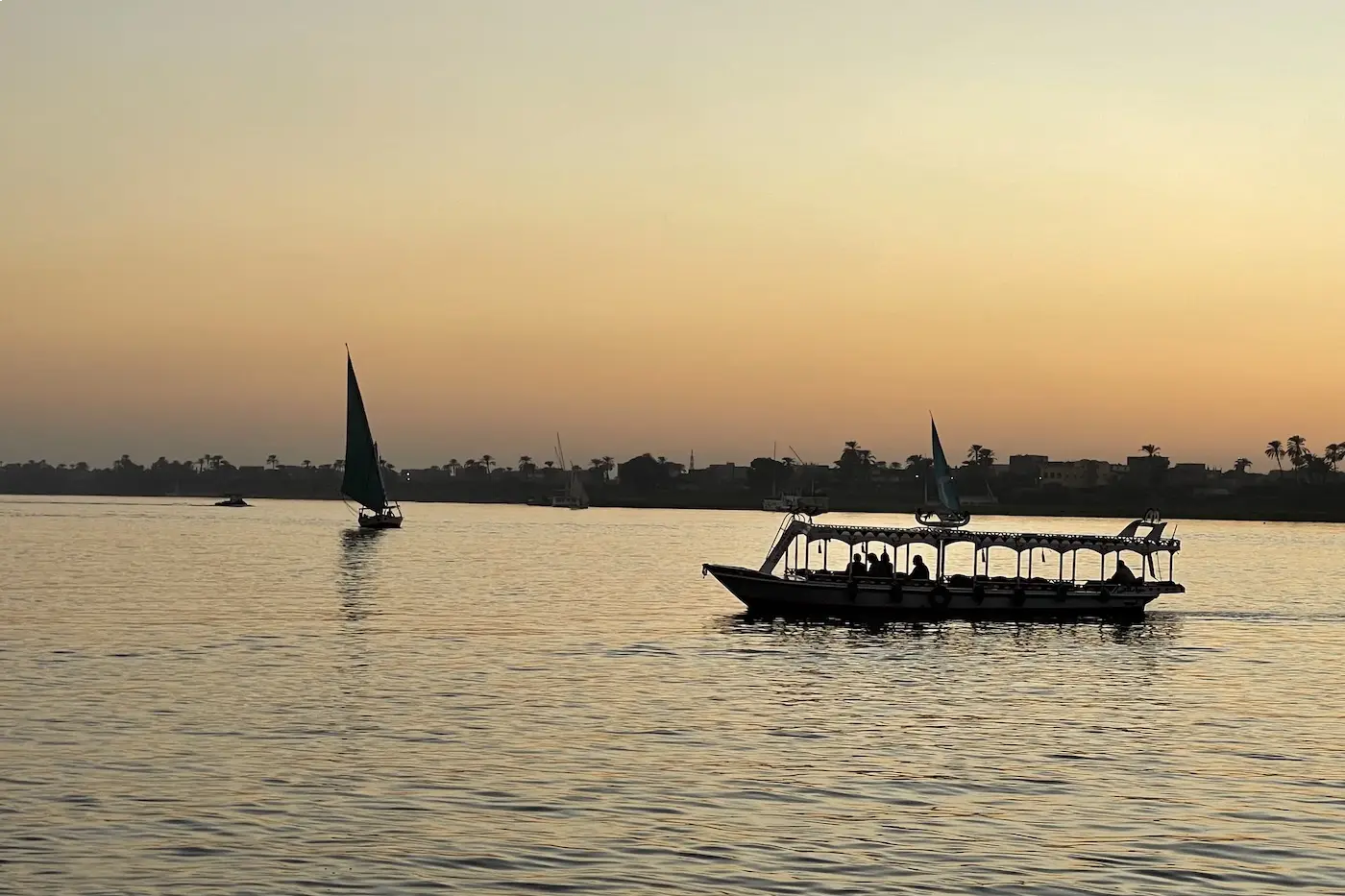
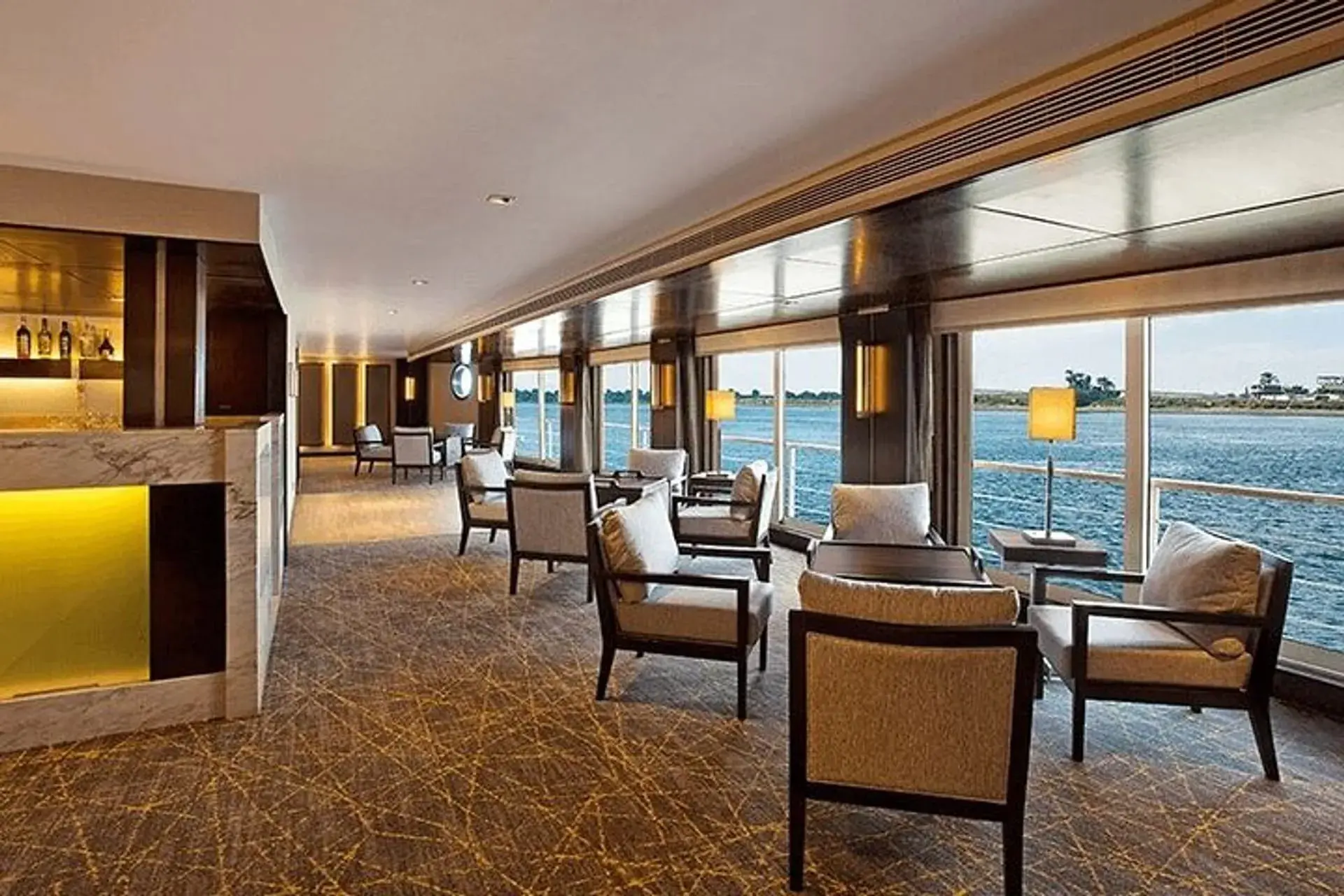
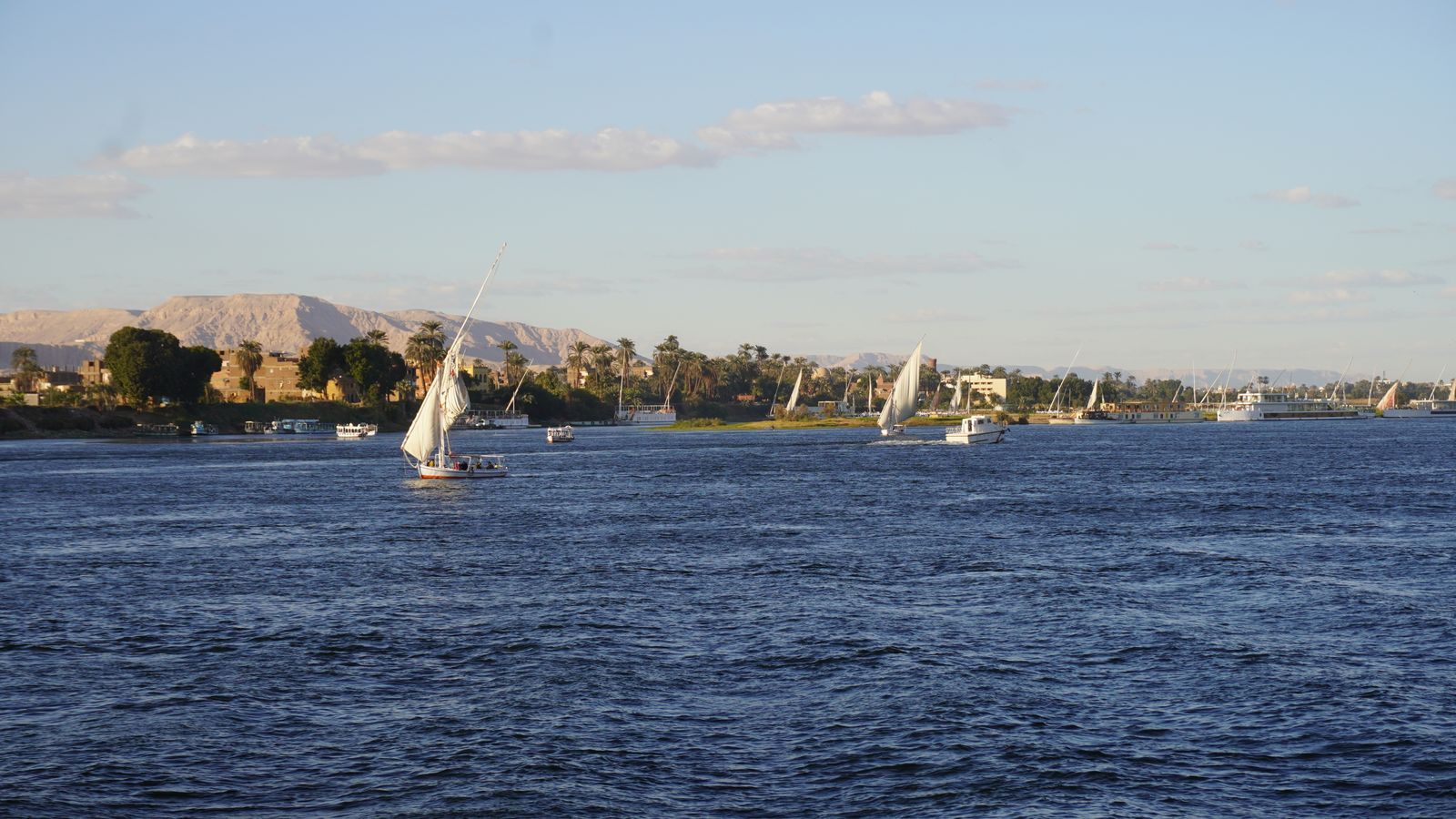
- Crossing the river. There are three ways over: the road bridge south of the city, the local ferry from the corniche, or a motorboat straight from a docked cruise ship. On this tour you cross by private air-conditioned vehicle, and your guide handles the route.
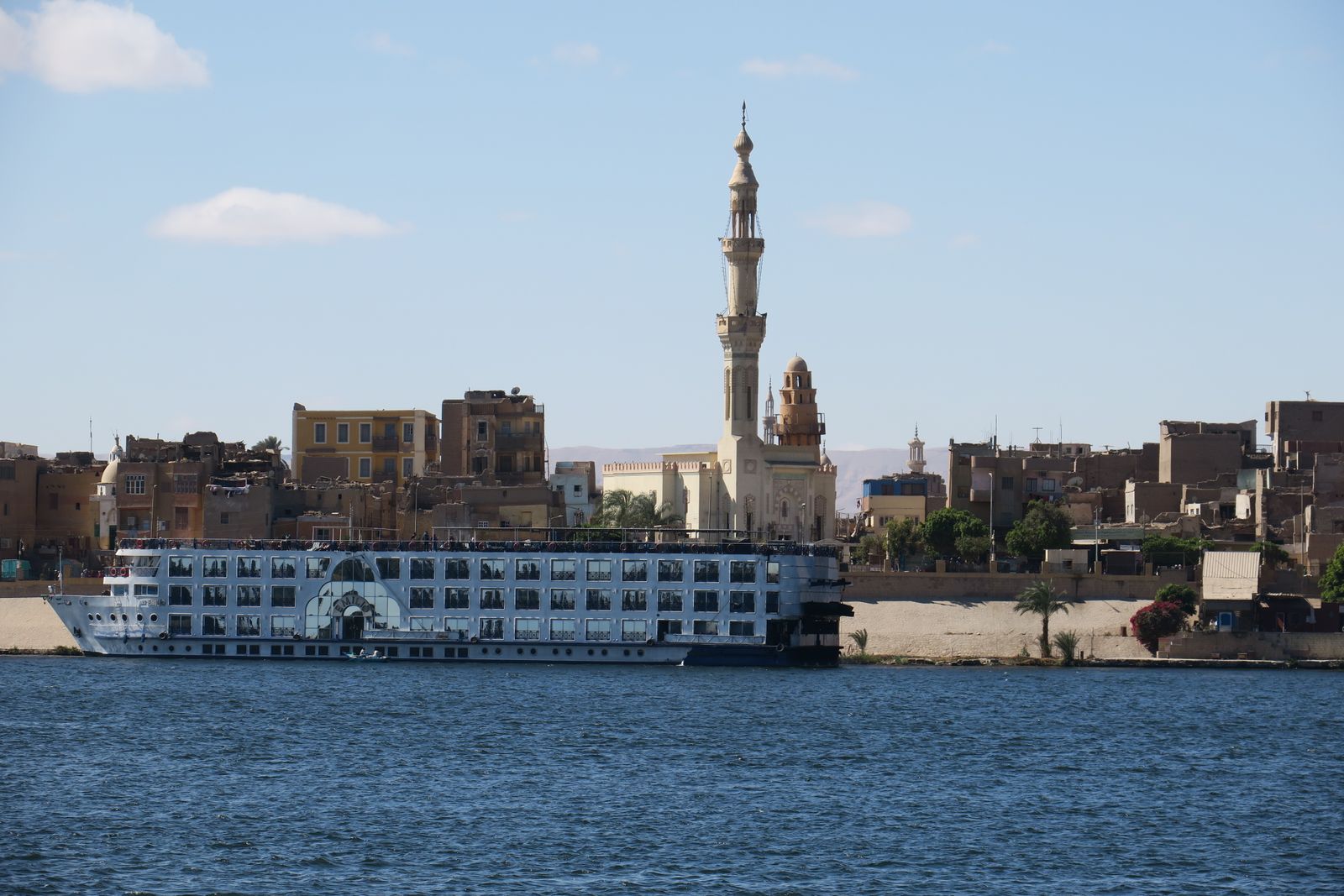
- Arriving on a Nile cruise? Pickup and return work identically from a moored ship. Send us your docking day and we’ll tell you honestly what fits between arrival and departure. Still choosing a ship? See our guide to the Nile cruise from Luxor to Aswan.
- Travelling with children? Children do better in Luxor than most parents expect, provided the day is built for them — fewer sites, more variety, and an acceptance that a fourth tomb is one tomb too many. On a private tour the route bends to your family; on a group coach it doesn’t.
- Mobility. We’ll be straight with you: tomb entrances involve descending ramps and steps, and temple floors are uneven ancient stone. Wheelchair access across the necropolis is limited and varies site by site. What private travel solves is everything around that — the vehicle waits where you left it, the route is chosen around what you can comfortably do, and the day ends when you decide it does. Mention mobility in your enquiry and we’ll build the route around it rather than improvise on the day.
- Photography. Camera rules differ site to site and change periodically. Some tombs allow photography with a ticket, others not at all. Your guide tells you where you stand before you walk in.
Luxor Day Trip FAQs
What is included in a typical Luxor day trip?
On this tour: hotel or cruise pickup and return in Luxor, private air-conditioned transportation, entrance fees to the listed sites, lunch at a local restaurant, a private English-speaking Egyptologist guide, bottled water, and service charges and taxes. Excluded: entry to the tombs of Tutankhamun, Seti I and Ramses VI, any sites or services not mentioned, personal expenses, and tipping.
How long is the tour?
Approximately 8 hours. The exact pickup time is confirmed with you before travel, since we build the start around the season and your date.
Are entrance fees included?
Yes — standard entrance fees to the sites listed in the itinerary are included. Special tombs (Tutankhamun, Seti I, Ramses VI) are separate tickets and available as an optional add-on.
How much does a Luxor day trip cost?
This tour is quoted per trip rather than listed at a fixed price, because the figure depends on your party size, date and pickup point. Send us those three details and we’ll come back with an accurate quote and exactly what it covers.
Can I do this as a day trip from Hurghada or another Red Sea resort?
Our confirmed pickup for this programme is from your hotel in Luxor or from a Nile cruise docked in Luxor. If you’re starting from the Red Sea coast, tell us where you’re staying in your enquiry and we’ll confirm what we can arrange for your date rather than guess here. Cruise passengers docking at Safaga can also look at our Safaga to Luxor day trip.
Is it suitable for families with children?
Yes, and privately it’s far more suitable than a group alternative. The route, the pace and the number of stops all flex around your children rather than around a coach schedule.
What should I wear?
Comfortable clothing you don’t mind getting dusty, and proper footwear above everything else — you’ll be walking on uneven ancient stone and stepped tomb entrances. Sun protection and water matter in every season; bottled water is included.
Can I customise the itinerary?
Yes. Route, pacing and pickup details are clarified before you travel, and you can add the special tombs or combine the day with a dawn balloon flight. Tell us what you want more of and we’ll rebuild the sequence around it.
What’s the best time of year?
November to February is most comfortable and busiest. March, April and October are warm but very workable with an early start. May to September is hot — we run dawn starts and finish the outdoor sections before late morning, and you get noticeably quieter monuments in return.
What should I confirm before booking?
Travel date, pickup point, included tickets, meals, optional experiences and any mobility considerations. All five are things we put in writing. For general questions about travelling with us, see our FAQs.
One Day, Done Properly
Luxor gives you the Valley of the Kings, Hatshepsut’s terraces, Karnak’s hypostyle hall and Luxor Temple — and it gives them to everyone who turns up. What it doesn’t hand out is the sequencing: starting early, spending the heat at lunch, arriving at Karnak as the light softens, and standing inside a tomb long enough to actually read the ceiling.
That’s what this Luxor day trip is built around. Private vehicle, private Egyptologist, approximately eight hours, both banks, entrance fees and lunch included, and the special tombs declared as extra before you book rather than discovered at the gate. See the full programme on the Full-Day Luxor Tour: East and West Banks page.
Tell us your date and we’ll build the day around it.
Fill in the enquiry form with your travel dates, how long you have in Luxor, how many of you are travelling, and whether you’re staying in a hotel or on a cruise. We’ll come back with the route we’d actually run for you, what it includes, what it doesn’t, current ticket and opening-hour details for your specific date, and where the day should start.
No pressure, no obligation — just a proper conversation with a team who live twenty minutes from the Valley of the Kings.