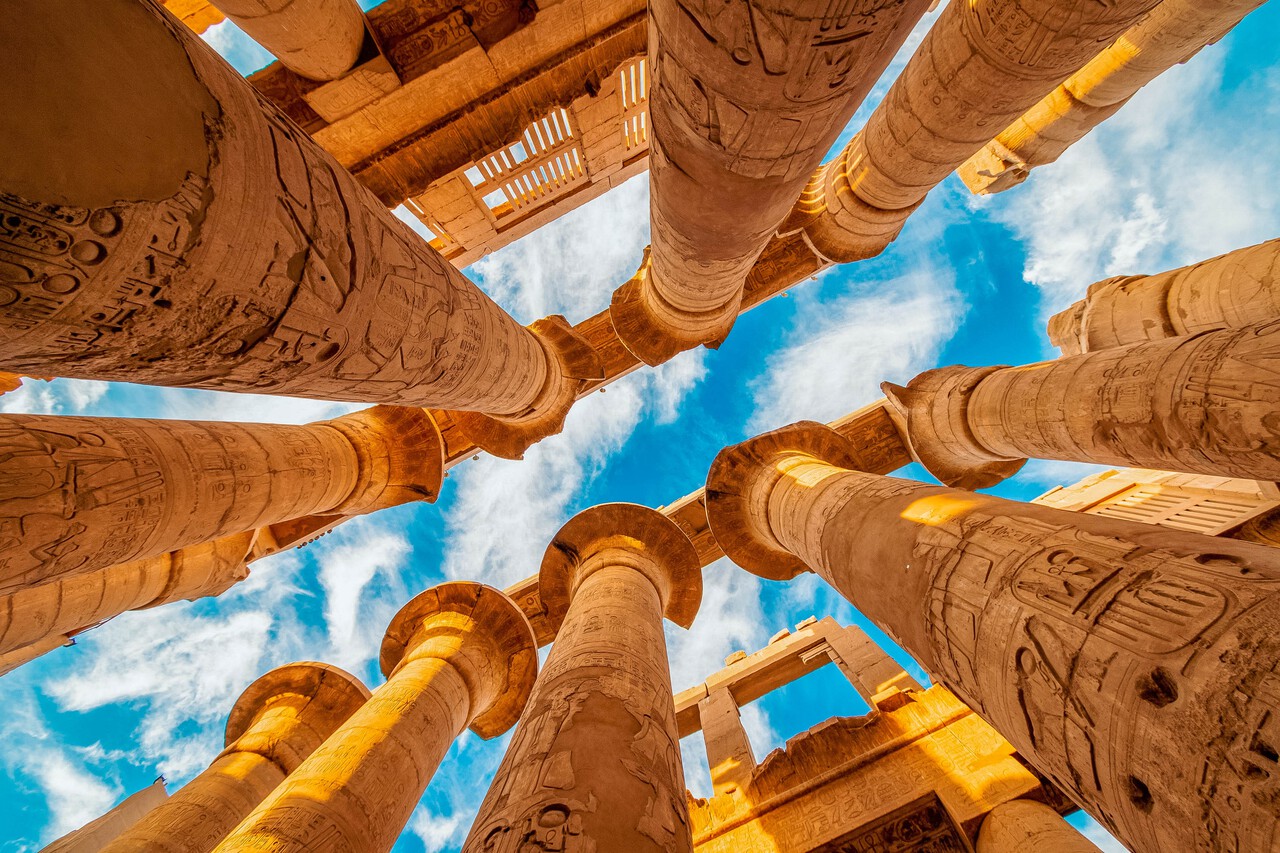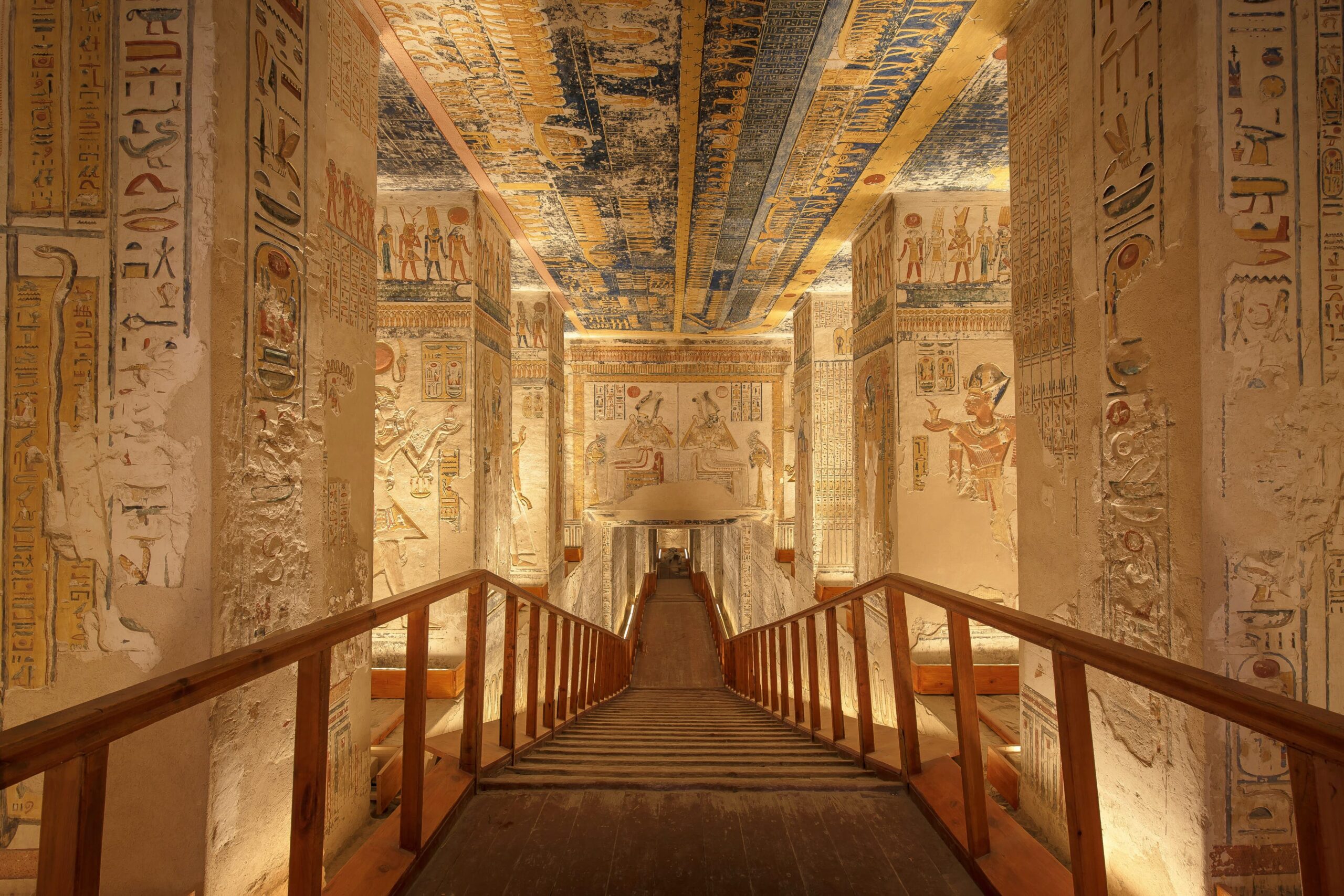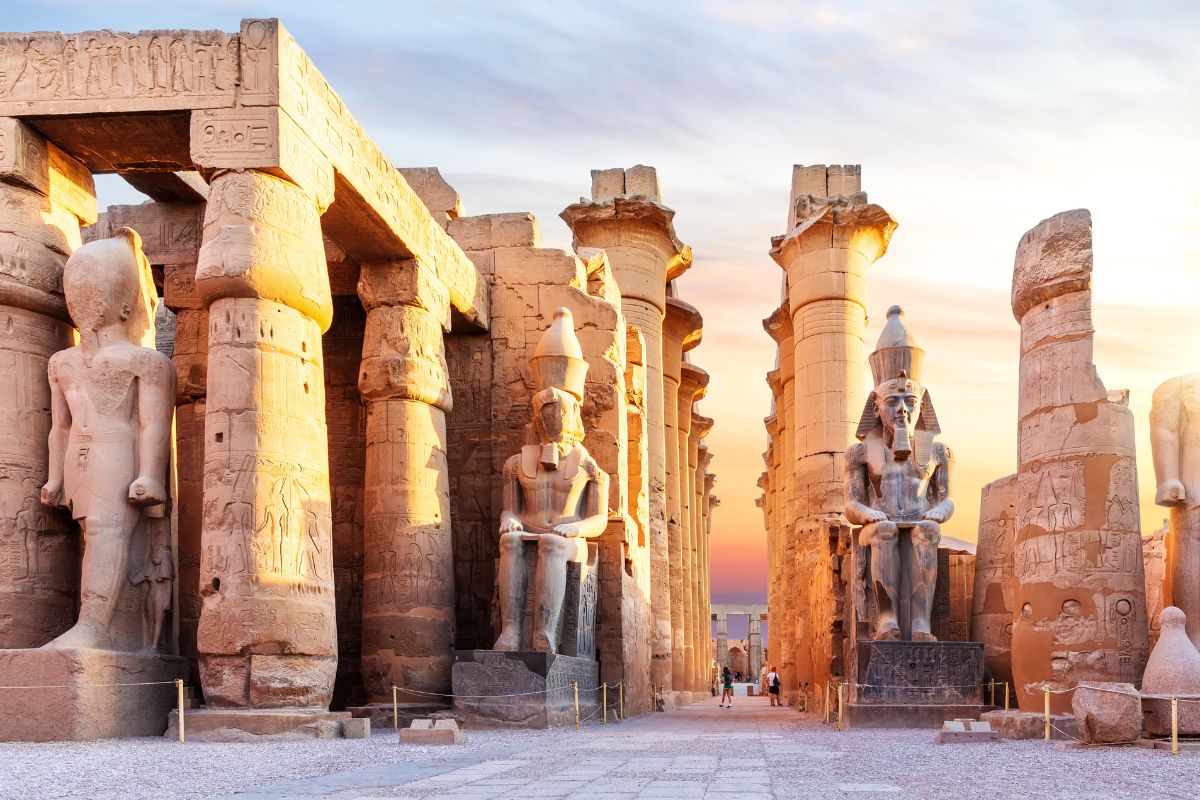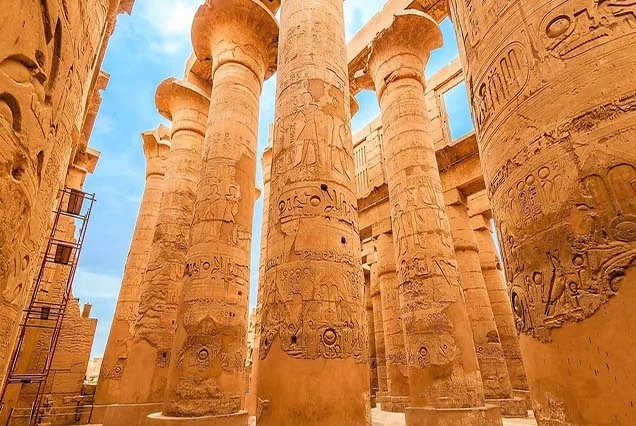

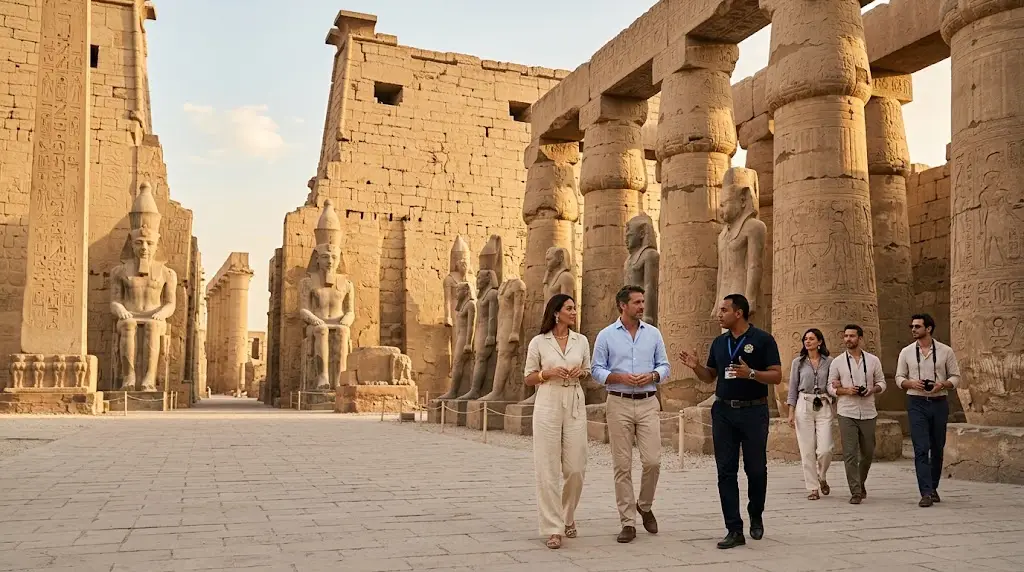
There’s a moment that catches almost everyone off guard in Luxor. You walk toward the temple just as the sun drops behind the West Bank, the floodlights flicker on, and suddenly a 3,000-year-old colonnade is glowing above your head while a taxi honks somewhere behind you. Ancient Egypt, right there in the middle of a working city. No fence around a distant ruin, no long desert drive — just an open-air masterpiece sitting in the heart of town.
That’s what makes Luxor Temple tours different from almost everything else on an Egypt itinerary. And it’s why we at Egypt Luxury Trips get asked about this site more than almost any other in Luxor.
This page covers what you actually need to know before you go: what’s inside the temple, when to visit, how long to allow, what tickets cost, how guided visits work, and how the temple fits into a wider day in Luxor. Whether you’re arriving on a Nile cruise, flying in from Cairo, or driving up from the Red Sea coast, we’ll help you shape a visit that fits your pace — not a rushed shuffle through stones you don’t understand.
Why Luxor Temple Deserves More Than a Quick Photo Stop
Karnak gets the headlines for sheer scale. The Valley of the Kings gets them for the tombs. But Luxor Temple? Luxor Temple gets you atmosphere.
It’s one of the very few major ancient sites in Egypt that stays open into the evening, often until around 21:00–22:00. That single fact changes the whole experience. Instead of squinting through midday glare with a bottle of warm water in your hand, you can walk between illuminated columns in the cool of the night, with the city humming quietly around you.
Here’s what we tell travellers who ask us whether it’s “worth it” alongside Karnak:
Karnak is where you feel small.
Luxor Temple is where you feel close — to the carvings, the statues, the layers of history stacked on top of each other.
Both, ideally. Which is exactly why the two are so often visited together on our Karnak and Luxor Temples Tour.
What You’ll See Inside Luxor Temple
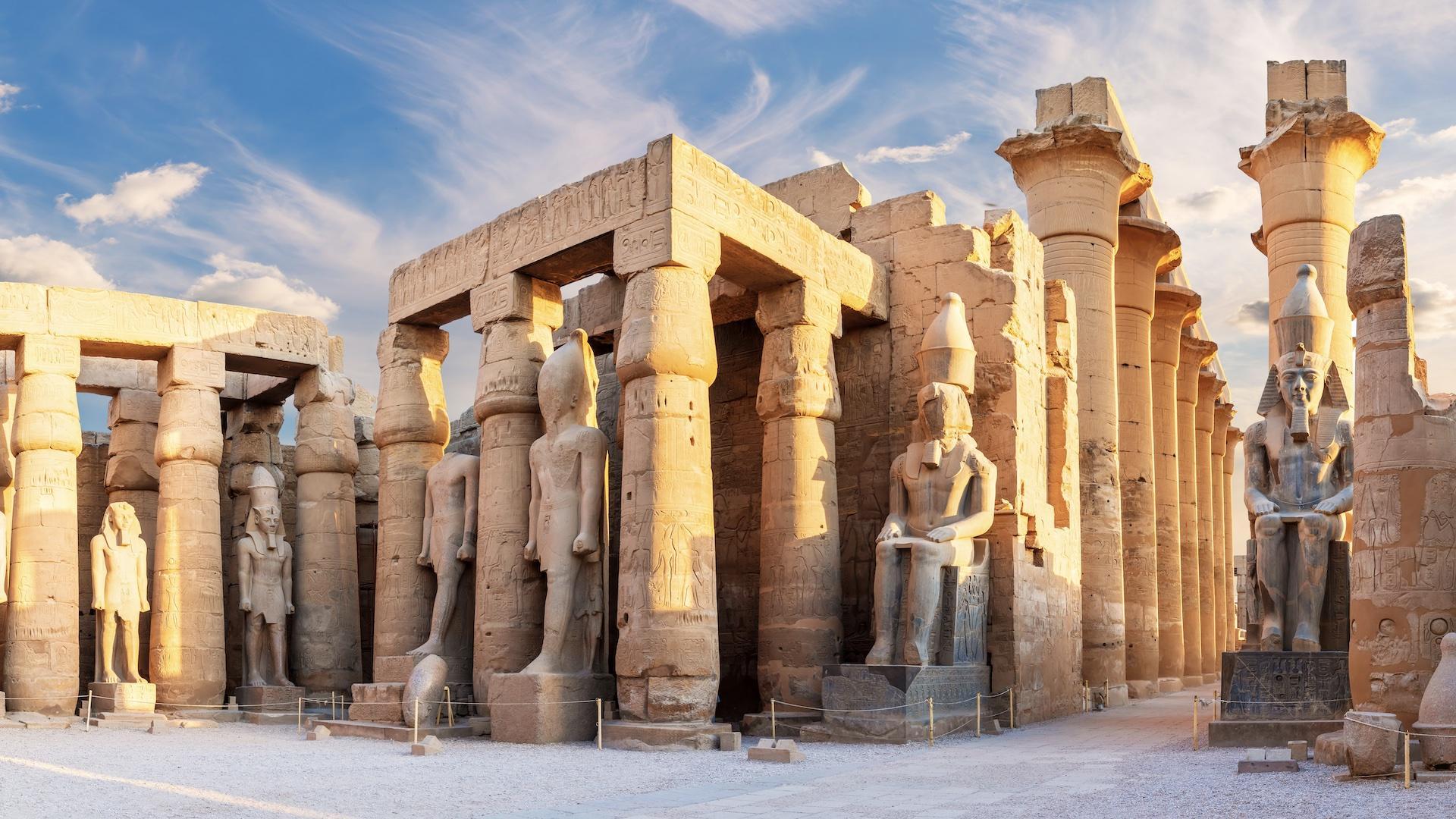
A guided walk through the temple usually follows its natural line — from the great entrance pylon through the courts and colonnade to the sanctuary at the far end. For the deeper history behind each space, read our guide to the Luxor Temple. These are the features travellers ask about most:
| Highlight | Why it matters to your visit |
|---|---|
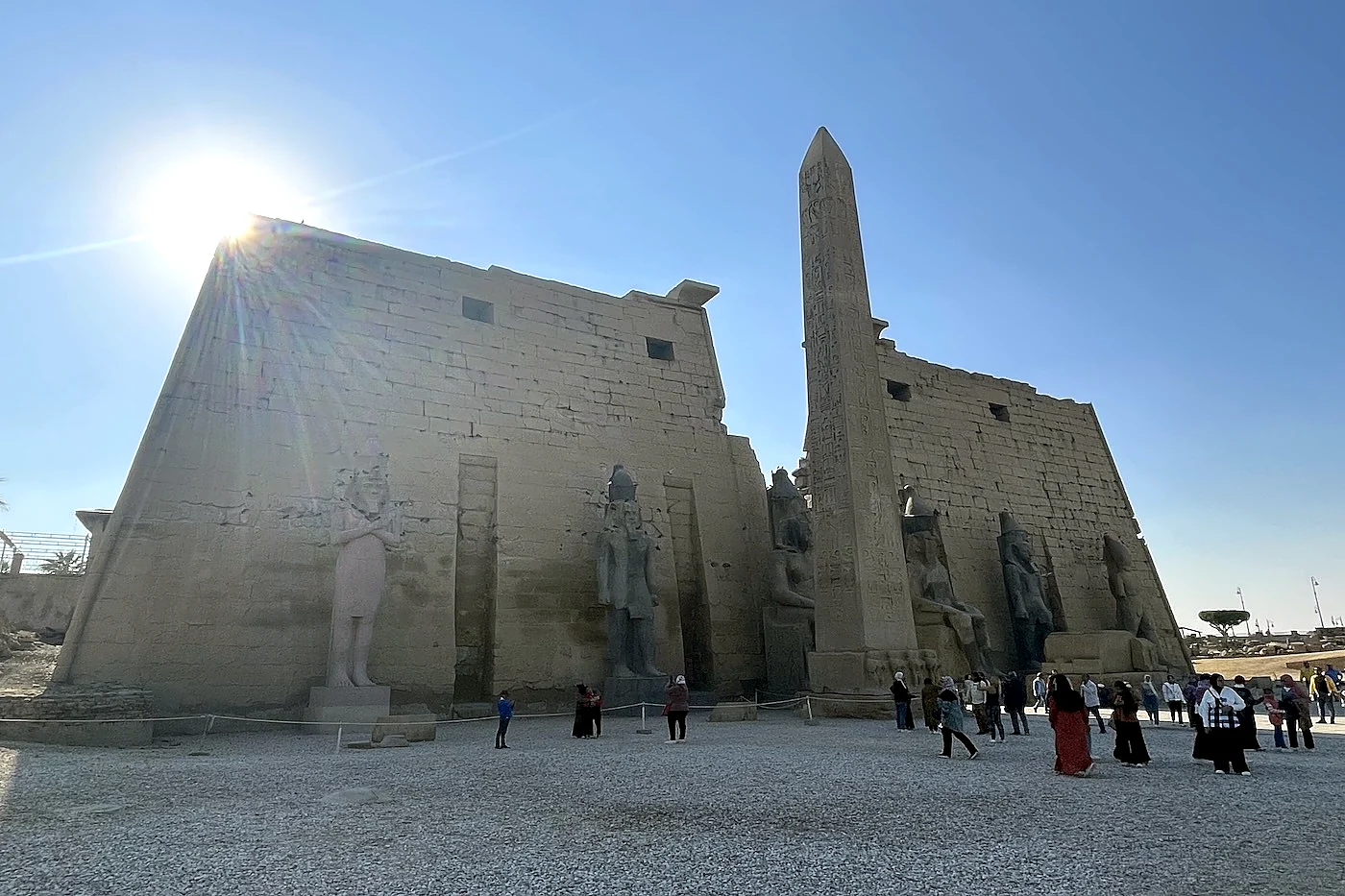
| The First Pylon | The temple’s monumental façade and your first view on entering — the classic photo. |
| Statues of Ramses II | The colossal seated and standing figures most associated with the temple’s public face. |
| The Great Court | An open, columned space that gives you the temple’s scale before you move deeper inside. |
| The Colonnade of Amenhotep III | The tall processional columns that photograph beautifully under evening light. |
| The Sanctuary | The innermost, most sacred part of the temple at the end of the axis. |
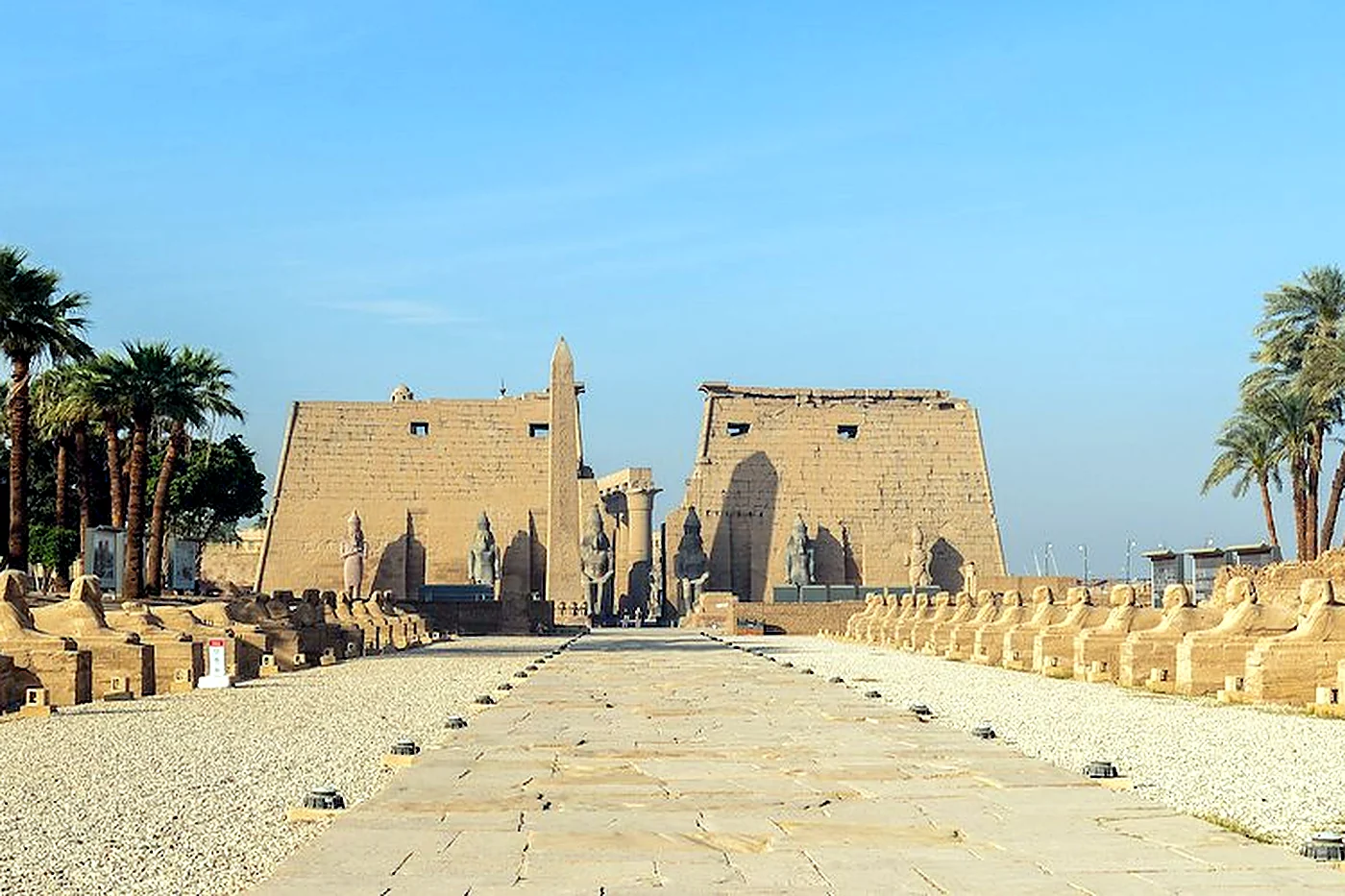
| The Avenue of Sphinxes | The sphinx-lined processional route connecting Luxor Temple with Karnak. |
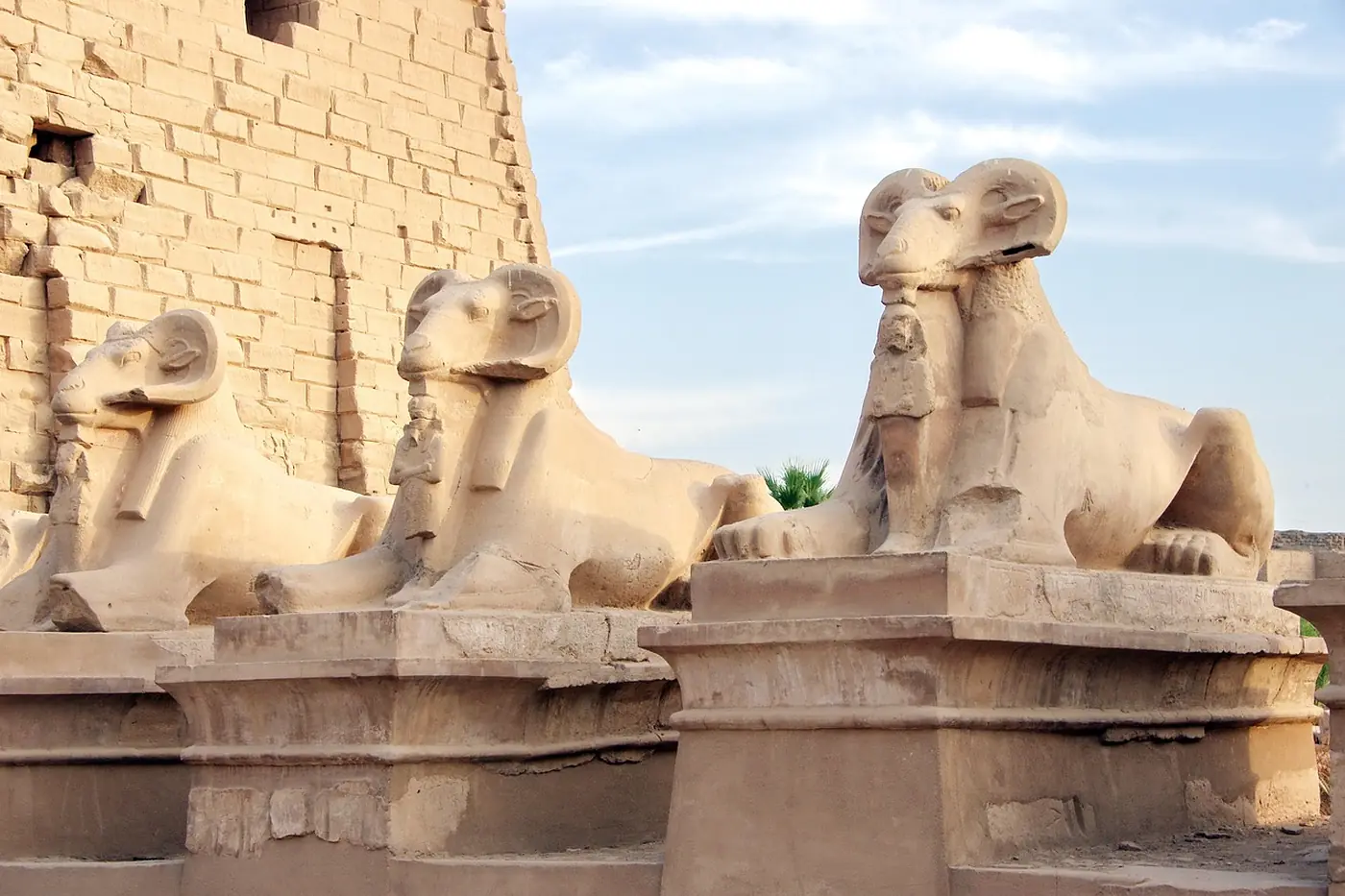
If you’ve ever wondered why a Luxor Temple Ramses II tour or a Luxor Temple Avenue of Sphinxes tour appears as its own listing online, this is why — those two features alone carry enough story to fill a visit.
When Is the Best Time to Visit Luxor Temple?
Ask ten guides and you’ll get roughly one answer: late afternoon into the evening.
The reasoning is practical rather than poetic:
- Cooler temperatures. Luxor’s daytime heat is not a minor detail, and this is an open site with limited shade.
- Better light. The low sun brings out the depth in the carvings; photographers tend to plan around it.
- Night illumination. After dark, the lighting gives the temple a completely different character — the reason so many travellers specifically request a Luxor Temple night tour or an evening visit.

Can you visit in the morning? Of course. Plenty of travellers do, especially when the temple is slotted into a wider East Bank day. But if your schedule has any flexibility at all, we’ll usually suggest holding Luxor Temple back until the end of the day. It’s a better finish than a beginning.
Luxor Temple Opening Hours and Evening Visits
Luxor Temple is one of the few major ancient sites in Egypt open late, frequently until around 21:00–22:00. Exact closing times shift with the season, so we confirm the current hours for your travel dates when you enquire — nobody wants to arrive at 20:45 on the one evening the gates close early.
How Long Does a Luxor Temple Tour Take?
Shorter than most people expect, which is good news for your itinerary.
| Type of visit | Typical duration |
|---|---|
| Independent walk-through | About 1–2 hours |
| Guided tour with explanation and photo time | About 1.5–2 hours |
Most visitors spend 1–2 hours inside, while guided tours generally allow 1.5–2 hours to cover the history, the symbolism and enough breathing room for photographs. That compact Luxor Temple visit duration is precisely why it pairs so easily with Karnak, a museum stop, or a felucca ride on the same day.
Luxor Temple Tickets, Entry Fee and Costs
Let’s talk numbers, because vague pricing helps nobody.
| Item | What to expect |
|---|---|
| Entry ticket, foreign adult (2026) | Around 450–550 EGP (roughly $9–11) |
| Guided tour packages | Typically $45–$150+ per person, depending on inclusions and departure city |
Guided package pricing varies mainly by three things: where you’re starting from, whether transport and entrance fees are included, and whether meals are part of the arrangement. A half-day guided visit from a Luxor hotel and a long day trip from the Red Sea coast are simply not the same product, and the price reflects that.
Where to Buy Luxor Temple Tickets
You have a few routes:
- At the entrance ticket booth on arrival.
- Online, via official Egyptian monuments platforms and some third-party sites.
- Through some hotels, which sell e-tickets.
There’s also the Luxor Pass, which covers many sites across the city. Its inclusions and conditions do change, so if you’re weighing it up, check the current official information to confirm whether Luxor Temple is covered or needs a separate ticket. We’re happy to walk you through whether a pass makes sense for your particular list of sites — for a two-day visit it often doesn’t, for a longer, temple-heavy stay it sometimes does.
One honest note on “skip-the-line” claims: what genuinely saves you time at Egyptian sites is arriving with tickets already sorted and a guide who knows the layout, rather than any magic queue-jumping. We’d rather set that expectation clearly than sell you a phrase.
Do You Really Need a Guide at Luxor Temple?
Technically, no. A guide is not mandatory. You can buy a ticket, walk in, and admire some very impressive stonework.
But here’s the thing about Egyptian temples: without context, they flatten into beautiful shapes. With context, they become a story about kingship, ritual, and the people who built it all. A guide is highly recommended to understand the history, the symbolism and the layout — and many travellers specifically book a Luxor Temple tour with an Egyptologist for exactly that depth.
There’s a middle path too. An audio guide gives you structure without a person beside you, which suits travellers who like to wander at their own pace and linger where they please.
Our view, after arranging a great many Luxor days: if you’re visiting one temple, go without a guide and enjoy it. If you’re visiting three or four across a couple of days, a guide is what stops them blurring into one.
Choosing the Right Type of Luxor Temple Tour
Not everyone wants the same day. Here’s how the common formats compare, so you can tell us which one sounds like you.
| Tour style | Best suited to |
|---|---|
| Private tour | Couples, honeymooners and anyone who wants to set their own pace and timing |
| Small group tour | Travellers who like company and a sociable atmosphere |
| VIP tour | Those who want a more elevated, personalised arrangement |
| Family tour | Families who need a flexible pace and shorter site time |
| Tour for couples | Slower, quieter visits — evening timing works particularly well |
| Tour for seniors | Gentler pacing with rest breaks built into the schedule |
| Accessible tour | Travellers with mobility needs, including wheelchair access requirements |
| Photography-focused visit | Timed around the best light, with room to work rather than rush |
A word on accessibility: ancient sites are ancient, and surfaces are uneven. If wheelchair access or limited walking is a factor for you, tell us clearly in your enquiry and we’ll give you a straight answer about what’s realistic at this specific site rather than a cheerful generalisation.
Tours in Your Language
Guided visits are commonly arranged in English, French, German, Spanish and Arabic. If you’d prefer to explore in a language other than English, mention it when you enquire — guide availability by language and date is one of the things worth confirming early rather than late.
Combining Luxor Temple With Other Sites
Very few travellers visit Luxor Temple in isolation, and honestly, they shouldn’t. It sits inside a city packed with world-class sites, and the temple’s short visit time makes it an easy addition to a fuller day.
The most requested combinations:
| Combination | What it covers |
|---|---|
| Luxor Temple + Karnak Temple | The classic East Bank pairing, linked by the Avenue of Sphinxes |
| Full East Bank tour | Luxor Temple, Karnak and the East Bank highlights |
| East and West Bank day tour | Adds the Valley of the Kings, Hatshepsut Temple and the Colossi of Memnon |
| Evening add-on | A sound and light show, paired with a daytime or late-afternoon temple visit |

The Luxor Temple and Karnak combo tour remains the single most popular request we handle for the East Bank — two very different temples, one morning or afternoon, and a clear thread of history running between them. If you also want the West Bank, see our guide to Luxor West Bank private tours or the Valley of the Kings and Hatshepsut Temple Tour.
Luxor Temple Tours From Hurghada, Cairo, Marsa Alam and Sharm El Sheikh
Not staying in Luxor? You’re far from alone. A large share of travellers reach Luxor as a day trip or short package from elsewhere in Egypt.
Day trips and multi-day packages run from:
- Hurghada — one of the most common departure points for Luxor day trips
- Cairo — including flight-based options such as our Day Trip from Cairo to Luxor by Flight
- Marsa Alam
- Sharm El Sheikh
These packages usually include transport, a guide and entrance fees, and sometimes meals. What they always include is an early start and a long day — that’s simply the geography, and we’d rather you plan for it than be surprised by it. Cruise passengers docking at Safaga can look at our Safaga to Luxor day trip or the Safaga Port to Luxor 2-day tour.
A few things worth thinking through before you commit to a long-distance day trip:
- Your total travel time, and how you feel about early mornings.
- How many sites you genuinely want to see in one day versus how many will still be enjoyable by hour nine.
- Whether an overnight in Luxor would turn a demanding day into a relaxed two.
We’ll give you an honest recommendation on that last point when you tell us where you’re staying. Sometimes the answer is “yes, the day trip works well.” Sometimes it’s “give Luxor a night, you’ll thank yourself.”
Practical Tips From Our Team
A short list of the things that actually make a difference on the day:
- Time your visit around the heat, not around your breakfast. Late afternoon is your friend.
- Bring sun protection and water even for an evening visit — the walk in is open and exposed.
- Wear proper shoes. The ground is uneven in places, and sandals rarely end well.
- Allow photo time. If photography matters to you, say so upfront so it’s built into the schedule rather than squeezed in at the end.
- Go early or late for a quieter temple. Midday tends to be the busiest and the least comfortable.
- Ask your guide questions. The good ones are waiting for you to, and that’s where the best moments of the visit usually come from.
Arriving early? A horse-drawn carriage tour of Luxor is an easy way to see the Corniche before you reach the temple.
Frequently Asked Questions About Luxor Temple Tours
What is the best time to visit Luxor Temple?
Late afternoon to evening — around sunset and after dark — is widely recommended for the best light, cooler temperatures and the atmospheric night illumination.
How long does a typical Luxor Temple tour last?
Most visitors spend about 1–2 hours inside the temple. Guided tours usually allocate 1.5–2 hours, including explanation and photo stops.
How much does a Luxor Temple tour cost?
Entry tickets for foreign adults are around 450–550 EGP (roughly $9–11) in 2026. Guided tour packages including transport, a guide and sometimes lunch typically range from about $45–$150+ per person, depending on inclusions and departure city.
Do I need a guide for Luxor Temple?
A guide isn’t mandatory, but it’s highly recommended if you want to understand the history, symbolism and layout. Many travellers book an Egyptologist-led tour, such as our Karnak and Luxor Temples Tour, for a deeper experience.
Can I visit Luxor Temple at night?
Yes. Luxor Temple is one of the few major ancient sites in Egypt open late, often until around 21:00–22:00, and night visits are popular for both photography and atmosphere.
Where can I buy Luxor Temple tickets?
At the entrance ticket booth, online through official Egyptian monuments platforms and some third-party sites, or in some cases through hotels that sell e-tickets.
Is Luxor Temple included in the Luxor Pass?
Luxor has a pass covering many sites, but inclusions and details change. Check the current official information to confirm whether Luxor Temple is covered or requires a separate ticket.
What are the main highlights inside Luxor Temple?
The First Pylon, the statues of Ramses II, the Great Court, the Colonnade of Amenhotep III, the sanctuary, and the connected Avenue of Sphinxes. Our guide to the Luxor Temple covers each in more depth.
Can I combine Luxor Temple with other sites in one tour?
Yes. Common combinations include Luxor Temple with Karnak Temple on the East Bank, or a full East and West Bank day adding the Valley of the Kings, Hatshepsut Temple and the Colossi of Memnon.
Are there tours to Luxor Temple from Hurghada, Cairo or Marsa Alam?
Yes. Day trips and multi-day packages run from Hurghada, Cairo, Marsa Alam and Sharm El Sheikh, usually including transport, a guide, entrance fees and sometimes meals. See our Cairo to Luxor day trip by flight, or read our FAQs for general questions.
Let’s Plan Your Visit to Luxor Temple
Here’s where we’ve landed. Luxor Temple is compact enough to fit almost any itinerary, open late enough to enjoy in the cool of the evening, and rich enough that a good guide can turn ninety minutes into one of the most memorable parts of your Egypt trip. Tickets are modest. The decisions that actually shape your day are the other ones: private or small group, morning or evening, temple alone or paired with Karnak, day trip or overnight.
Those are the questions we help travellers answer every week — and the answer genuinely does change depending on where you’re staying, how long you have, who you’re travelling with, and how much walking suits you.
Fill in the enquiry form and tell us a little about your trip: your dates, your starting point, how many of you are travelling, and the kind of pace you’d enjoy. Our team at Egypt Luxury Trips will come back to you with the available options, current details and clear information for your dates — no pressure, no obligation, just a proper conversation about the trip you’re planning.
The temple has waited three thousand years. Your itinerary, we suspect, is a little more urgent.