
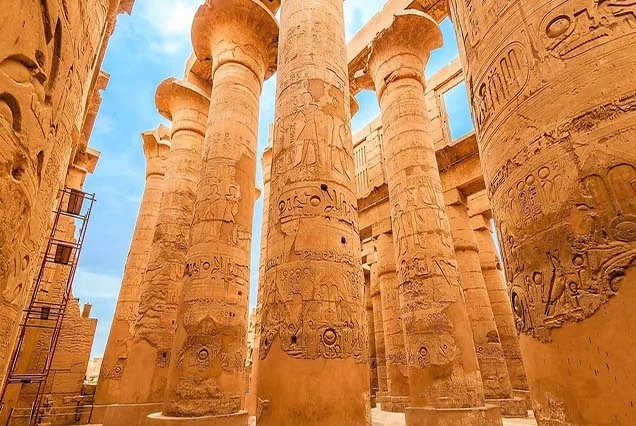
The Luxor West Bank, walked at the hour it was built for.
Start here
One riverbank. Five hundred years of pharaohs.
Cross the Nile at Luxor and the world changes register. The east side is where ancient Thebes lived — markets, houses, the great processional temples. The west side is where it prepared to die well. Every tomb, every mortuary temple, every painted ceiling on the Luxor West Bank was built on the side of the river where the sun goes down, and the ancient Egyptians chose that geography on purpose.
What sits over there now is, by any measure, one of the densest concentrations of ancient monuments on the planet. Sixty-odd royal tombs cut into a dry valley. A queen’s temple carved in terraces straight out of a cliff. A walled village where the men who cut those tombs argued about their wages, in writing, three thousand years ago. It is all part of the UNESCO World Heritage listing for Ancient Thebes and its Necropolis, and none of it is arranged for your convenience.
The West Bank is not a site. It is a district — roughly the size of a small town, with the monuments scattered across it and a desert in between.
That last point is the one that catches people out. You cannot stroll from the Valley of the Kings to Medinet Habu. The sites sit kilometres apart across cultivated fields and open desert, and between about ten in the morning and three in the afternoon that desert does what deserts do.
So the practical question is never what is there. It is what fits, in which order, on which morning. That is the part we handle. We are Egypt Luxury Trips, we are based in Luxor, and we run the West Bank privately — your own Egyptologist, your own vehicle, and a route that starts before the coaches rather than behind them.
Ways to spend the day
Four private Luxor West Bank tours, each built for a different appetite.
These are the programmes we run on the west side of the river, from a two-hour balloon at first light to a full day that takes in both banks. All of them are private, all of them include a licensed Egyptologist, and all of them collect you from your Luxor hotel or from a Nile cruise ship docked for the day.
≈ 6 hours
Luxor West Bank · The headline sites
Valley of the Kings and Hatshepsut Temple Tour
The classic West Bank morning, done without a group holding the pace. Three open royal tombs on the standard ticket, then the terraced temple at Deir el-Bahari, then the Colossi of Memnon on the way back.
Tomb time is what most visitors run short of. Private means you spend it inside the Valley, not queuing outside it.
 ≈ 4 hours
Luxor West Bank · The quiet circuit
Valley of the Nobles, Deir el-Medina and Medinet Habu
The West Bank most itineraries drive straight past: officials’ tombs painted with harvests and hunting parties, the artisans’ village of Set Ma’at, and Ramesses III’s temple with its Sea Peoples reliefs still legible on the walls.
The best colour on the West Bank is not in the royal valleys — it is in tombs the coaches never stop at.
 ≈ 8 hours
Luxor · Both banks in one day
Full-Day Luxor Tour: East and West Banks
West Bank in the morning — three tombs, Hatshepsut, the Colossi — then lunch, then Karnak and Luxor Temple as the light drops. The right answer when Luxor has to fit into a single day.
Lunch at a local restaurant is included, which is precisely when the West Bank should be handing you back to shade.
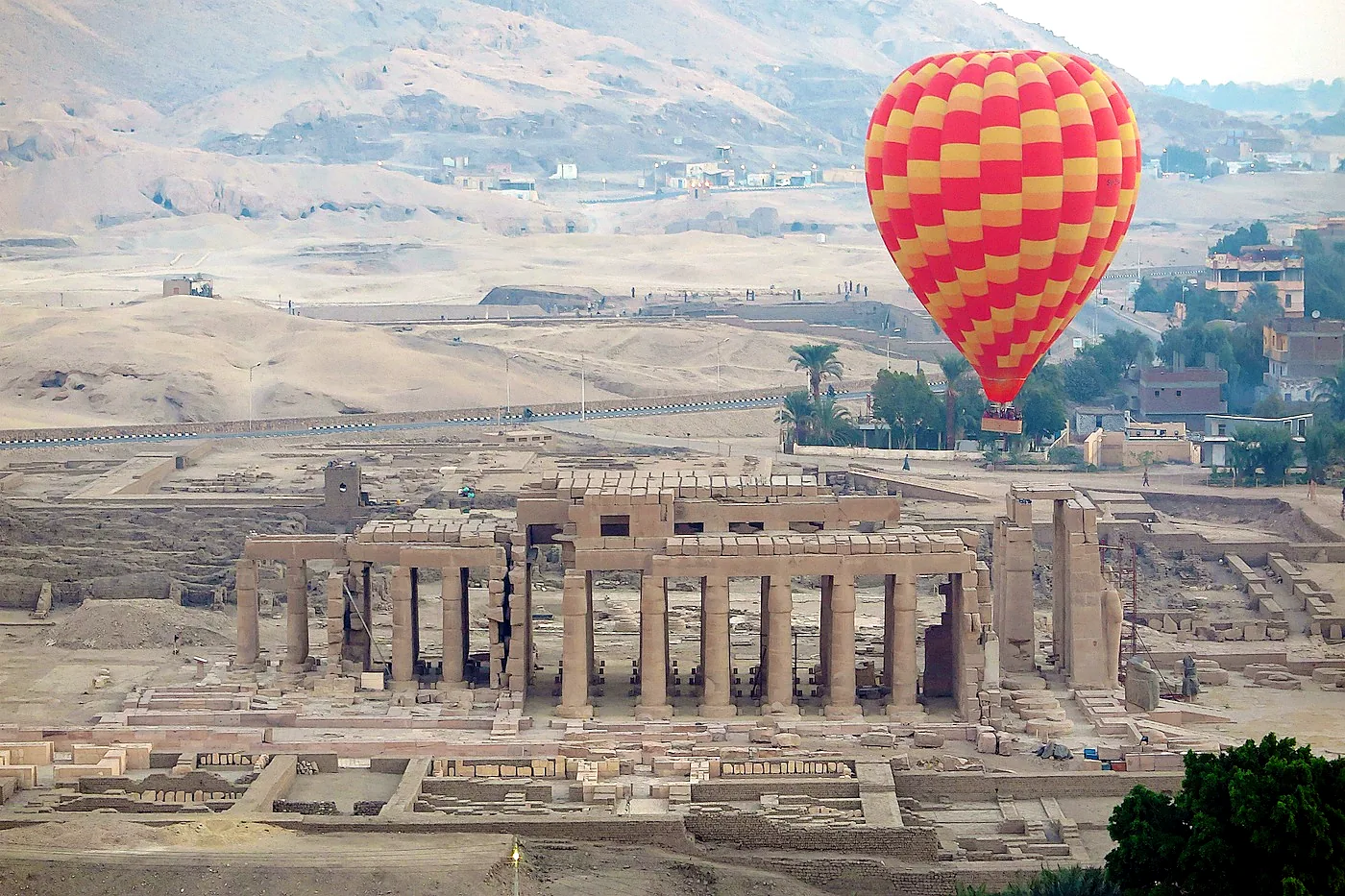 ≈ 2 hours
Luxor West Bank · Before sunrise
Luxor Hot-Air-Balloon Ride
A motorboat crossing in the dark, tea at the launch field, then roughly forty-five minutes in the air as the sun comes over the eastern hills and the whole necropolis lays itself out beneath you.
It is the only way to understand how the West Bank is actually laid out — and it finishes early enough to leave the day intact.
The ground
West Bank Luxor attractions, and what each one is actually for.
The monuments here divide into three honest categories: places kings were buried, places kings were remembered, and places ordinary Thebans lived and were buried themselves. Knowing which is which makes the whole necropolis suddenly legible.
| Site | What you are looking at | Time we usually allow |
|---|---|---|
| Valley of the Kings | The royal necropolis of the New Kingdom, cut into a dry valley behind the cliffs. The standard ticket admits you to three tombs from a rotation set by the antiquities authority. | About 2 hours |
| Temple of Hatshepsut (Deir el-Bahari) | Three colonnaded terraces built straight into the cliff face for the woman who ruled Egypt as pharaoh in her own right. | About 1 hour |
| Valley of the Queens | Ta-Set-Neferu, “the place of beauty” — burial ground of royal wives and children, including the tomb of Nefertari. | About 1½ hours |
| Medinet Habu | The mortuary temple of Ramesses III: towering pylons, painted ceilings and the reliefs recording his naval battle against the Sea Peoples. | About 1 hour |
| Deir el-Medina | The walled village of the artisans who cut and painted the royal tombs, plus their own small, vividly decorated tombs above it. | About 1 hour |
| Tombs of the Nobles | Tombs of officials, priests and administrators — decorated with farming, hunting, banquets and family life rather than the underworld. | Allow 1–1½ hours |
| The Ramesseum | Ramesses II’s mortuary temple, and the toppled colossus that gave the world a poem about how empires end. | Allow 45 minutes |
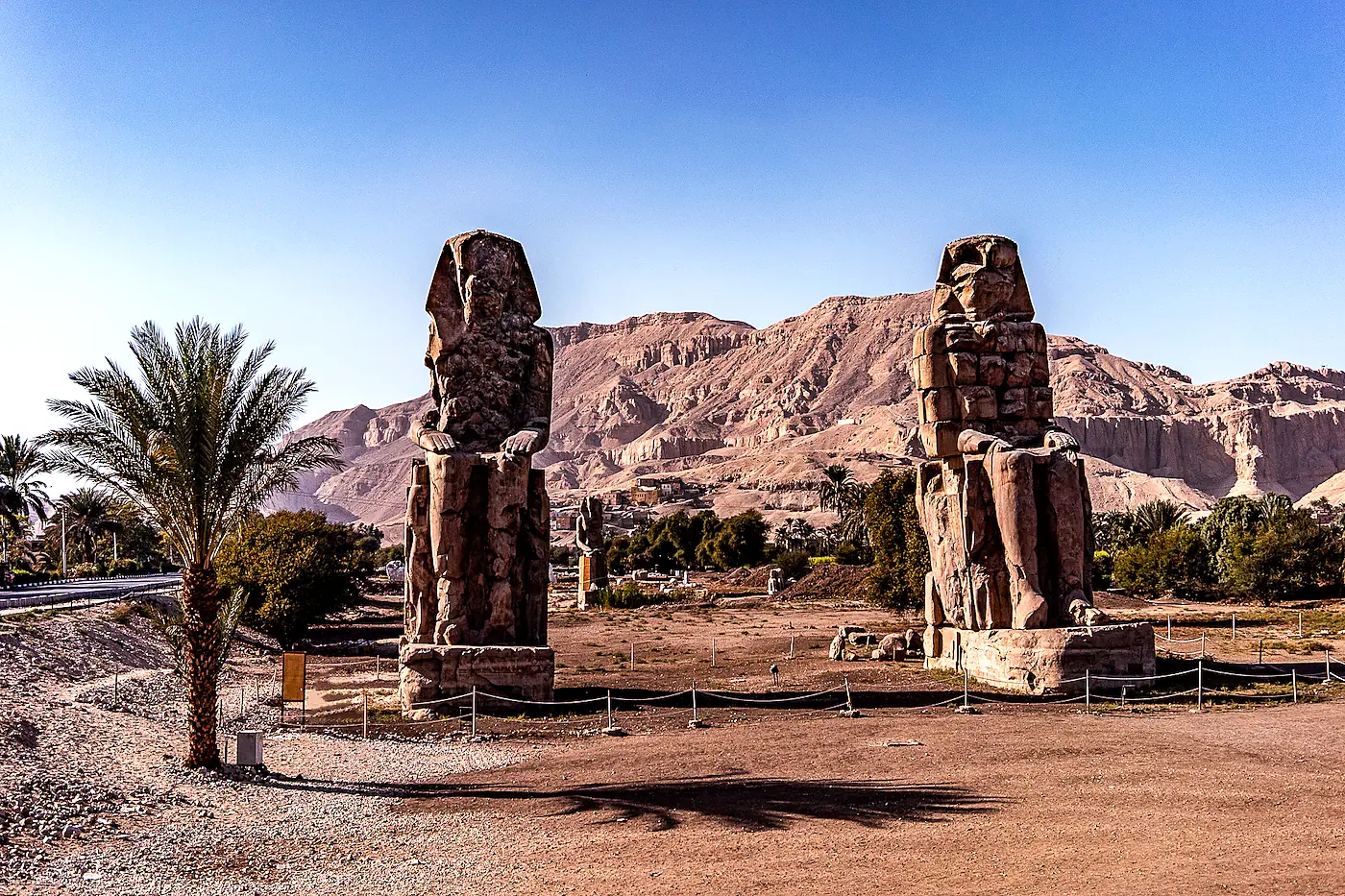
| Colossi of Memnon | Two eighteen-metre statues of Amenhotep III, the last survivors of what was once the largest mortuary temple on the West Bank. | About 10 minutes |
The royal valleys: where the pharaohs went
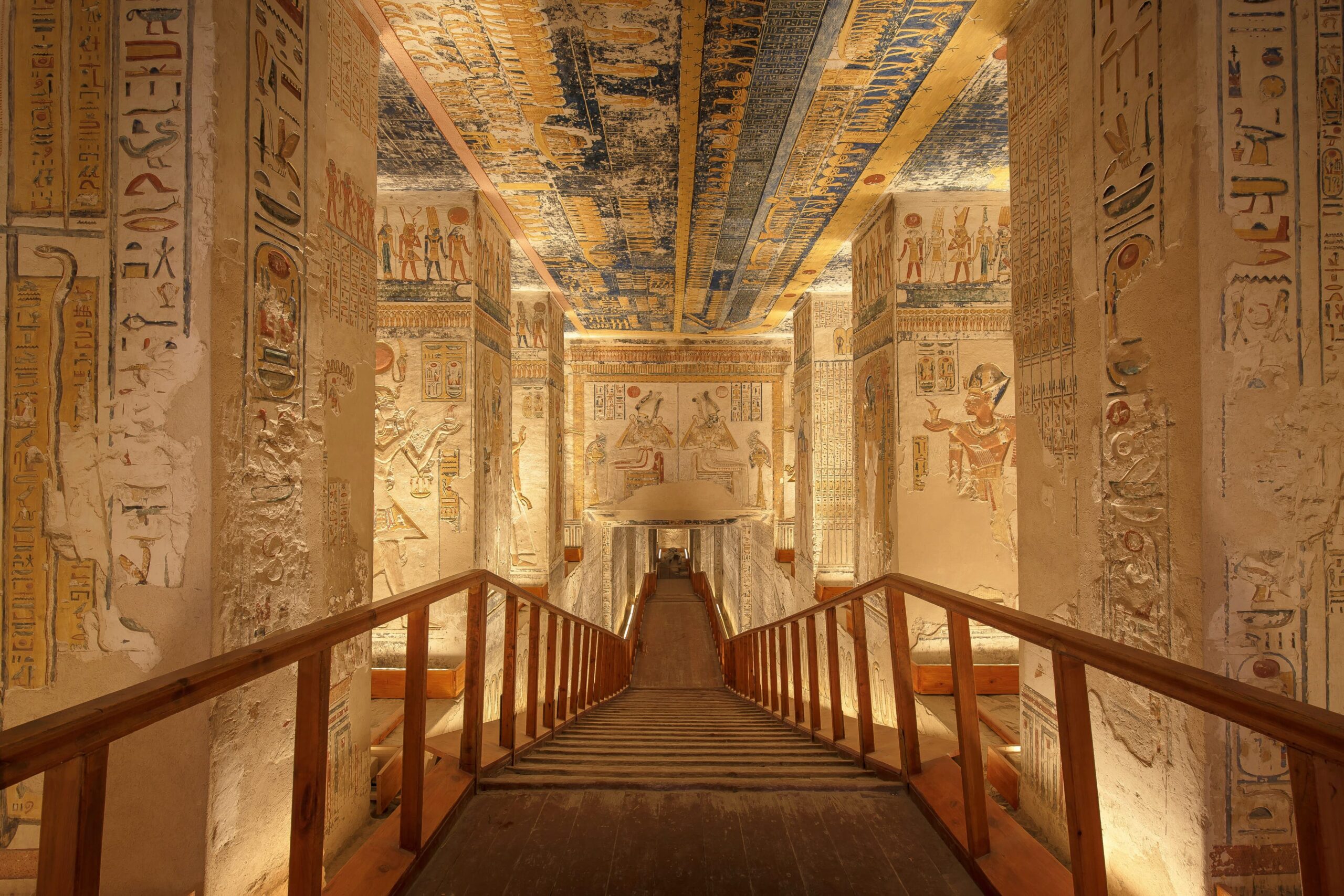
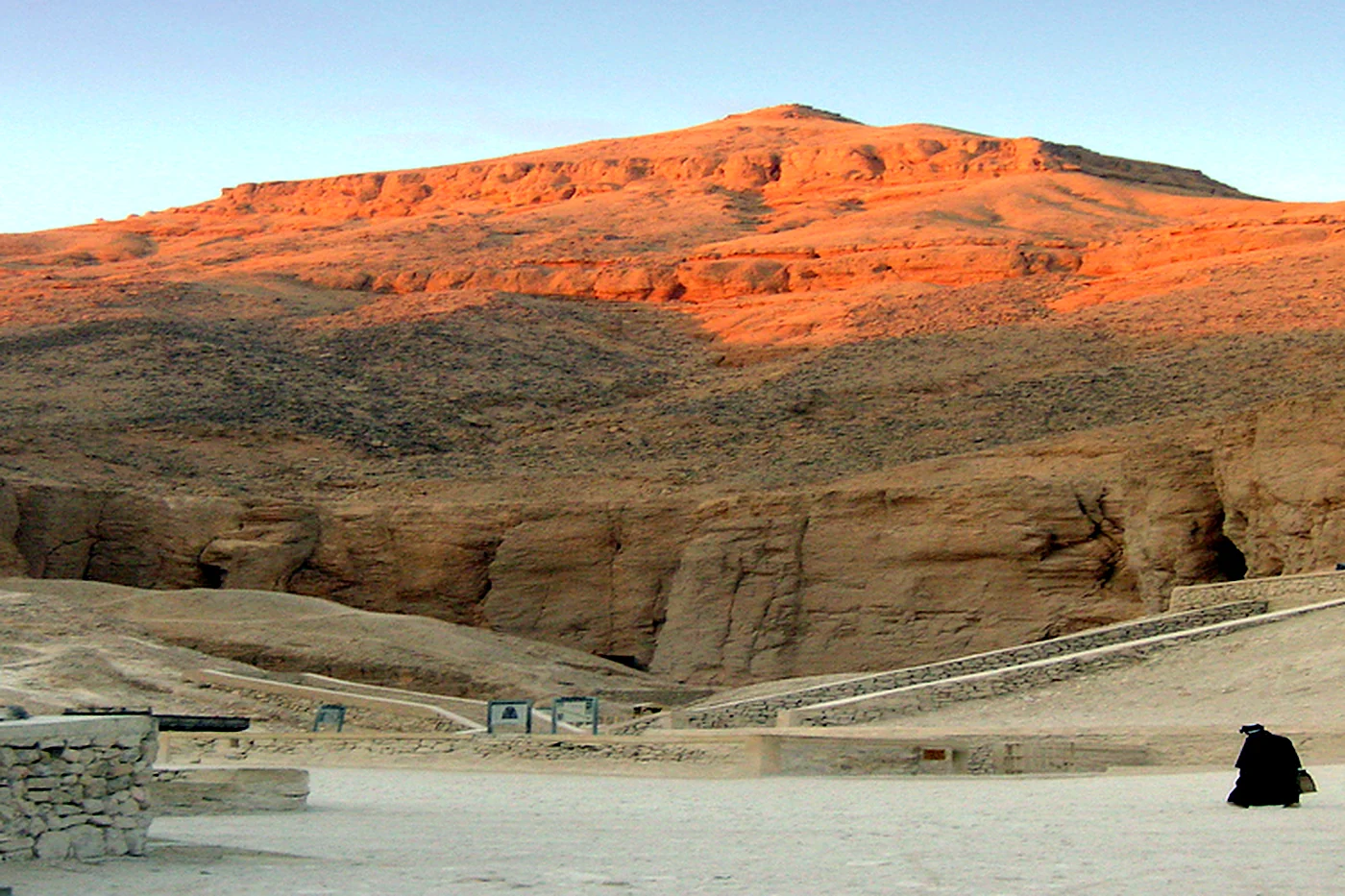
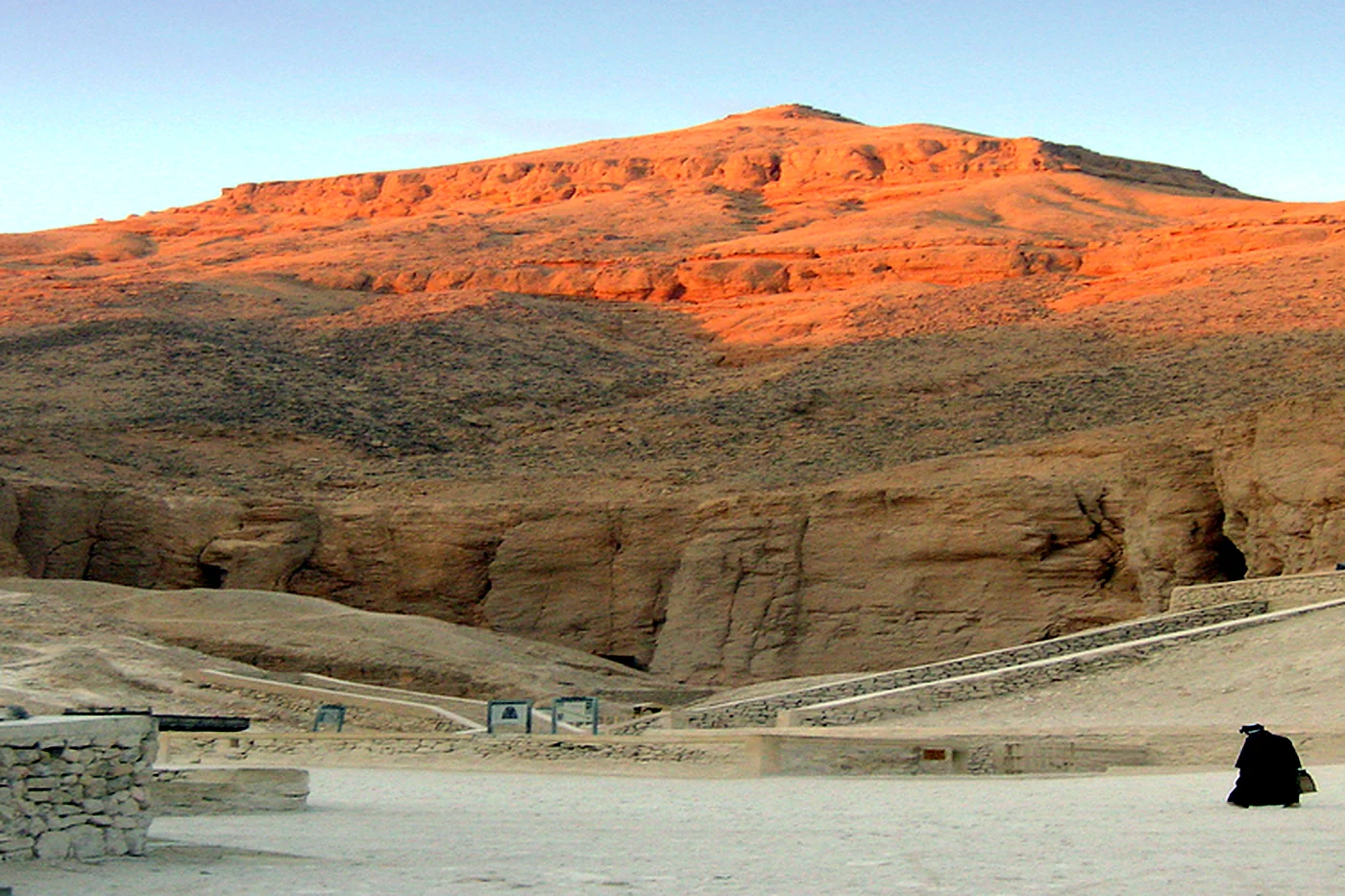
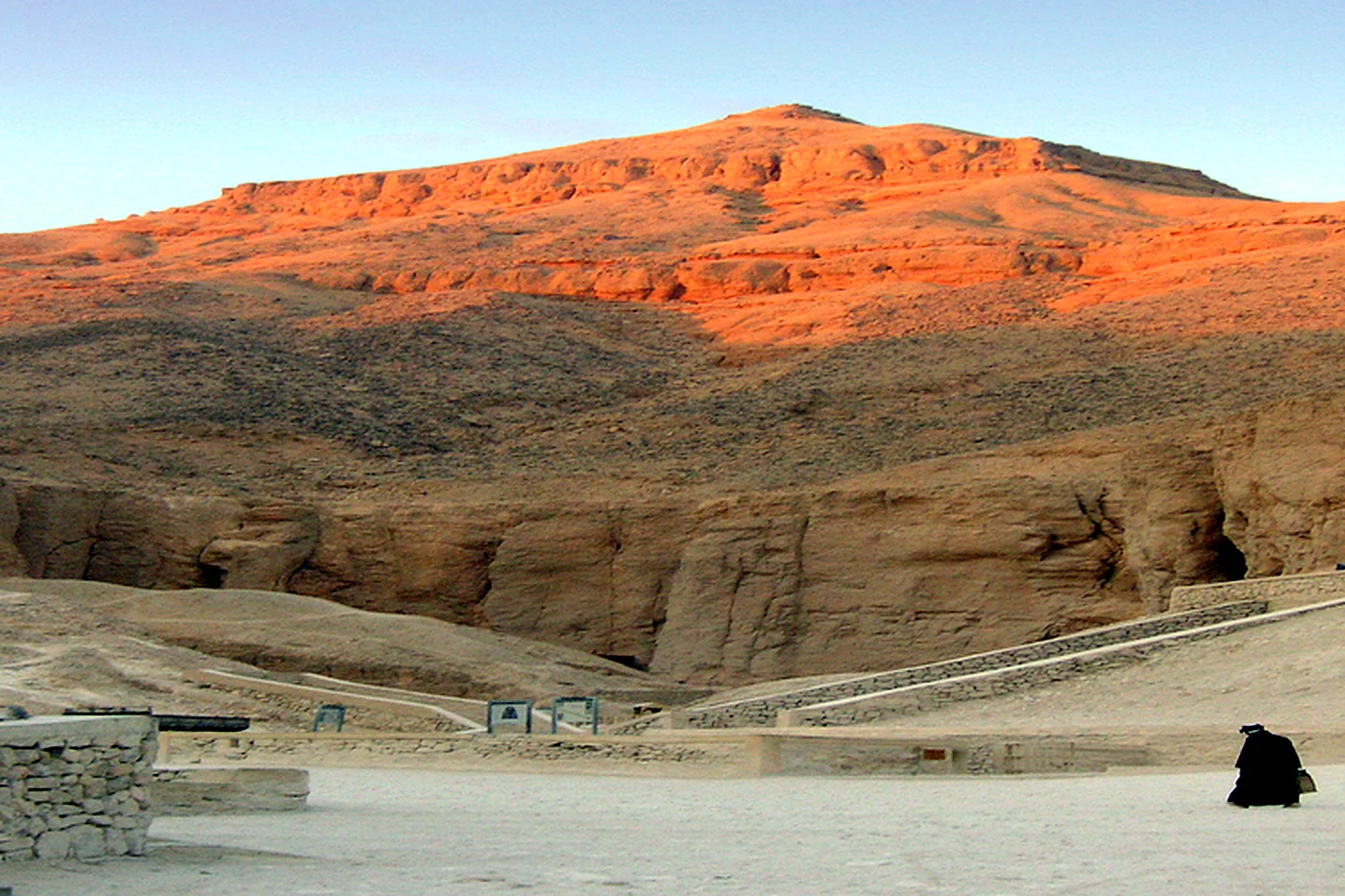
The Valley of the Kings is the reason most people cross the river, and it rewards a small amount of expectation management. You are not walking into a treasure chamber. You are walking down a sloping corridor cut through solid limestone, with the walls and ceiling still carrying the colour and the funerary texts that were meant to talk a dead king safely through the night.
Your standard ticket covers three tombs, chosen from whichever are open that day — the authority rotates them to protect the paintings, so your guide confirms the day’s selection at the gate rather than promising a fixed list months in advance. Tutankhamun’s tomb is a separate ticket, bought on site, and so are one or two other special tombs. We would rather you heard that here than at the ticket window.
South of it, the Valley of the Queens is smaller, quieter and generally kinder to walk. It holds the tombs of royal wives and children, Nefertari’s among them, and it makes an excellent second act once you have seen how the kings did it.
Want the full background before you go? We keep a longer read on the Valley of the Kings, and our Valley of the Kings and Hatshepsut Temple tour is the half-day version of everything in this section.
The mortuary temples: where the pharaohs were remembered
A tomb held the body. A mortuary temple kept the name alive — staffed, endowed and running a daily cult for a king who was already in the ground a few kilometres away. They line the edge of the cultivation, and three of them are worth your time.
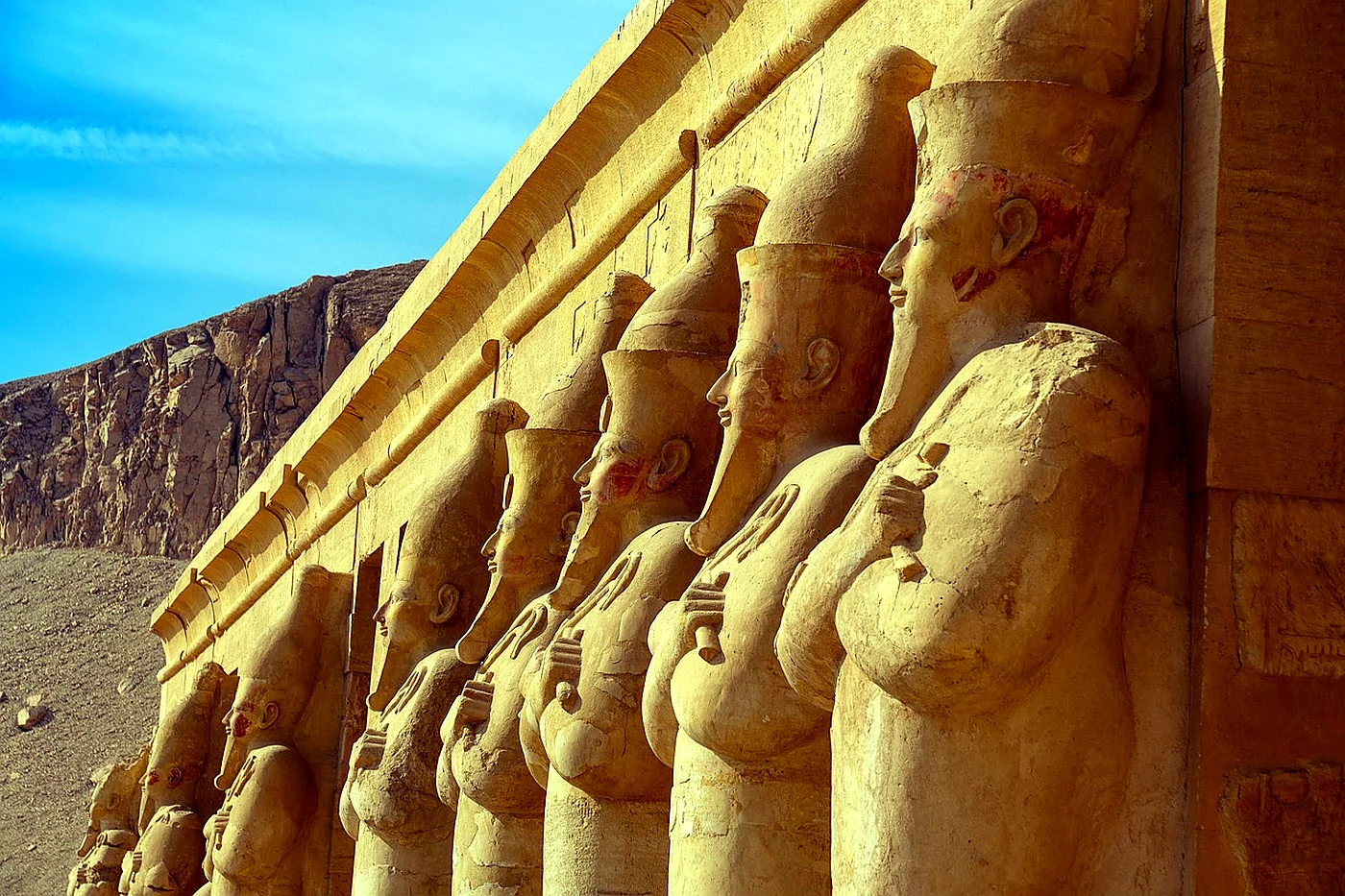
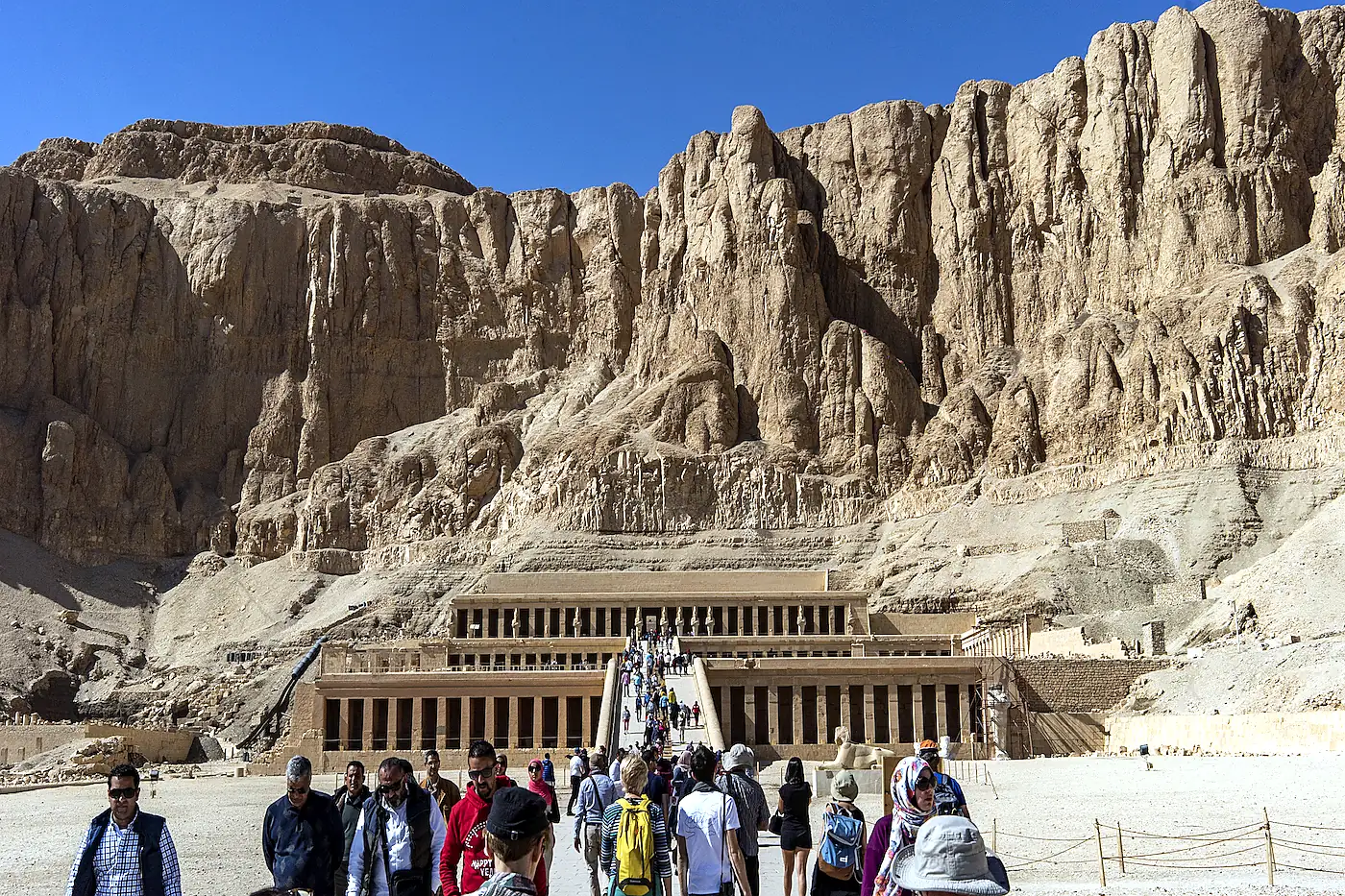
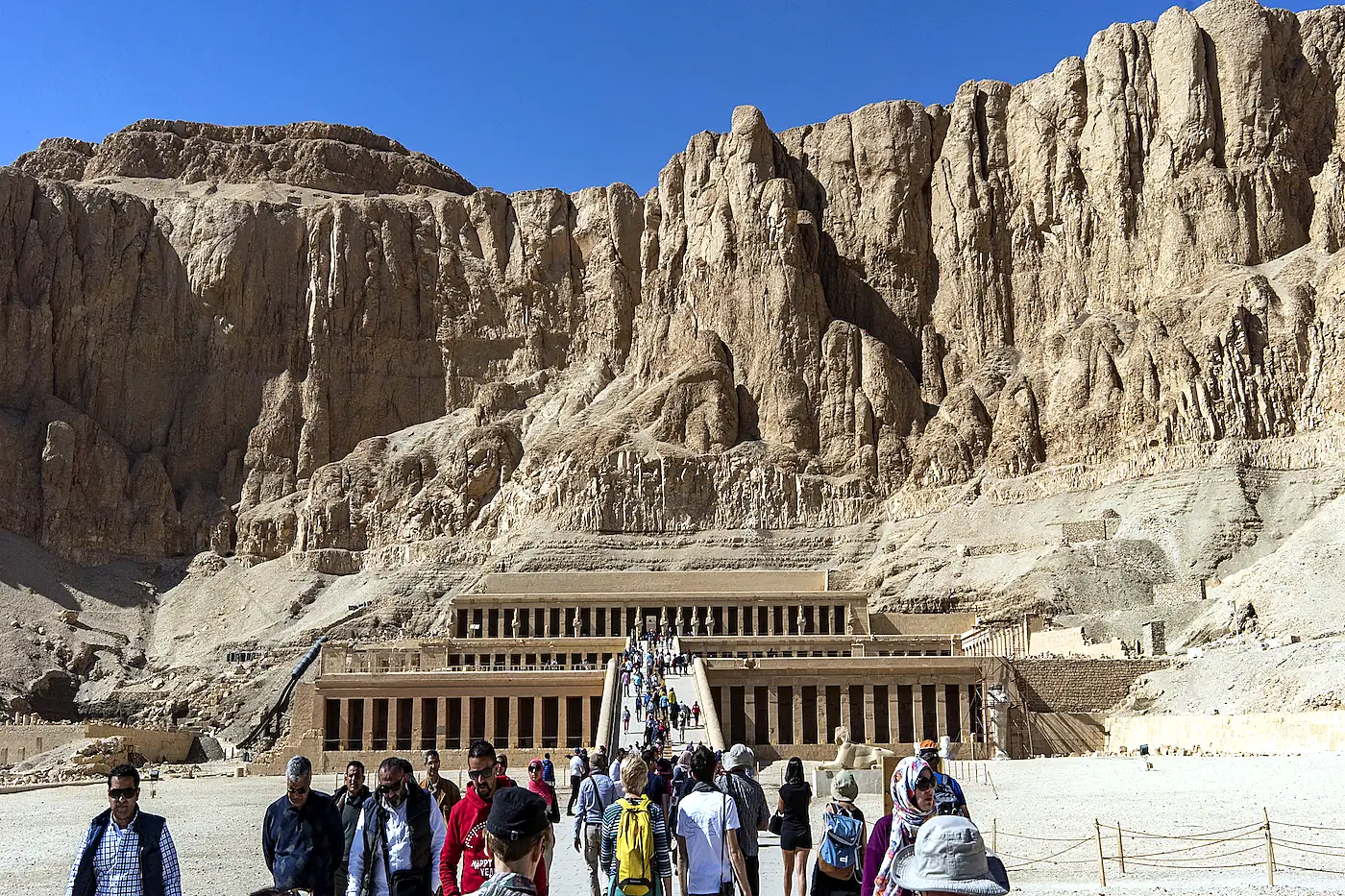
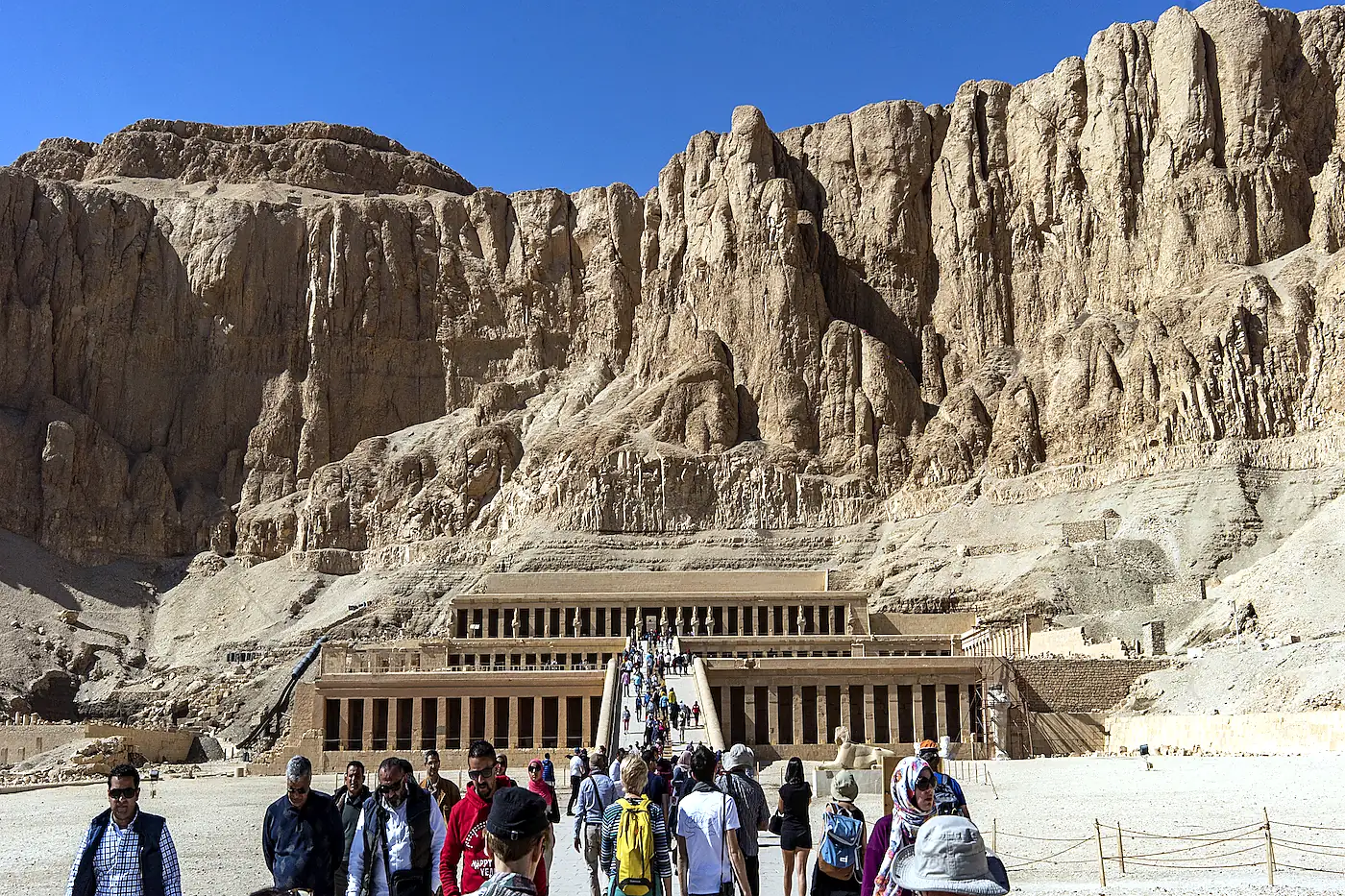
Hatshepsut’s temple at Deir el-Bahari is the one on the postcards, and deservedly so: three flat terraces set against a cliff that rises behind it like a wall, reliefs claiming divine birth for a queen whose right to rule was never universally accepted, and a scale that only makes sense once you are standing at the bottom looking up.
Medinet Habu is, we think, the most underrated site on the whole West Bank. Ramesses III built it as a fortified temple complex, and because it was later buried and reused it kept its colour better than almost anything comparable — including battle reliefs that remain one of the few surviving records of the Sea Peoples’ invasion.
The Ramesseum is a ruin, and it is meant to be read as one. Ramesses II’s mortuary temple lies partly collapsed, its enormous seated colossus face-down in fragments — the sight that inspired Shelley’s Ozymandias. Bring the poem. It lands differently on site.
The human West Bank: Deir el-Medina and the Tombs of the Nobles
Here is the part of the necropolis that tends to stay with people longest, and it has nothing to do with kings.
Deir el-Medina was the walled village of the craftsmen who cut and painted the royal tombs. Its ancient name was Set Ma’at, Place of Truth. Excavation there produced thousands of inscribed pottery shards recording wages, arguments, illnesses, absences from work and — famously — the earliest recorded labour strike in human history. These were the men who made the Valley of the Kings, and they left a paper trail.
Their own tombs, small and tucked above the village, are among the most brilliantly coloured on the West Bank precisely because the people who decorated them did it for a living.
The Tombs of the Nobles work the same way. Officials and priests could not commission a royal valley, so they filled their walls with the world they actually knew: grain harvests, cattle counts, fowling in the marshes, musicians at a banquet. If the royal tombs show you what Egyptians believed about death, these show you what they enjoyed about life.
All of it sits on our Valley of the Nobles, Deir el-Medina and Medinet Habu tour — about four hours, and the West Bank at close to walking pace.
Days and pacing
How many days do you actually need on the West Bank?
Nearly everyone who asks us this has already decided the answer is one. Sometimes it is. Here is what each version genuinely gets you, so you can choose with your eyes open rather than discover it at four in the afternoon.
| You have | What that realistically covers | Best suited to |
|---|---|---|
| Half a day (4–6 hours) | Either the royal circuit — Valley of the Kings, Hatshepsut, Colossi — or the quiet circuit of Nobles, Deir el-Medina and Medinet Habu. Not both. | Cruise passengers, and anyone landing or leaving the same day |
| One full day (about 8 hours) | The West Bank highlights in the morning, lunch, then Karnak and Luxor Temple across the river in the afternoon light. | First-time visitors with a single day in Luxor |
| Two days | The royal valleys and Hatshepsut on day one; the artisans’ village, the Nobles and Medinet Habu on day two — with a balloon at dawn if you want the aerial view first. | Couples and photographers who would rather look than tick |
| Three days or more | All of the above, plus the Ramesseum, the Valley of the Queens at length, and time for Dendera and Abydos or Esna and El-Kab further afield. | Returning visitors and serious Egyptophiles |
One structural point worth making. The West Bank does not reward density — it rewards early. A half-day that starts at six and finishes at eleven will beat a full day that starts at nine, every time, in every season. The tombs are cooler, the light is better, the tour buses are still at breakfast, and you will arrive back with an afternoon in hand rather than a headache.
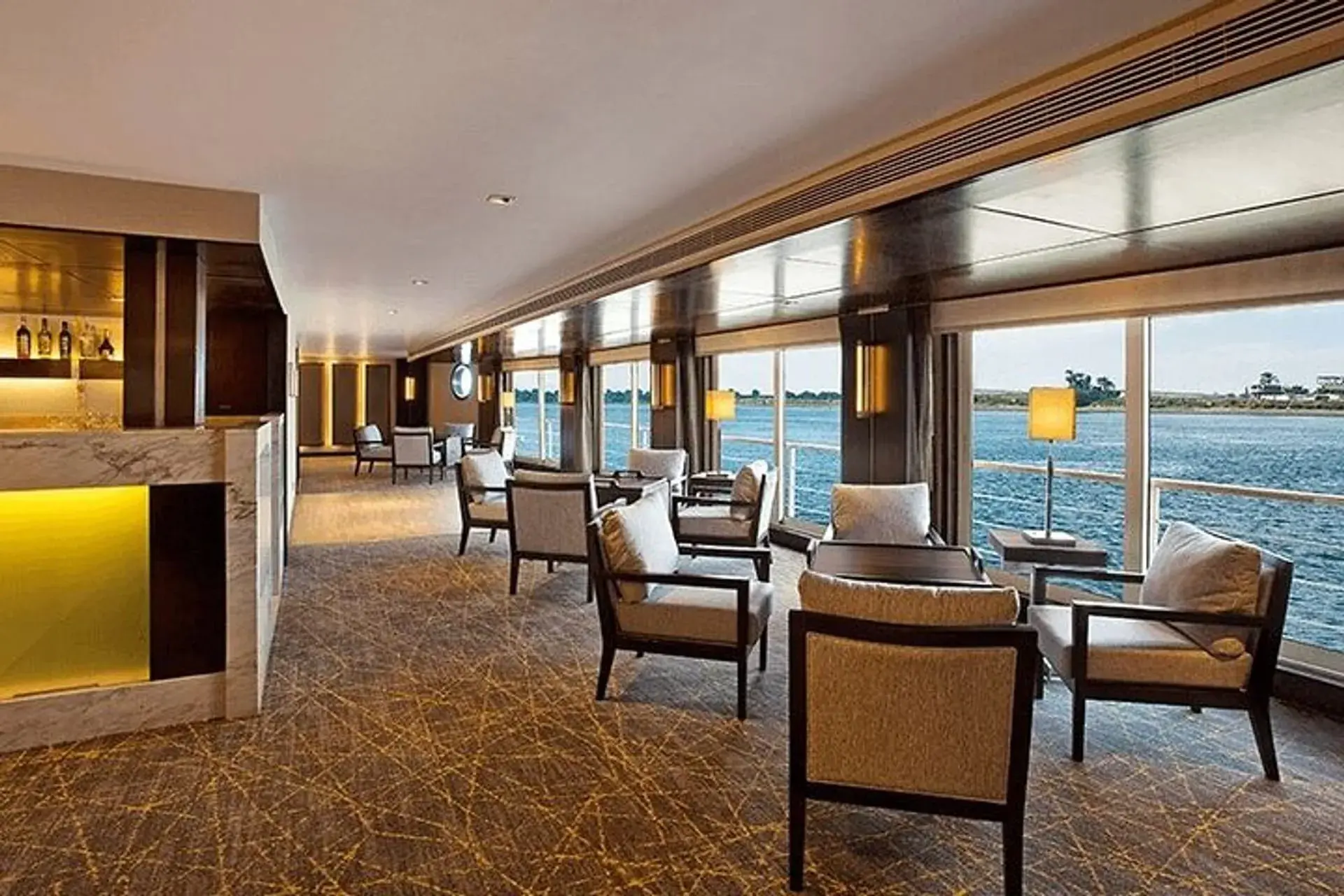
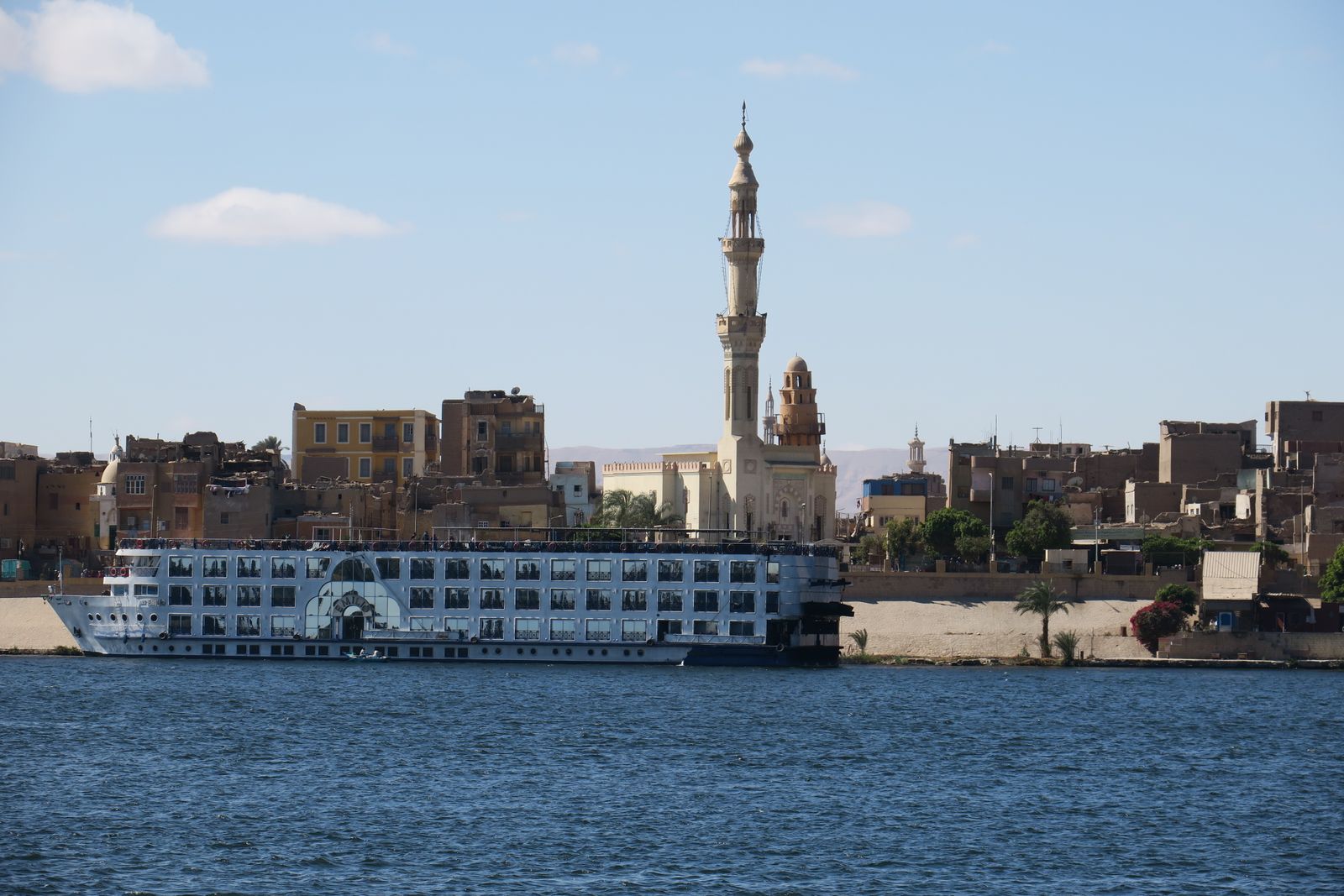
If you are combining Luxor with the river, the same logic applies from a cabin. Cruise ships dock within reach of the West Bank and our pickups work identically from a moored ship — worth knowing when you are deciding whether Luxor gets one morning of your sailing or two.
Before you go
Getting there, timing it, and surviving the middle of the day.
The West Bank is straightforward to visit and genuinely rewarding to plan properly. Six things decide whether your day feels effortless or endless.
Crossing the river
There are three ways over: the road bridge south of the city, the local ferry from the corniche, or a motorboat straight from a docked cruise ship. On our tours you cross by private air-conditioned vehicle and your guide handles the route.
Distances, not footsteps
The sites are kilometres apart with desert in between. A vehicle waiting at each gate is not a luxury here — it is the difference between six sites and two.
Opening hours
Hours are set by Egypt’s Ministry of Tourism and Antiquities and shift with the season and occasionally at short notice. We confirm the current hours for your specific date in writing rather than printing a figure here that ages badly.
Tickets and what they cover
Entrance fees are set by the antiquities authority and revised periodically. On our private West Bank tours the standard entrance fees to the listed sites are included; special tombs such as Tutankhamun’s are excluded and paid at the gate.
Heat as a scheduling problem
Between roughly ten and three, the open desert sites are hard work in summer. The fix is not stamina, it is sequencing: start early, put the shaded and enclosed sites in the middle, and be back for lunch.
Photography and phones
Camera and photography rules differ from site to site and change from time to time — some tombs allow it with a ticket, others not at all. Your guide will tell you exactly where you stand before you walk in.
| Season | What it is like | How we schedule it |
|---|---|---|
| November – February | The comfortable window, and the busiest. Warm days, genuinely cool mornings and evenings. | Standard early start; the whole day stays pleasant, so pacing is about crowds rather than heat. |
| March – April | Warming quickly but still very manageable, with long clear light. | Early start, longer midday break, sites reordered so the open ground comes first. |
| May – September | Hot, and the desert sites are exposed. Quieter at the monuments, which is a real compensation. | Dawn starts, shorter and sharper routes, everything outdoors finished before late morning. |
| October | The heat breaks. Excellent conditions with fewer people than midwinter. | Early start, full-length days back on the table. |
Families, mobility and getting the day to fit
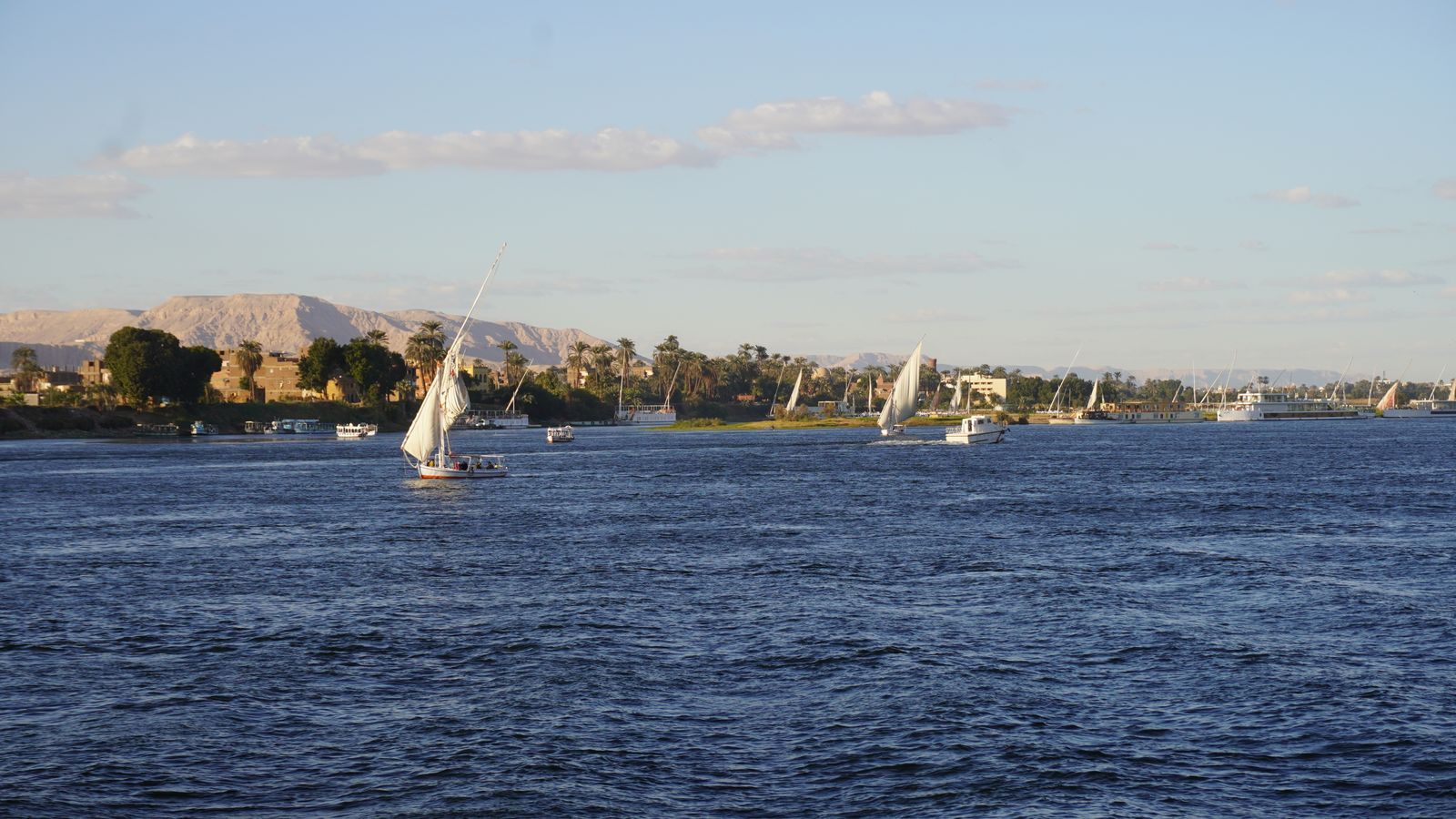
Children do better on the West Bank than most parents expect, as long as the day is built for them: fewer sites, more variety, and the acceptance that a fourth tomb is one tomb too many. A morning of Deir el-Medina and Medinet Habu, followed by an afternoon of sailing on a felucca or a carriage ride through Luxor, is a far better day than six monuments and a mutiny.
On accessibility, we will be straight with you. Tomb entrances involve descending ramps and steps, and temple floors are uneven ancient stone; wheelchair access across the necropolis is limited and varies site by site. What private travel solves is everything around that — the vehicle waits where you left it, the route is chosen around what you can comfortably do, and the day ends when you decide it does. Tell us about mobility in your enquiry and we will build the West Bank route around it instead of improvising on the day.
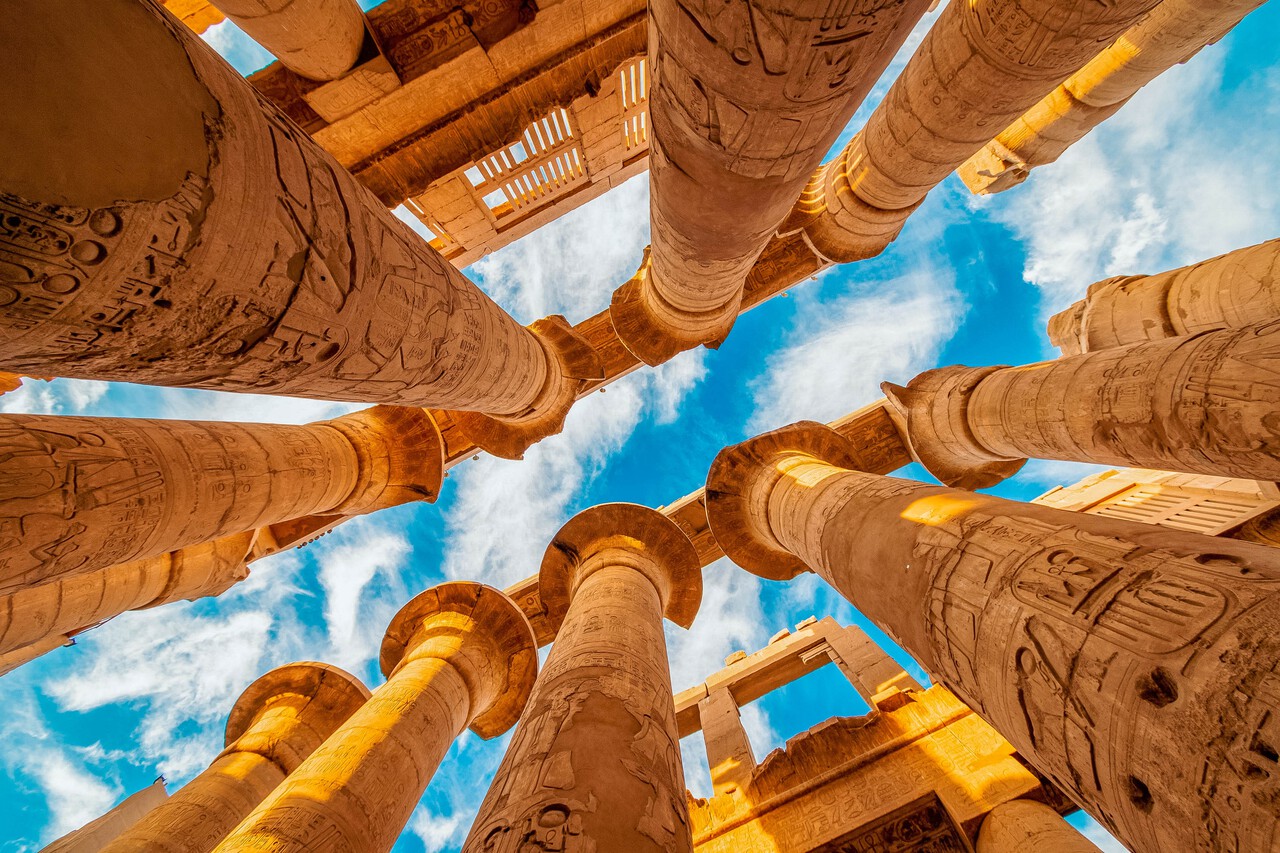
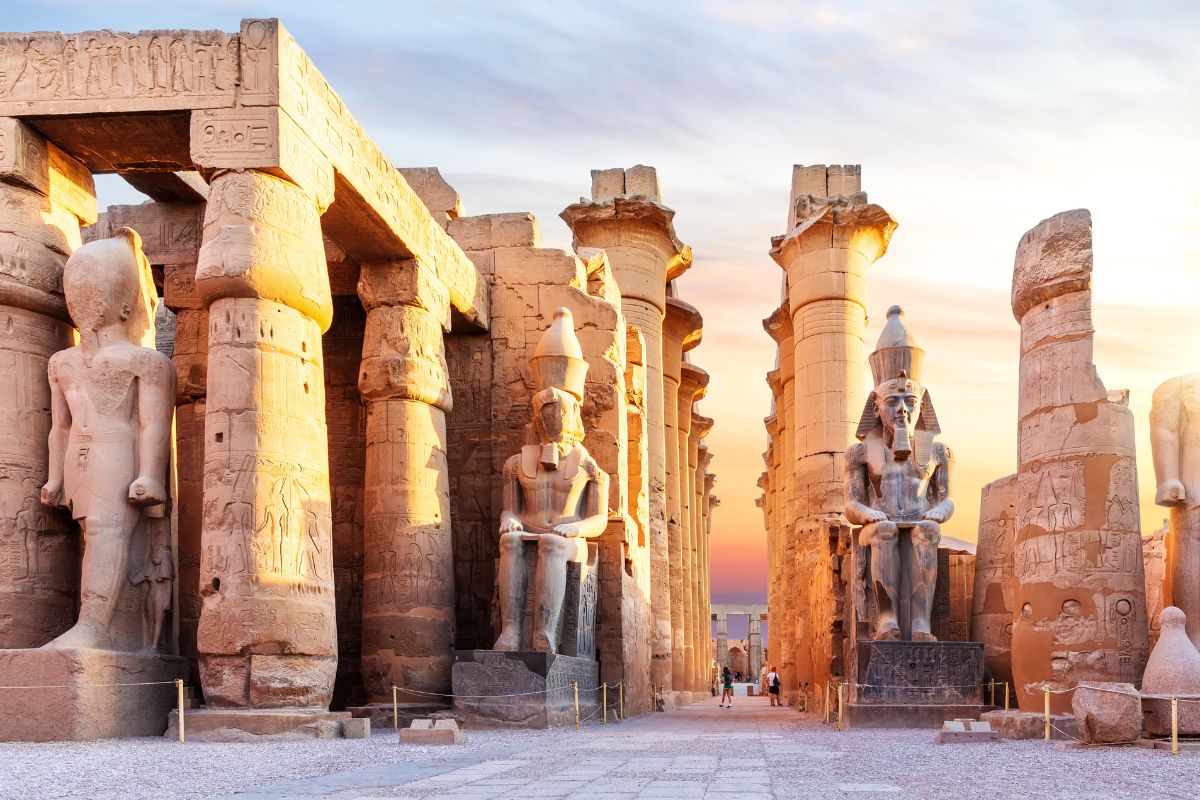
And if the plan is more Luxor than one bank can hold, the East Bank is waiting: Karnak and Luxor Temple, the Luxor Museum and Mummification Museum for a hot afternoon indoors, and Karnak floodlit after dark. There is background reading on Luxor Temple too, and a full write-up of our full day of West Bank temples and tombs.
Straight answers
Four things we confirm in writing instead of printing here.
On the West Bank, the details that matter most are the ones that change most.
Ticket prices, opening hours and which tombs are open are all decided by Egypt’s antiquities authority, not by us — and they move. Publishing a number today that is wrong by the time you travel would not make this page more useful, only more confident. So we hold these four back and confirm each one for your actual date, before you commit to anything.
Ask us any of them directly in the enquiry form. You will get a real answer for your day, not a brochure line.
Which tombs are open
The Valley of the Kings rotates its open tombs to protect the paintings. Your guide confirms the day’s selection at the gate — and we tell you that in advance rather than promising a specific tomb we cannot guarantee.
Ticket prices and special tombs
Standard entrance fees to the listed sites are included on our private West Bank tours. Special tombs — Tutankhamun’s among them — are a separate ticket bought on site, and we say so before you book.
Opening hours for your date
Hours shift with the season and are occasionally adjusted at short notice. We check them against your travel date and build the start time around what is actually true that week.
What your day includes
Pickup point, guide, vehicle, water, meals and any add-ons are set out per journey rather than assumed across all of them. You will see exactly what your quote covers, and what it does not.
Before you enquire
Luxor West Bank questions we answer every week.
What is the Luxor West Bank?
It is the necropolis of ancient Thebes — the western side of the Nile at Luxor, where the New Kingdom buried its pharaohs, queens, nobles and artisans, and where kings built the mortuary temples that kept their names alive. It covers the Valley of the Kings, the Valley of the Queens, Deir el-Bahari, Medinet Habu, the Ramesseum, the Tombs of the Nobles, Deir el-Medina and the Colossi of Memnon, and it forms part of the UNESCO World Heritage site of Ancient Thebes with its Necropolis.
What are the main attractions on the Luxor West Bank?
The ones that anchor almost every itinerary are:
- Valley of the Kings — royal tombs, three included on the standard ticket
- Temple of Hatshepsut at Deir el-Bahari
- Valley of the Queens, including the tomb of Nefertari
- Medinet Habu, the mortuary temple of Ramesses III
- Deir el-Medina, the artisans’ village
- Tombs of the Nobles
- The Ramesseum and the Colossi of Memnon
How many days do I need to visit the Luxor West Bank?
One well-planned day covers the headline sites comfortably. Half a day covers one circuit — either the royal valleys or the quieter Nobles and Deir el-Medina route, not both. Two days lets you take in both circuits without rushing, and three or more suits returning visitors who want the Ramesseum, longer in the Valley of the Queens, and time for temples further afield.
What is the best time of year to visit the Luxor West Bank?
November to February is the most comfortable window and also the busiest. March, April and October are warm but very workable with an early start. Between May and September the open desert sites are hot, so we run dawn starts and finish the outdoor sections before late morning — the compensation being noticeably fewer people at the monuments.
How do I get from Luxor East Bank to the West Bank?
By road across the bridge south of the city, by the local ferry from the corniche, or by motorboat directly from a docked Nile cruise ship. On our private tours you cross by air-conditioned vehicle with your guide, and the same vehicle stays with you between sites — which matters, because the monuments are spread kilometres apart.
What are the opening hours for Luxor West Bank sites?
Opening hours are set by Egypt’s Ministry of Tourism and Antiquities, vary between sites and change with the season. Because they can also be adjusted at short notice, we confirm the current hours for your specific travel date in writing rather than publishing a figure here that may not hold by the time you arrive.
How much do tickets cost for the Luxor West Bank attractions?
Entrance fees are set and periodically revised by the antiquities authority, so we quote them for your date rather than printing them. What we can tell you plainly is how they work: the Valley of the Kings standard ticket admits you to three tombs from the day’s open rotation, and special tombs such as Tutankhamun’s require a separate ticket bought on site. On our private West Bank tours, standard entrance fees to the listed sites are included; special tombs are not.
Can I visit the Luxor West Bank on a Nile cruise stop?
Yes, and it is one of the most common ways our guests see it. Pickup and return work the same from a cruise ship as from a hotel. Send us your docking day and we will tell you which circuit fits the hours you have ashore — usually the royal valleys and Hatshepsut, or the quieter Nobles and Medinet Habu route if you have seen the Valley of the Kings before.
Is it safe to visit the Luxor West Bank as a tourist?
The West Bank is a well-established, ticketed and staffed archaeological area that receives visitors year-round, and travelling privately with a licensed guide keeps the practical side simple. The genuine things to plan around are physical rather than anything else: heat in the middle of the day, uneven ancient stone underfoot, and stepped or sloping tomb entrances. Sensible timing, water and decent footwear handle all three.
Are there guided tours available for the Luxor West Bank?
Yes — every West Bank programme we run is private and led by a licensed Egyptologist, with hotel or cruise pickup and a private air-conditioned vehicle. You can take the royal circuit on our Valley of the Kings and Hatshepsut Temple tour, the quieter route on our Valley of the Nobles, Deir el-Medina and Medinet Habu tour, both banks together on the Full-Day Luxor Tour, or the aerial view first on the Luxor Hot-Air-Balloon Ride.
Can I fly over the Luxor West Bank in a hot air balloon?
You can, and it is the clearest way to understand how the necropolis is laid out. Our balloon programme runs about two hours including transfers, with a motorboat crossing of the Nile, refreshments at the launch site, roughly a forty-five-minute flight over the West Bank and a flight certificate afterwards. Flights are early and conditions-dependent, so we confirm timing close to the date.
Can I see both the West Bank and the East Bank in one day?
Yes, and our Full-Day Luxor Tour is built exactly for that: the West Bank tombs and Hatshepsut’s temple in the morning, lunch at a local restaurant, then Karnak and Luxor Temple in the afternoon. It runs about eight hours. If you have two days instead, we would rather give each bank its own morning.
Next step
Tell us your date. We’ll build the morning around it.
Fill in the enquiry form with your travel dates, how long you have in Luxor, who is travelling and whether you are in a hotel or on a cruise. We will come back with the West Bank route we would actually run for you, what it includes, what it does not, and where the day should start — no pressure, no obligation, just a proper conversation with people who live twenty minutes from the Valley of the Kings.